

If you’re looking to win podcast awards this year, there’s one thing worth getting right before you even open the form. A lot of strong podcasts don’t make it through judging simply because their entry doesn’t do them justice.
That’s especially true for indie podcasters. You might be up against bigger teams and bigger budgets, but the way you present your show is one of the few things completely in your control.
Across most podcast awards, judges are reviewing a high volume of entries in a short space of time. At the British Podcast Awards, for example, entries are scored individually in an initial round before shortlists are even discussed, which means your submission has to stand on its own immediately.
In practice, that means your entry needs to land fast. If it takes too long to understand what your show is, why it matters, and who it connects with, it’s easy to get lost in the pile.
What Judges Actually Look For in a Winning Entry
Judges themselves are pretty clear about this. One piece of guidance from industry judges is that “judges have a lot to judge” and first impressions matter, so your entry needs to cut through quickly - and that’s where a lot of submissions struggle.
Most entries are thoughtful and detailed, but everything sits in long paragraphs with very little structure. Key points get buried. Impact takes time to come through. And in a judging environment where decisions are made quickly, that slows you down. What tends to stand out is clarity.
When a judge can scan something and immediately understand the concept, the audience, and the traction behind it, the show feels more established. It feels easier to back. That impression carries weight when entries are being compared side by side.
There’s also a more practical layer to this. Award experts consistently recommend structuring submissions so judges can score them easily, even suggesting you mirror judging criteria and create a clear visual hierarchy to guide attention. In other words, format isn’t cosmetic. It directly affects how your entry is assessed. This is why presentation becomes a competitive advantage.
Podcast awards are built around creativity and storytelling, but the entries themselves are still judged in a structured, comparative way. The easier you make it for someone to understand your work, the stronger your position becomes.
The Case for a Visual Summary PDF
One of the simplest ways to strengthen that is by using supporting materials properly.
Most awards give you the option to upload additional material. It’s often underused, or treated as an afterthought. But it’s one of the few places where you can step outside the limits of the form and present your podcast more intentionally.
A clean, well-designed PDF summary can do a lot of heavy lifting here. It gives you space to pull your story together, highlight the moments that matter, and show your growth clearly. Instead of relying on a judge to piece everything together, you’re laying it out in a way that’s easy to take in.
That matters because judges aren’t researching your podcast outside of what you submit. Guidance from podcast award judges repeatedly stresses the importance of including clear evidence within the entry itself, rather than assuming anything will be inferred.
If your growth, audience response, or impact isn’t visible in the submission, it’s unlikely to fully land.
There’s also a broader benefit to getting this right that can help you to win podcast awards. According to The Podcast Academy, entering awards in itself can increase visibility, credibility, and even monetisation opportunities for podcasts, whether you win or not. So the quality of your entry doesn’t just affect judging outcomes. It affects how your show is positioned more widely.
Why Tailoring Your Entry to Each Award Improves Your Chances
Another area where entries often fall short is in how they’re tailored.
Different awards are looking for different things. Some lean towards audience impact, others towards craft or originality. Even within the same awards, categories can vary quite a bit. Choosing the right category and aligning your entry with what’s being judged is a known factor in improving your chances.
It doesn’t need to mean starting from scratch every time. Small shifts in emphasis, examples, and language are usually enough. The key is making sure you’re answering the question that’s actually being asked. When you put all of this together, improving your entry becomes a lot more manageable.
You’re giving your show a clear structure. You’re bringing your strongest points forward. You’re making it easy for someone unfamiliar with your work to understand it quickly and feel confident backing it.
For a lot of indie podcasters, the challenge is time. Pulling this together properly can feel like a job in itself.
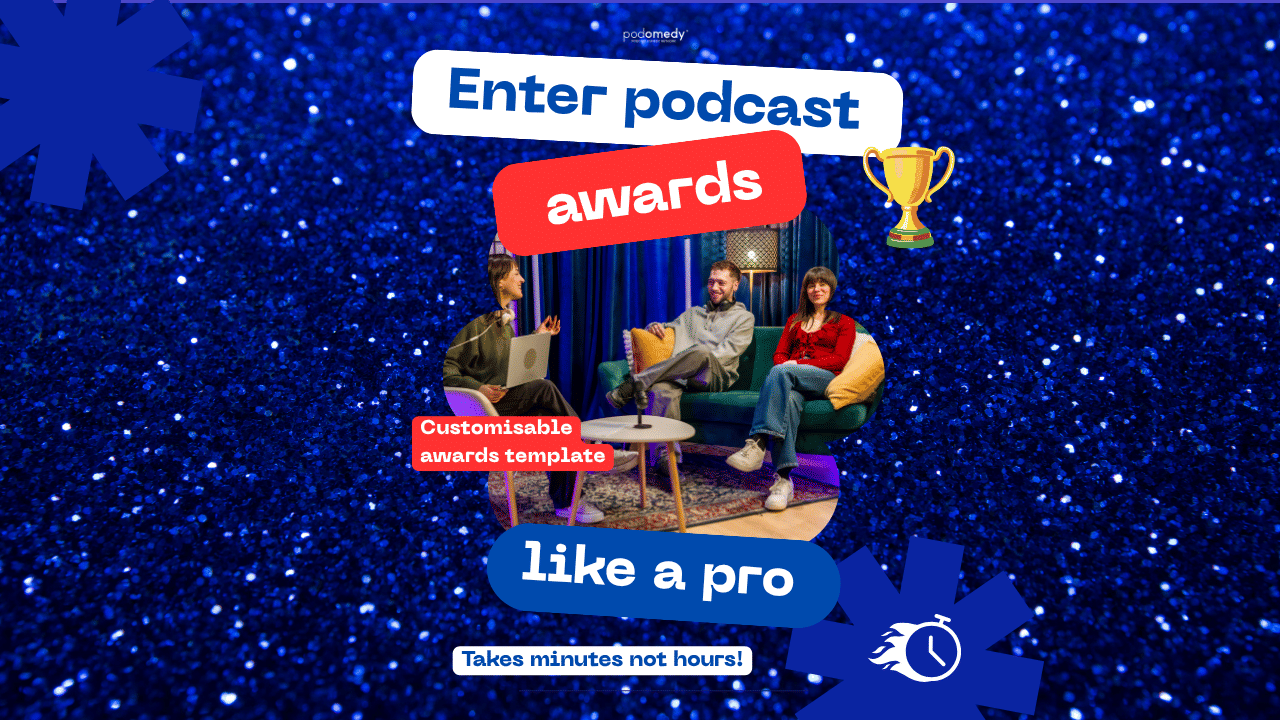
That’s where having a simple framework helps. A ready-made template gives you a starting point, keeps everything consistent, and removes a lot of the friction. You can focus on shaping your story rather than building the document around it.
Final Thought: Presentation Is the Difference
Podcast awards are getting more competitive each year. More entries, higher standards, less time to make an impression. If you’ve already done the work to build a strong show, it’s worth making sure the entry reflects that.
Because in the end, judges aren’t just listening to your podcast. They’re responding to how clearly you show them why it matters.