
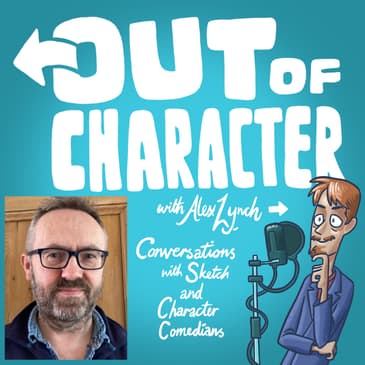

In second of this two-parter, Alex chats to Mark about Bleak Old Shops, repeatable skills and Dale Winton.
Mark also creates a character on the spot based solely on the made-up name given to him by the show’s previous guest in ‘Chain(ge) of Character’. This episode was recorded 12th February 2026.
You can find more of Mark’s work at https://www.comedy.co.uk/people/mark_evans/
Listen to the entire ‘Bleak Expectations’ at https://archive.org/details/BleakExpectationsS02E02AReKipperedLifeSmashedSomeMore
Presented, recorded, edited and produced by Alex Lynch
Music by Naive
Artwork by Tom Crowley
A Podomedy Podcast
Follow the podcast at @oocharacterpod on Twitter. Email oocharacterpod@gmail.com
Give £5, £10 or £20 now and help CALM in their fight against suicide: https://www.justgiving.com/page/podomedy-stay-tuned
Hosted on Acast. See acast.com/privacy for more information.
[00:00:00] This show is nominated for a 2026 Golden Lobes Podcast Award. Get in! If you had to be isolated with any TV comedy character, who would it be? Oh, oh, that's a great question.
[00:00:32] Any TV comedy character from a sketch? Yeah, anything. As long as it's the character, not the actor. There's a bit of me that would like to be isolated and wasted on hand and foot by Julie Walters from the Two Soups sketch. Just because I think you get so much material out of that. But she's so cack-handed! Yes, I know. I think that would be... Because if you're getting me isolated, you might as well laugh at the slapstick awfulness of it. Oh, God.
[00:01:03] So you're expecting her to cook for you and then spill half of it? Yes, I just... It's such a funny character. I haven't mentioned Victoria Wood at all in this, who's one of my heroes on sketch writing and things. Oh, yes. Yes, yes. So that's a way of getting that in. But probably then... I mean, it's very tempting to say Basil Fawlty, because again, what the hell would that be like? That would be quite extraordinary. But actually, it's really got to be... It's going to be...
[00:01:31] I think I'd like to be isolated with Phil Dunphy from Modern Family. Oh, okay. He's just fun, and Ty Burrell plays him brilliantly. Oh, it's Ty Burrell's character, right. And he'd just be such a... You'd have fun. I think within a couple of days you might be going, less fun please, Phil. But you'd be absolutely isolated. That's not a... Oh, great. That's not a bad person, is it? No, okay. So you would lock down just in the Modern Family house? Oh, that would be fine. It's a very nice one of those big away houses.
[00:01:59] Yeah, I'll happily be isolated with Phil. And he can teach me magic tricks. I was going to say, what do you imagine those days to be like then? Just always an adventure. Exhausting. He wouldn't get bored. He might not let me sit in the corner and read as much as I'd want. Yeah, you'll have to go out and actually do those exciting things that... Yeah, that would be... I'm trying to think of other characters though. Well, not go out, but you have to... Phil Dunphy would be a good person. Okay. So you are going to lock down with Phil Dunphy from Modern Family. Yeah.
[00:02:28] Oh, I know. Or do I want Ted Danson from The Good Place? I can't decide. Oh. Yeah, and then I could teach them about being human. I mean, you could do a flat share with Phil Dunphy and Michael if you think you could handle that. I think if you've got Ted Benson when he's become... Realises he wants to be more than just the demons and stuff like that. Yeah, yeah, yeah. Then you could put your imprint on his human personality and you could turn out another neurotic, bitter writer type. Do you think you'd need him to kind of offset Phil Dunphy then? Maybe.
[00:02:58] He'd be a nice calming thing. Enough magic now, Phil. So you could do a flat share with the two of them. Go for it. Or like a house share. A house share with the two of them. With Julie Walters and our staff from The Two Soups. Oh my God, you've got staff. Jesus, okay. That's a sitcom in its own, isn't it? Yeah, yeah. So you are locking down with Phil Dunphy, Michael from The Good Place and Julie Walters' character from Two Soups. Two Soups. Ready to order, sir? That's all.
[00:03:34] I've got a very good friend who wrote on Doctors. Oh yes, sadly no more. He wrote a vast number of episodes. Yeah. Like in the 90s. Yeah. 90-odd episode episodes. And when that finished, that's it. Yeah. I mean he's writing other things trying to develop stuff, but he's not got any work as a writer at the moment officially. Or he might do, I hope he has since I last spoke to you for Christmas. Yeah, yeah. But when he was on Doctors, they said, oh a doctor would be really good because you know, there'll be people doing that and then we'll move them on to casualty and the other medical things and then they can do it. And that'll develop you. Yeah.
[00:04:03] And he went for interviews on Holby and Casualty and they wouldn't look at him because he was a doctor's writer. And you suddenly get siloed and you're placed in that thing of like, oh that's that silly thing. And you go, so how is that meant to help him? So he's got a living and he took it away and someone just decided to stop that and that stopped a lot of people earning a living as a writer. Yeah. And now they haven't got the credibility because the BBC have sort of put them in this box, they're doctors writers, we don't want them for other things. And you go, but the natural thing though would be to see how people do.
[00:04:30] Yeah, you're good, why don't you develop an idea with us and do an episode of this and that. But I do know it's hard, it's very hard for any system to work perfectly and we argue always from the writer's point of view. But I don't think the industry helps itself that way either. Well writers are very, they seem to be from what I gather, quite far down the pecking order considering if you didn't have a writer you wouldn't have the thing that... Writers are treated as, you know, to be, you know, I think if you've got something away and said I'll be there on set, they went, they won't.
[00:04:59] A lot of people won't do that, a lot of people would be very good to you, you know, there are some excellent, there's, you know, there's some very good companies that do, I know, I know somebody wrote a sitcom recently and said all time this, it was great. Yeah. They were listened to totally. Yeah, yeah. But it depends, I mean I know people that have, weren't even invited to production meetings. Yeah. They wrote the bloody thing. It's, it's, yeah, it's... I think, I think that has got worse. I don't know, you, you based all on anecdata rather than actual data. Well yes, of course, but it's... But the very fact it happens at all is, you know, the fact that you've,
[00:05:29] you've got at least three stories from people where that's happened, you're a bit like, oh that's... Yeah. I mean I've, I've had more bad experiences as a writer in the last few years than I've had in my entire career I think. Oh God. Um, and I, but that might just be chance, I might have been very lucky in the people I worked with before. I mean I've had bad, bad, you know, you have bad stories occasionally. What, what has been, um, and you don't need to name what it is, but what has been the most challenging gig for you as a writer? Oh.
[00:05:58] Um, that's really hard. I mean my funniest, most challenging gig was writing, uh, a script for Dale Winton for a daytime quiz show about 20 years ago. Ha. I can't remember what it was called. But I worked with a very nice pair of producers. Hmm. I worked from home, emailing, because we got to the email stage by this point. Of course.
[00:06:21] Um, and he used to have to give, so I think it was clues for the answer, but each one came with a little witty joke or, for anything, and I was writing those. Right. And he just didn't use them. What? And the more he didn't use them, the more I wrote. Ha, ha, ha, ha, ha, ha. But they were one of, they were cramming a daytime quiz into a couple of weeks of filming, so it was a bit of a nightmare. And they said every night at nine once they'd finished, they'd come in and look at what I'd written for the day after, and it was the only bit that cheered them up,
[00:06:48] because as it went through I got more and more sarcastic, and I wrote more and more digs at Dale into them. Ha, ha, ha. But they handed them onto me, and I think my ratio of jokes to written to on was something like 600 to none. What? That's one of my favourite challenging jobs. My God. Partly because it's hilarious. Oh, and also partly because the rules for this game show are quite complicated. And I spent ages working with people on getting it just right, so they explained it properly.
[00:07:15] And Dale went, oh, I don't need that, I'll just put it to Dale speak, I'll Wintonize it. He actually said those words. And so he had lived it, and got them wrong. And so several people went, but technically I wasn't out, because that's not what you said in the rules. And the company got sued and had to pay out money to some people who were unfairly knocked out of the competition. Oh. So that was quite a challenging gig. But I really enjoyed it. I got well paid, and I liked the other people I was working with. Oh my God. But I've had some challenging things. I did a drama, Channel 4 a few years ago, oddly.
[00:07:46] Yeah. A bit of a change of thing. Very complicated way of getting to do it. A second series of something. And I found that incredibly challenging, because it was done in quite a low budget, the production company's model. I had to outline and write five episodes in three months, four months, I think. Yes. Which is quite hard work. That's quite a lot of TV to do. Yes. Rately outlines, detailed outlines, which they loved. Everyone loved them. Director loved them.
[00:08:16] Channel 4 loved them. Said they were something great. Yes. Hard scripting. And you just go, I don't have enough time. There's a lot of pressure. And I found dealing with that was very hard. Partly because of the time pressure. But also because I think the feedback from people was contradictory. Oh God. Coming from all sides. You had, you know, you had deputy heads of things saying, I really want this scene in there. And the next thing you could go on, the head of the company, the head would say, what the hell's that scene in here? I hate that. And the deputy would go, yeah, I know, that should definitely go, that's awful.
[00:08:43] And you go, put your hand up and say, no, I did that. I've always done that as a script editor. If I make a recommendation and then the higher up people don't like it, I go, my bad. Don't blame writer. So the lack of trust and faith and the belief that any notes I was getting or any competence were very, very, very tricky. So that was very hard. I mean, but I think that can be the drama system and the way it works. But it was just unpleasant. No one was nice. No one thought about me. No one gave me time or chance to do things properly.
[00:09:13] That's harsh. And then the year, a couple of years later, I had a similar thing with my own show that my play, I'd write a play of Bleak Expectations, which is the sitcom I wrote for Radio 4 a long time ago. Which of course we're going to talk about. But that was a hideous experience. Because again, time pressure, ridiculous notes, trying to adjust them, addressing notes, going, I'm not sure this is right, but it's okay, we can work on it in rehearsals. There'll not be enough time for rehearsals to it.
[00:09:42] Okay, we've got 15 previews to do it. I've never been allowed to go back to my own script and make the cuts and changes I wanted for various complicated reasons. And you go, that's terrible. But I'm the writer of this. You have a vested interest in this being as good as possible on stage. And I think there's five to ten minutes I need to change that will radically make this better. Not that I think the show was bad, but it could have been better.
[00:10:31] Yeah. I don't know whether it's a combination of, you know, panic, lack of competence, lack of experience. I just don't know. You just don't know. I had that with my first Radio 4. Did you? Radio is normally lovely. No. So my first Radio 4 show, which was when I was 23. Yeah. Well, it aired ten years ago. It was commissioned in 2014. I'd never had any writing credits. It must be so exciting to get that away. Yeah.
[00:11:00] And then it was, I was having a proper like existential crisis because I was having a miserable time whilst we were making it. Yeah. And I was like, but this is supposed to be the best thing that's ever happened. Why am I so miserable? Oh God, I'm so ungrateful. And it was, it was such a mental gymnastics thing of. I know you get, you get, you get wrapped up in this, this thing of like, I should be appreciating this, but it's going wrong. And I, I had that. I had a play in the West 10 and I was going, but it's going wrong. I was not enjoying myself.
[00:11:27] I didn't know how to get out of, I didn't know how to fix the situation. Yeah. Because as a writer, you're essentially quite powerless until you get to a certain level. Yeah. And very few people get to that level. It's Jesse basically. Jesse Armstrong has that power. Yes. I've had some very funny stories about him. I'm going to tell this story. I think because I do, do, do. Phil Clark, who's an expert on the USERN and used to be head of Channel 4 comedy and
[00:11:51] stuff and now runs, was having some difficulty budget wise on the thing that we've been co-produced by HBO. Oh yes. And this was, Phil told me this story so he doesn't like me telling you. But he said, It doesn't need to go. He said Jesse was in the room and Jesse had come off, you know, VEAP, ME's for VEAP and I think it just started succession. And he went, you know, who are you talking to? And Phil mouthed him in the middle. He said, give me the phone. He went, hi, it's Jesse here. Yeah. No, no, Phil says we need another half minute episode. We need another half minute. Okay, great. Thanks. Bye. Bye.
[00:12:22] Got it sorted. And Phil went, I used to be head of, I was important once. Now Jesse's much more important. Jesse's about the only person with that power I think in, in Britain with an American company. But yeah, when you get your own thing away and it goes wrong, it's, it's horrific.
[00:12:50] And sometimes it's because someone not very good has taken it. And more often it's just because everyone's well intentioned. Everyone's got their job. Yeah. But chaos theory takes over and a tiny decision ripples out and you suddenly go, but no, we're, hang on, we're meant to be going there and we're now over here, which is how did, let me think this. No, I don't see quite how this happened. And it's just, it's, it's maddening. And it's, you know, in such a subjective world anyway. Yeah.
[00:13:19] A subjective world where everyone's very happy to have an opinion as well. Yeah. And the best people you work with know it's not their place to have an opinion sometimes. Especially when it's comedy, which is again, where people get so angry about comedy because comedy is the most subjective. Yeah. Form. So then suddenly everyone's got their thing of like, oh no, this is funny. Yeah. This is funny. This is funny. Yes. And it's, I think there are, there are, there are so many people in life who, life in general,
[00:13:45] but you know, the way it works in our industry is that not many people can fill a blank page. No. Or the second one. Mm-hmm. Or the 30 for a script or 60 for an hour and 90 for a film. Uh-huh. And there are not many people, those who can fill it well. Mm-hmm. But there are loads of people who have the attitude of, oh I couldn't do it myself. I can definitely tell you what's wrong with what you've done. Yeah. Yeah. Can you? Yes, some people are very good at that, but they're vanishingly few. Like there are vanishingly few really good writers, I think.
[00:14:15] But it's, but so many people are very happy to have an opinion about something without actually being prepared to put in the hard work themselves. And that is true of every area of life. Yeah, yeah, yeah. Oh, completely. I mean, it's a horrible thing to get older and go, oh my business is like this, oh they're all like that. There's always someone at the top going, no change this, do that. I'm not prepared to put in the work myself, but you do it for me. Yeah. And it's, it's nature of it. Of course. It's, but it is, it is brutal. I mean you get many challenging things. I remember being on Ant and Dec working with them. Oh yeah.
[00:14:43] Years ago with James Barton and we worked on three series there, the first, and treating the first two of Saturday Night Takeaway. Oh right, yeah. And as we were on the second series and it was a big hit, James and I got the feeling we were being edged out by someone. And one morning we had a production meeting on the Monday morning, so everyone's around the desk, about 20 of us. And on the Fridays before I'd left the office I'd written a bullet point thing of what Ant and Dec should do on a piece they were filming that weekend, little BT piece.
[00:15:12] And I'd written a ten point bullet plan saying, I think we start here, we go here, we do this, the, the, the, that. Yeah. Because they're very good at, you know. So that was, I wrote the structure and how it should go, including some jokes. And when I came out they went, well how did the shoot go? And this nameless person said, oh well, they went really well, you know, I got them to do this, this, and this, and he went through my bullet point list. And I went, oh well played, I can't do anything about that, can I?
[00:15:38] Because if I go, well actually I wrote that, I did that, I look like a dick in front of everyone. Yet he's claiming credit for it. And then later on in the same thing, we'd have meetings, and it became, they'd only get one of me and James in for one of the, you know, meetings, saying oh we just can't do it. And I remember sitting there with that person, Ant and Dec, and going, and we're discussing stuff. And me pitching in the same, shaping the idea for this sketch or whatever it was. And they went, you'll get that done, to the bloke who was in, being dodgy.
[00:16:07] And he goes, yeah, yeah, yeah, no, leave it with me boys, I'll get it sorted. Waited for them to leave them, and he turned to me and went, get that done, I'm going home. And then took the credit for it, and you go, wow, wow, wow. And then suddenly it was, we're not using writers from the next series, they were, they were using a different writer. And it was basically someone wanting to take the credit and get rid of us. And they've gone on to do very well for themselves as an exec in TV. But every time they're going, yeah, but you did that, and that's wrong. That is so shit.
[00:16:36] And you know, you could have probably done well out of it anyway and not have to stab anyone in the back. And I don't understand, I don't understand how that works. But the world is full of people like that. Not full of it, but there are enough of them to make life hard. It's so pointless. And as a writer at Boston the Chain on many shows, you're not there the whole time, so people can always, you know, it's hard, it's a silly thing. If you can even get a job, it's now, it's weird. Do you and James ever like, do you kind of ever send each other scripts?
[00:17:05] Or do you ever kind of work together? Yeah, I've always kept James as my sort of primary reader of things actually. So when I wrote Bleak Expectations by myself, which was 2006 with the pilot. So I wrote it in 2005. Every single episode, before I even sent it to Gareth, the producer Gareth Edwards, who's terrific to work with. Yeah. I trust no one more on script, he's very, very good with those. We work very well together.
[00:17:35] I sent James a draft because I know that he knows my mad process. And so I sent him a long one and I say, look, can you just tell me, does this make vague sense as a story? But most importantly, is it funny? Because I know if it hangs together as a story vaguely, and it's funny, at 45 minute length, I can turn that into 28 minutes where it works really, really well as a story. Yeah. And it's very, very funny. And so I'd always run every single episode past James. That's great. Apart from the last series where I had to write the last two episodes in 72 hours and I didn't have time. Why?
[00:18:04] Because I got it wrong. Oh wow. I got a bit worse at deadlines. The first two or three series, we used to have a read through. I'd be that far ahead of time, I could do it. We'd do a read through two weeks before I could polish. Yes, yeah. And the last series I had my episodes all worked out. And I suddenly went, oh, the last two don't work. They're the same episode. That can't work.
[00:18:34] I need, episode six should be episode five. And that leaves me with episode six, I haven't got one. Oh no, this is disastrous. And I was peritiously close to the deadline anyway. Wow. I remember not panicking because I didn't do that back then. I probably would now. I just remember going, okay, it's lunchtime on a Tuesday and we're recording on a Sunday. And I now have, I kind of have three quarters of an episode that I need to move forward and I'm done for. I don't know what to do.
[00:19:04] And I just went, okay. And I went and had a copy and I thought, well, what's the plot of the last? I thought, right, is this, okay, that's funny. That can work. That can work. I called James and went, just listen to me. I'm going to pitch something out and he'd tell me, does this sound like a story that could be funny? And he went, yes, I mean, I can gain now. Put the phone down and I went, and I'm going to take the afternoon off. Because I need this to burble away in me. I can't write it from scratch. But I did write the last episode of Blue Cassius in about 24 hours flat. Oh my. Maybe 36. Wow.
[00:19:33] But it's my own fault. I was an idiot up till then. And it's very pleasing to get it done. But it was a bit strange. Yeah. I emailed it off to Gareth at four in the morning or something with a recording the next day. Good Lord. I was pleased with it. That was great. So, I mean, going into now into Bleak Expectations, which I do obviously want to talk about, like the origin of Bleak Expectations, but also were you,
[00:20:01] do you know sort of like when it's kind of, to parody something, it's quite helpful to like know the source material really well. Were you a Dickens fan? Or are you about to dispel that? Yeah. I disagree that to parody something you need to know it really, really well. Yeah, yeah. And I think... I'm intrigued. I wondered. I wondered if that, like... If you know something really, really well and you parody it, quite often you end up in something that's just not accessible.
[00:20:31] Okay, yeah. And what I felt... I would be able to say I didn't know Dickens very well at all. I read... I think I read the Picnic papers in my twenties. But I did read Great Expectations and Recommendation of a friend of mine who's a professor of Victorian literature. Right. And I went, oh, that is a very good book. Yeah. But also at the same time, I think they were doing Bleak House in that half-hour chunk. Yes, of course. So all these things... And I remember watching...
[00:20:57] First of all, there's the sort of inherent memory of what they called costume dramas. Yes. Growing up. They were always on. Upstairs, downstairs... And it was all the wobbly sets and stuff. You think that's the way to go. But when they did Bleak House and suddenly things were getting a bit better, the quality was good. Yes. And so I remember watching and just thinking, just imagine, you know, people getting out of a carriage. There was a shot with, you know, carriage... People get out of the carriage and they start walking and talking and the camera tracks with them. And you go, it's lovely. We couldn't do that with them in the 80s. No one did that sort of shot. This is great.
[00:21:27] I love this. And I thought, but what if this was funny? What if they were doing that and then there's a wall? And so the camera has to keep going past the wall. And about 20 seconds later, you come up at the end of the conversation with a funny line. And I thought, that's... I mean, that's a funny idea, isn't it? I think that a costume drama taken absolutely seriously but done ridiculously. Nice. Yes, completely. I thought that could be very, very funny.
[00:21:58] And partly because of reading radio stations. So I wrote a script, but I wrote it as a TV script and sent it to a bunch of producers. And Gareth, who I'd not spoken to in a long time since week-ending times, I didn't know if I got on with him or not. You know, we weren't enemies or anything. Sure, sure. But he said, I think you've written a radio script here and I'll help you work on it to get a radio script. And I went, okay. Yeah, why not? Let's do that. Gareth had great input to help me shape it. It was so mad and bizarre. I think he even may have come up with the title.
[00:22:27] I think I called it low expectations of times. It was a very great expectation. Yeah, yeah, yeah, of course. And he went, what about bleak expertise? I went, okay. That's very, very funny as a thing. Unfortunately, I think it's a bit too funny because I think possibly when the play was in the West End, people didn't know it was a parody and a comedy because it seemed so real. But, so we did that and then we did a pilot and then it didn't get picked up. Really? No. Even though the pilot had gone down really, really well.
[00:22:55] And we had Sophie Thompson, Tom Hollander and Joanna Page just as she was filming Gavin and Stacy. And, but luckily there's a new head of comedy at Radio 4 called Paul Schlesinger. And I've always loved Paul for this, not just to be a nice bloke anyway. But he stood his ground and he fought with the head of Radio 4 and he went, I want this on, this is exactly the sort of show I came to do, big, silly, funny, proper 6.30 comedy. I want this on.
[00:23:25] Right. And that's how it happened. That's brilliant. Otherwise it wouldn't have got on. Oh, it's so mad how these things are so, it's timing isn't it? Yeah. It's just crazy. Well, but also they never wanted it. They always wanted to kill it off and the head of commissioning at the end of the series sent a nice email to Gareth going, thank you for a lovely show. It's really good to see Tom Allen doing so well. Tom Allen played. Yes. There's a lead in it. Of course. And Gareth says, that's nice. After she didn't want to commission it, it's nice to have sent that. I said, okay, can you read that back to me and say, any mention of my name?
[00:23:53] The fact that someone actually put four months of work into this as a writer? No. And then after series two was it? I think they said, you can do another series, but Gareth isn't allowed to produce it. Not enough producers are producing. So you can only do four episodes and they've got to be produced by different producers. And it was like, what? What? What is that about? Again, I think Paul might have moved on at that point, but there was a fight to do that. And then... Is that a kind of sabotage thing? Yeah. I think it was out to get it basically.
[00:24:22] And then I did the fourth series and the... I mean, well done. We came for four series. But then after four series, the lovely Paul Mayhew Archer was imposed at this point. Oh yes, there was a very small window. Yeah, the interregnum. Yeah. He commissioned Clever Peter a series in that. And then immediately they got it taken off as soon as he... Well, I just... I was exhausted after the fourth series and he and Gareth took me for lunch and said, do you want to do another one? I said, I can't now. I'm just drained. Asked me again in six months.
[00:24:52] He went, the trouble is, in six months this other person will be back and she'll kill it. She's been trying to kill it for years. Oh God. And he went, do you know what? I'll give you an open ended commission. I'll commission it but say there's no date on it so you've got two years of you to do it. And that's what happened. I did it a year later actually. Wow. So I'm very much grateful to not just Gareth picking up but Paul fighting for it and the other Paul for... Wow. So that's how I got five series and I wouldn't have wanted to do a six if I was out by then. God. But yeah, these are the shenanigans that go on. Yeah, yeah, yeah. Did you enjoy...
[00:25:20] Say if we're going into the first series, did you enjoy writing it or was it quite a slog? It's never fun is it, writing. If writing's fun you're doing it wrong. Most people go, I just love writing. Well, you're not a proper writer but that's just my bitter cynical nature. No, it is sort of fun in a way but it's not... Was it your first time writing on your own? No. Like in writing a sitcom on your own? No, I had written scripts but not commissioned scripts to... Sure.
[00:25:48] But you know I've written several, many scripts but not... Oh no, sorry that's what I mean. Was this your first commissioned solo writing or had you written stuff on your own? I can't remember. Okay. I think I've written... I've written a lot of stuff by myself over the years but it's probably my first commissioned piece by myself. Oh yeah. And this thing. And then this is a big thing I think as a writer you come across is to me I think I call it the repeatable skill. Do you have it? Have you got a repeatable skill? Hmm.
[00:26:16] So I remember in my twenties I got a little bit overwhelmed by it. Everyone I knew was writing screenplays. Yeah. Every actor I knew these people were writing screenplays. Yeah. And I'm like, my God everyone's writing. This is ridiculous. And a year or two later I went, oh hang on, how many of these people have actually going to finish it and how many will actually be any good? Yeah, yeah, yeah. And you go, ah, okay, it's fine. How many will... And then I realise that... And then you get, oh well I am writing a pilot. Hmm. And you go, okay, that's a lot of pilot. Ah, hang on. Hmm. Interesting. How many will actually finish the pilot? Yeah. How many will any good?
[00:26:46] And then the question comes, can you do it again? Can you do a second episode? Hmm. Can you do a third episode? Can you do six for a series? And the second episode of Blue Crusade is the hardest thing I've ever written I think because I just didn't... It's just like... The second episode? Oh yes. Yeah, because the first episode was written as a mad thing to end on a cliffhanger and it's like, what do I do now? And that was the pilot that you had like written quite a while ago. Yeah. A year or so before. So yeah. So suddenly having to come back to that world. Yeah. And really... Yeah, no, that was fine. I...
[00:27:14] Yeah, it's just what is this second episode going to be? I hadn't really thought the story through. Okay. And I'm still not very happy with the second episode because I don't think it hits its stride till episode four. When you pitched it, did you not have to say what your whole series plan was in your series? Probably been quite vague. Oh, I see. Yeah, yeah, yeah. Because I find nowadays they want you... It's very intense. I know. Every beat, please. They want about five series worth. It's insane. Yeah. And it can't be done that way. Yeah.
[00:27:44] And so I found that very, very hard. But writing that I went, okay, I can do that. And then getting to the series. And then you get a second series. And you go, oh, can I do this again? This is really hard. But at the end of the whole thing, you get to... I've written 30 episodes of a... You know, 30 half hour episodes of a sitcom. No ad breaks. It's a full 28 minutes. Wow. And you go, wow, I did that all by myself. Obviously with an excellent producer helping out. Yes. I did create that. And it's an extraordinary feeling of pride to have. But I'm very lucky to have got anything away.
[00:28:14] You know, most people... A lot of people just don't. And it's mad. But yeah, it's that repeatable skill thing. You're always going to come across that as a writer at some point. You hope you do. Yes. You hope you get the joy of going, what's the second episode? Yeah, yeah. What's the third? Can I do that? Oh, I can do that. Right, can I do a second series? You know? But I think I'd sort of got myself into what I call... I had a luxury problem. Is another term I've got with. If you write a pilot for something... Yeah. And it maybe ends in a cliffhanger.
[00:28:43] Or it sets some really interesting stuff up. Yeah. And everyone goes, what happens next? What happens next? You go, it's a luxury problem. What do you mean? You go, well, in order for me to decide what happens next, I'm going to need to be paid. At which point, it's definitely a luxury problem because I'm finally being paid for something. Yeah, yeah, yeah. And producers don't like you saying that, execs don't like you saying that, because they want to know now. But you go, I don't quite know, but I've got enough story strands to work it out. Yeah, yeah, yeah. I think if you leave yourself in a tricky position, yeah, it's a problem. But the only way you're ever going to be made to solve it is going to be luxurious, because you're going to get paid.
[00:29:15] Too often you don't! No, it's interesting that when I was a teenager, I was writing full series. And when I wrote that decent script at like 20, I was already writing more episodes. And it was when I was working on the radio show of Count Arthur Strong. Oh yeah. I met Graham Duff. Yeah. And I was chatting to him and I was telling him about my writing. And he was just like, don't write anything more than a pilot. He was like, don't write more episodes. Yeah.
[00:29:42] And that was such a good piece of advice. Because he's like, you don't know... He said if you write the whole thing, then they could come in and be like, right, I want to completely change that. And then you've got to change the whole thing. And ever since that, I was like, right, I'm only writing pilot. And I think that's really good. That's right. But what you did in the first place was also right, because it will have taught you so much. Well, yeah. Yes. And that's brilliant to show you can do that to yourself. Who cares about other people?
[00:30:11] You've just proven to yourself, I can do that. And that's an amazing thing to have with that. That will give you, you'll have within you a little laminate bit of confidence wrapped around some organ that says I could do this. Yeah. Yeah, that's true actually. Yeah. Thanks. That's true.
[00:30:47] Bleak Expectations. You say you wrote it as like a TV script version. Yeah. Was the bleak old shop of stuff, was that you as well? Yeah. So was that essentially your TV script of Bleak Expectations? This is another tale of television and its awkwardnesses. Oh God. For a while, we tried to get Bleak Expectations onto TV, Yeah. Because it proved popular on the radio. And again Mark Freeland was at the BBC, again,
[00:31:16] and a very nice, funny, creative executive. Yes. And we wrote, I think I wrote two scripts, two TV scripts. Yes. Where I adapted the first episode. And one of the nice comments, again, the wonderful Paul Mayhew Archer, Yes. I read the first one and said, if I hadn't known this was a radio script already, I would have thought it was purely written for TV, because he really brought it to life. And that's a great compliment. I'm very pleased with that. So we wrote two scripts, I think. And we tried to get it on, but there was just pushback all the time of,
[00:31:46] Oh, oh, but this might, you know, this might work, it might not. But we'd have to write a pilot, we'd have to film a pilot, and that would be very expensive as a one-off, so maybe we shouldn't do it. And oh, oh dear. And there just locked on me all, and there was like, oh, it's good, because we've been looking for that Blackadder type thing, but it all might be a bit too much like Blackadder. And there were so many ways they were humming and whoring around it, as it was being pushed and pushed by certain people. And you know, it's not to everyone's taste, and lots of people didn't want it, and some people did want it. Yeah.
[00:32:14] And then Gareth suggested, why don't we do something that is like a proof of concept? If they want to do a one-off, why don't we pitch a Christmas special, a Victorian Christmas special? It's an hour, so it's a bit more doable for the money, and set it in that world. And if that works, then we can do a series off the back of it. And so I wrote the script for a bleak old shop of stuff, which is tricky, because you've done a show set in the world, which people are really, really like. And they go, can you do a similar show set in that world that people need to go?
[00:32:44] We sort of, you know, you've done that thing of slightly capturing light in the bottle. You want me to go? Again, that's really dangerous and hard. So, we did that, wrote that, it came out well. And you had like Mitchell and Webb in it, and Katherine Parkinson, and Steven Fry. Pete, again, there was that, we had shenanigans about casting and stuff. We got Steven, I think, attached. At one point, Matthew McFadden was apparently interested in it,
[00:33:13] but they went, no, I don't know. But we always had Rob in mind, he'd be very good as the lead of it. Yeah. I think a lot of things spent on whether it was going to BBC One or BBC Two. Sure. Because at that point, Rob was viewed as, oh, BBC Two would be excellent, BBC One, who knows? Because that weird thing is like that. The audience demographic. Mad. Yeah. But the thing is, in the end, they liked the one-off enough. Yeah.
[00:33:38] Especially when, oh, right, well, I tell you what, why don't we give you the money for a series and you can do three other episodes, three half hours to follow it up. And I went, oh, Bleak Expectations. I went, no, no, no, this bleak whole shop of stuff. And it's like, but the whole point was to get my, but what? Oh, what is going on? So we ended up doing three episodes of that. So again, you're doing something that's adjacent to that. Oh my God. Because Bleak Expectations was still on the radio at this point?
[00:34:07] Yeah, we'd done four series, so this came in between. Oh my God. So it's very, very complicated doing the similar thing, but different. Yeah. And also you're at the risk of being pigeonholed as, oh, well, he's the guy who does the Dickens comedy. Yeah. It was, so we did, we did that in the three episodes and it was meant to sort of go out, you know, peak time at Christmas. Yes. And then three episodes would come right on the back of it through New Year. Oh. But the infighting at the BBC got so much that they put it out on a Monday before Christmas
[00:34:36] when most people aren't in. And they delayed the three episodes for, you know, a month to, and you go, oh, that's someone trying to kill it. Yeah. And they put it on, you know, weird slots and it did quite well. The special did well. I think it was the highest rated comedy on BBC that year. But the, and then I got recommissioned during the filming. So I moved straight up to writing another three episodes and started writing those right afterwards. Um, and then we didn't quite have the money to do it or something.
[00:35:06] And so the head of BBC two said, well, why don't you do another Christmas special and three and we can package it again this year. It's like, yeah, brilliant. And then someone else stepped in and went, oh, I don't know about that. And then some politics happened and then got cancelled. Jesus. And at one point Gareth had to call me and say, now you have to assume we're still filming in March, whatever it was. You have to keep writing like that, but there's a chance it's all going to go wrong. They might D green light it. So I had a green light and then they cut it. Oh God. So loads and loads of shenanigans.
[00:35:34] Um, and it was quite, that was quite disheartening. Yeah. So I threw myself into writing the fifth series of the radio show. Um, but yeah, but that's just the nature of how it works. And I'm very proud of it, but you know, I had some issues with the way it was made and stuff. Um, it was not an easy process and I wasn't allowed into the edit eventually because I had some not strong opinions, but I had two or three things that I thought they weren't quite doing right. Yeah. Mostly around how jokes were told and shot.
[00:36:03] And I just got kicked out and you go, I was not that difficult or very polite and nice. This is what I have with the expenses only. This is the thing. And they put it as like a stock program, which meant that, um, it'll go out when a gap opens up. Yeah. And then a gap opened up in August when everyone's up at the fringe and no one gives a shit what's on radio for. Yeah. And yeah, that's, I think that's where they put Bleak Expectations out the first series in August. Trying to hide it. Mmm. But it's, it's weird.
[00:36:33] There are always politics around these things and I don't know, I haven't watched Bleak Old Shutter stuff in years, but I was, I was proud of it. I, the scripts are very good. I still use the Christmas special as a part, as a sample script. Um, I read the, I remember a gag with Stephen Fry, the angry, the meaner he got, his hat got bigger. Yeah. I remember that. There are, you know, it didn't help cause of the budget. I think there were things we could have done differently. The three scripts that weren't made, I think were really good. Um, and, uh, it's a big shame, but you know, it's the, it's the nature of the industry. I was lucky enough to get that. Yes.
[00:37:02] And it just slightly went wrong. Again, those things like we try this, we try that. Tiny things don't happen and it just, you know, oh. The editor who was a lovely guy had just gone freelance and another gig came up that was better paid and he took that. Oh. And so we had, someone else got promoted and it's like, they were very good at their job, but they were much newer and it not that they weren't good or, you know, I knew we had a really good comedy editor. Yeah. And it just, you know, it's things like that. And no one was trying to do a bad job.
[00:37:32] No. And the only people trying to get it was some executive somewhere at the BBC, but you know what it's like. It was, I mean, it was a really, it was, it is a really funny show and it does have a following so to speak. There are people that love, I think it's, yeah. The, uh, the whole bleak expectations. Uh, yeah. It's a weird number of fans actually. It's quite sweet. Yeah. It's not the radio show. Yeah. The legal station does have quite a following, which is really nice. And a lot of people seem to love it. Yeah. Yeah. And I feel very honoured by that.
[00:38:01] I like it and I'm very proud of that work. Yeah, yeah. A whisky, if you'll please. Might I remind sir that it is only half past nine in the morning? Yeah, quite right. Better make it a brandy. Of course, sir. And use the large glass. Yes, sir.
[00:38:39] Your drink, sir. Yeah, thank you, sir. Well, I take it the large glass is being washed. It's my fault, father. I gave it away to a poor beggar family as a new home. Ah. We met because you were script editor on Reluctant Persuaders. Yeah. And you've done script editing and you were saying before we started that you were often brought in to kind of punch up. Yeah. Um, sitcoms and scripts.
[00:39:09] How do you find editing other people's work compared to editing your own? It largely depends on what sort of script editing you're doing. So I've done stuff on say a big 13 episode children's show. Yeah. Actually, it was in lockdown, I think called Seek Life for Boys and that became complicated because of the pandemic. Sure. Um, but that, doing that is a very different script editing job to say working on Reluctant Persuaders, which is an authored piece. Yes. To use the phrase. Yes. Um, Ed Rowett.
[00:39:40] Yes, Ed Rowett, who's I think a very, very good writer. Yeah. And with him on, uh, writing that, cause he's a writer who knows his mind, he might have the odd problem, he wants to run past me, I can offer advice, but it's his piece ultimately. Yeah. I don't want to get in the way of that. I will make suggestions, but if he doesn't want to take them, it's fine. It's his piece. Yeah. But if I can guide him to a, to a, you know, if I make three ideas and that gives him the fourth and fifth ideas that he needs. Yeah.
[00:40:07] Or even if it just, you know, him just not wanting my ideas makes him think of something like that, that's great. And Ed doesn't need that much script editing, but he, you know, it's as much as anything it's chief morale officer for a writer in a way, being a script editor on the show like that. It's like, well yes, how can I keep you going? This is great. You know, or maybe, is there a joke to be had extra there? You don't need to give much. Sure. And you've got lots of producers and often co-producers cause lots of kids shows are,
[00:40:34] you know, the pots of money come from many different places. Yes. More often than you might realize it's Canada. And that's a very different job because you're, in a way I see myself as trying to protect the writer there from the deluge of notes that might be coming in. And what you generally got is you've gone through a whole more of a process of scene by scenes and, you know, outline scene by scene and stuff like that. So you're trying to make that work and fit in with the other scripts around it. Yes. So it's a bit more of a spreadsheet type job in a way.
[00:41:04] You're trying to keep the threads of the whole show together and you're getting loads of notes to different people. You're trying to channel those to the writer in as clear and non-contradictory way as possible. Yeah. And sort of back them up and make judgment calls and say, well, we've got these two notes that directly conflict with each other. But I'd say this person's notes is more important because they're more likely to come around and punch us. Or it's actually their company running it and these people are only putting 20% of the money
[00:41:34] so they can, you know. Yes. They're prepared to fly here from Vancouver. That's fine. Yeah. But it, and so there's a lot more of that and it makes it a very, a very, very different process. Yeah. And there was a head writer on that. So that was again working through her. Yeah. Um, but it's things like on that, it was things like at one point we didn't know whether we'd be able to get one of the actors out to Northern Ireland where it's being filmed because of the pandemic and all that sort of thing. Right. Yeah. And the executive producer said, you're going to need to come up with a plan, uh, that rewrites the whole script without this kid in it.
[00:42:03] Um, and we need that plan. You need to get on it now so that when on Friday we'll know, um, then we can go into action on that. And I had a call with the head writer. She was like, what are we going to do? That's a huge amount of work. I went, we're not going to do it. And she went, sorry, what? I went, you know, don't worry about it. It's fine. I'll take the flat for this. Not going to do it. I am 90% certain this kid is going to get his approval to go. Yeah. So why we're going to have to work really hard next few weeks and we've got loads of work on it. What's the point in breaking our backs doing this?
[00:42:32] If we need to do it, we'll just work really, really hard off the event. I am not doing work for someone in case when I don't think there's a really good thing. I said, leave it me. It's fine. We'll just do that. And so a couple of times, how's it coming? Yeah, just we're making notes. We're all ready to go on it. And then eventually no one needs to look at the work because he got his visa. That's great. So it's just sort of realizing, knowing kind of how TV works and knowing how this producer worked. That's years of experience, isn't it? They want contingencies for everything. Yeah. Most contingencies aren't going to happen. Why do them?
[00:43:01] So those are very different ways of scripted. That's, that is so good that you were there because if I had been that writer, I would have been absolutely having kittens like that is just. It's yeah. And it's, but I see it as I made the mistake to get producer. I said, look, I'm just protecting my rights. He went, your writers. I went, yeah. And he went, they're my rights. I went, yeah, you think that. But let's face it. I know, I know you care about the show a lot, but I care about the writers and the show. And I think that's fine to have those. That's true. Your show then writers.
[00:43:30] I'm writers then show. And I think that's fair. That's how it works out. But I think that's really good because the writers, as we were saying, because of how they sometimes are treated, you need that person on side to show that you've got their back kind of thing. And you've got bare interest at the heart of it. But I've worked with, I did another scripting job with someone who's quite famous and they've written a show. Yeah. And I had to do Zoom with them about doing it. Yeah. And I can't remember what I said that got me the job, but it was basically about standing
[00:43:59] up to him and all that. He said something and I said, well that does make you sound a bit like a sociopath. And I can stop you sounding like a sociopath. Something like that. But anyway, I got the job and I got on well with the guy, but he wasn't a great writer. Really good actor and very funny ideas. And he's a really good actor, an actor I really like. I don't want to name this for this. No, sure, sure, sure. And Channel 4 were unhappy with the scripts and they were quite right to be unhappy with the scripts. And it turned out it was quite a history. They'd done many drafts.
[00:44:26] It turned out a lot of the scripts had been improvised with an improv group in when he was filming something else that he found automatically going, this seems dubious for other writers. But Channel 4 were very unhappy. So it was a lot. And there was another producer brought in at the same time to take over. I've worked with it before back on the Jack Doherty show. Oh, right, yes. That was nice. An excellent producer called Sam Pinnell. He's really good. Oh, yes, I know Sam. She's really, really good. Yes. Lovely person and really spot on. Yes.
[00:44:52] And, but we'd go to meetings at Channel 4 where they'd say, oh, we're not happy about this episode. We talked about an episode. The Channel 4, we talked about three hours going through and eventually going, and I scripted it and said, yeah, I'm taking on that case. So I just want to clarify this before we go and do this draft. This is what you would like it to be. This, this, this, that, that, that. So we did that and the Channel 4 went, what have you done? And it's like, what you wanted. But you know, it's hard because executives aren't, they're over so many different things. Yes, yes.
[00:45:20] I do think it's overwhelm rather than deliberate. Yeah, yeah, yeah. But it was difficult again because you know, they'd be all over the big name writer, guy, star saying, oh, you're brilliant. Like I think you've never written before it's come out so well. They wait for him to leave and they go, oh my God, it's awful. You've got to fix it. And you go, you need to find an honest point somewhere in the middle. It is not that awful. It is fine. Yeah. You want it to be better and it can be better. He has not written something awful. Yeah.
[00:45:47] It's just not original or as interesting as you want it to be, you know, for these many reasons. You need to be more honest to the talent because I think he can take it. He's got a robust ego and he's a bright bloke. Yeah. You can't do this. But you know, but that's, again, that's a very different type of scripted. That's more sort of ego management. Yes. It was often the egos of the execs trying to protect the ego of the thing where you go, no, no, no, no, no. Oh God. So, you know, it's a complicated work.
[00:46:16] And I quite often don't get invited back on these things because I think I stand up for myself and to people too much. I think that says more about the TV industry than about you. But do you normally get kind of... You might just be a dick. Do you normally get sort of, how do these sort of assignments happen? Like, have you worked with these people at all before? Or are you brought in, like with Black to Persuaders? Yeah. Was it just like, Ed, is this new writer? We need an experienced script editor.
[00:46:44] I knew Ed vaguely via the producer on it, Alan Nixon. Yes. And actually Rob Grant. Oh yes. Yeah. The first couple of series and I think Rob felt Ed didn't really need him. But Ed felt like he could, I think, you know, cause Rob's this sort of legend of red dwarfness and amazingness. Of course, yeah. And so I'm not sure Rob felt he was getting much out of it. And I think Ed felt like I was a bit more approachable cause he knew me a bit more. Okay. Maybe.
[00:47:13] Or just maybe I was a bit more sympathetic to the way Ed wanted to go. Yeah, yeah, yeah. So I don't know what Rob was like. Rob's a very nice man and very, very nice. Yeah, yeah. So, that sort of came from there. But have you often like, you normally do know the people like vaguely that you're like brought into? You often need some connection from way back when. Yeah. But on the big star thing with, that was just mentioning about, that was just, I think that just came through my agent. I think they were looking for someone and I, you know, got a good track record and. Yeah. Yeah, so much of it is where I'm at.
[00:47:40] But I've got, you know, there's a lot of people move in different ways. Yes. A lot of the producers I worked with don't do that sort of thing. I've gone up to exact levels, you're not quite in the same employment bracket. Yeah, yeah. So, but I've got a lot of things in the past by just being asked to pitch for things or. Yes. Being headhunted. And I rewrote a film the other year. I was asked to do a joke pass on it and I went, I can't. And they went, you're too busy. I went, no, it's awful. I can't put dope. It'll be like tiny bits of cream floating in the. Oh. Oh God.
[00:48:09] Yeah, so I saw you were, you punched up Johnny English. I did that. Not much, but I did a rewrite on a big film, not a big film, it's never been made, but on a film that, because I went and said I can't punch it up because I don't think it's good enough to punch up. Wow. And I think the following things are wrong with it and that's fine. I'm sorry I'm out of here. And they rang two weeks later and went, do you want to do a rewrite? And they were like, oh, that's unexpectedly great. Oh.
[00:48:37] Again, it was a slightly military related film so that helped. That's pretty good then. Nice. And Johnny English, I just went in the room because I knew the director, David Kerr, who'd done Michelin Webb and things. He's a very, very, very good director. Nice. And now works with Ronan a lot. They've done Man vs. B and Man vs. Baby. Oh, they did all that. Yeah. David's a really good director, I think. And so he got me in that room and I had a really fun couple of days with a bunch of people suggesting jokes. And then afterwards they asked me if I'd go and do some extra writing on it. Yes.
[00:49:06] There's Will Davis who's the lead writer on it. He's a very successful screenwriter, a very nice man. But he's went, no, I'm just really exhausted. But if you wouldn't mind rewriting a chunk. And he said, I'll be honest about it. You probably won't get a word of that in, but I need someone to do it for me because I'm tired. So I rewrote the last 30 pages and then he ripped it to pieces and put it together himself. But he needed someone to do that. Nice. And it was very honest of him. I like that. That's great. And I don't, I mean, you know, I don't think I got a lot in, in the end. Yeah, yeah.
[00:49:35] Although I did make one change. I suggested an edit that apparently saved them a quarter of a million pounds and made their budget slot into place and their schedule. For South of France, it's like, so I'm a really practical writer? I'm not funny, but I'll save you money. Oh, that's a really good tag, isn't it? Mark Evans, he's not so funny. He'll save you money.
[00:50:04] So this is the final section. This is change character. Ah, yes, yeah. And this name has been gifted to you by Cathy Maniora. Yeah. The name she has given you is Robert Penge. So who is Robert Penge? Well, Robert Penge is clearly the person after whom Penge was named. No, no, I think, well, I think, I like to think when Robert Penge was young,
[00:50:34] Robert Penge realized his surname rhymed with Henge and Stonehenge. So Robert Penge is one of those strange Eric Von Daniken slash Graham Hancock type people who's gone into what they call alternative archaeology. And he spends his time, he's Penge of the Henge, he's known in his books, on his website. Henge Penge. Henge Penge, yeah. And Henge Penge goes around the world trying to find different henges. I mean, we all know about Stonehenge, but there are many other henges. I'm slightly obsessed with henges, I have to say.
[00:51:03] What are the other henges? Oh, there are all sorts of hens. I can't think of it. But there are, you know, there's wood henge, there's blamond henge, there's cheese henge, I'm sure. Different thing. Cheese henge. Oh, that's in France. South of France. It's quite near the cave paintings. Just as I said, there's cheese henge. Henge. Very, very, very aged cheese. Oh my God. So he is trying to put his own stamp on a different kind of henge? No, he investigates them. Oh, he investigates, okay.
[00:51:29] And their connection to humanity and the aliens that seeded humanity as he believes happened. So this is what Robert Penge does. He's known as Henge Penge. Henge Penge. He's desperate to get a series on one of the obscurer cable channels. Wow. Where he gets to go around doing his mad archaeology. Oh, God. Yeah, no, but he's a very happy man doing that. Okay. He's only slightly mad. How old is he? Now, he's in his 50s, but he's been doing this since his 20s. Okay.
[00:51:58] Since he did a degree in classics and realised that was going to get him nowhere. So he's now a pen changer. And he realised that at some deep point within him, he realised he's gone a bit too far into this. And this is the way he earns his money because he's got that 10,000 true fans thing. There are 10,000 lunatics out there who will back him in anything he does. Right, okay. Even down to the concept album he's done about Henges. With Rick Wakeman. I was going to say, a bit of Spinal Tap going on there.
[00:52:28] He got Rick Wakeman, the legendary keyboard wizard, to work on an album with him about Henges. The project went slowly because there aren't too many rhymes for Henge. And Rick's a big man. Big man for the rhymes. And so he's done that. But he's got those 10,000 true fans who will fund him. I was going to say, he does crowdfunding, does he? Yeah, and he's off and off in the Andes. And he's been caught on camera by other archaeologists doing fake Henges.
[00:52:58] Okay. He's set up his own fake Henges. He's got some bars of aluminium he's turned into a hedge to try and claim that aluminium was smelted here and refined thousands of years before humans discover this so it must be aliens. But that's all lies. Is there someone trying to bring him down? Oh yes, yeah. Oddly, this bloke's name is Robert Stone. And essentially in their 20s he really wanted to set up a double act, a comedy double act, called Stonehenge. Stone Penge, sorry. Stone Penge.
[00:53:26] Stone Penge, but Penge wasn't going for it so now he's sort of his nemesis. After a failed career in accountancy, Robert Stone has decided to take out. Oh my God. And Penge blames him for not having the comedy double act. Wow. And is he also, did he go into like architecture to try and like... No, all he wants to do is debunk. He just wants to, yeah. Yeah. So he's just there all the time tracking him. Yeah. He, he, he's so, in fact he's possibly even madder because he didn't have the money to do it. But what he had was two very well insured parents live in the big house.
[00:53:56] Oh wow. So he murdered them with, you wouldn't know, you wouldn't know, you know, but he murdered his parents just to get the money to follow Robert Penn around the world debunking his stupid henge mythologies. Wow. So that is his passion project. Yeah. God, just, uh... The two of them. I mean, the odd thing is, you know, if you put those together, you could certainly cast Nicolas Cage in that film. And Nicolas Cage. And Nicolas Cage. Yeah. Do an adaptation. Maybe, maybe they were actually twins separated at birth.
[00:54:25] Robert Stone and Robert Penn. Robert Penn. Ah, Stone Penn. Nicholas Cage and Stone Penn. Oh wow. So yeah, that's, that's, that's Robert Penn. Is he part of a society? Uh, no, because no society will have him once they work out who he is. Uh, but he has had a series of assistants. At the start they thought it would really help them with their archeological career, but they quite rapidly realized they were going to be marked as lunatics.
[00:54:52] Uh, and at some point they became age inappropriate for a middle aged man. Oh, okay. Yeah. He, he wasn't going the full Epstein. No. But you could see... The full Epstein. The love Epstein. Yeah, yeah, yeah. He doesn't have any interest in them that way. They're, they're, they're, you know, they're just someone to talk to and to take notes for him. He's basically quite a lonely man. But I think he will find love before, before too long.
[00:55:17] What is the most ambitious henge he's tried to kind of pass off as a henge? Oh, that was the aluminium one down in the Andes. The aluminium one. Yeah, yeah. Where was that in? Uh, it's quite, um, uh, it's in the Andes somewhere. I can't remember exactly. Um, I should look it up. Um, but he tried to get, you know, a trail route up. He tried to make it into sort of a new Machu Picchu. Right, yeah. No one was having that. Aluminopichu. Aluminopichu. Aluminopichu. Aluminopichu. Aluminopichu. Aluminopichu. Oh, God. Robert Penge.
[00:55:46] Robert Penge obsessed with henges. Oh, so that, that is Robert Penge. That's Robert Penge. Robert Penge. Yeah. Wow. Does he ever, before he dies, because he will, um, does he ever achieve, does he ever achieve, um, greatness? Or is it just an ongoing, um, kind of, fraud?
[00:56:13] Let's just see all this, what it is, fraud, um, and being shown for it. It's not unhappy. He's just frustrated. And he will die quite sound lonely. But in his last moments on earth, alone, the aliens, who did actually build an aluminium hinge that he didn't find, are going to come and tell him, you were right all along, Robert. And then I'll take him away. No. No. But you're such a dick. You're too mad for us. We could cure you of death.
[00:56:40] You could be ageless and immortal amongst the heavens with us, searching the universe for henges, but mate, mate, no. And they let him die. So he dies slightly cross, slightly fulfilled. At which point Robert Stone realises he loved him all along and, er, tells himself into the grave on top of him, screaming and says, bury me, bury me alive. And they do. So Stone and Penge are buried together.
[00:57:10] Tear and death. And they've been there 20, they've just done that comedy double act, their life might have been... Probably quite similar. What, you'll wind up as lunatics in the end? Yeah. Just separate lunatics. Everyone does, don't they? We don't get a bit mad as we get older. You're younger than me by quite a distance, you. I can see the makings of a true eccentric in you, Alex. That's good to know. Sorry, just keep it eccentric. Don't go fully mad. Yeah. Oh, well. That's great.
[00:57:39] So that was Robert Penge and Robert Stone. But Robert Penge, can you tell me the name you were going to pass on to my next guest? Yes, I would like to pass on the name Susan Thundershoes. Susan Thundershoes? Yes, Susan Thundershoes. Great. So, who is Susan Thundershoes? We shall find out on the next episode of Out of Character. In the meantime, Mark, this has been lovely. Thank you very much for being my guest.
[00:58:08] Thank you for letting a middle-aged man ramble on about comedy for so long. It's been a joy. I wouldn't have it any other way. Hello, this is Alex Lynch here. Thank you so much for listening to this episode and indeed other episodes if you have done.
[00:58:36] If you like the show, why not tell people about it? You could do this by either leaving a review on Apple, rating it on Spotify, shouting about it on social media, and then the old-fashioned but probably most effective way of just telling people about it. Any support really does help push the show to more listeners and it also gives me a little less anxiety that I'm not wasting my life with my audio endeavours. Anyway, that's enough from me. Thanks again. Bye.