
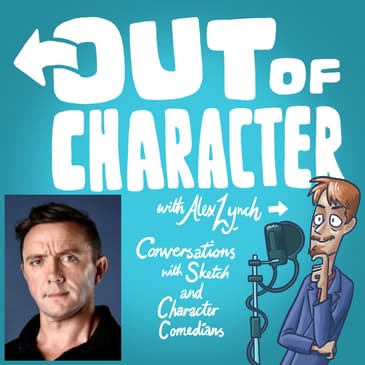

In this very special Series 5 finale, Alex chats to writer, performer and all round polymath Peter Serafinowicz (‘The Peter Serafinowicz Show’, ‘Shaun of the Dead’, ‘The Tick’) about making ‘Look Around You’, working with AI, and bringing back Brian Butterfield.
Peter also creates a character on the spot based solely on the made-up name given to him by Alex in our regular section ‘Chain(ge) of Character’. This episode was recorded 1st April 2026.
You can find more of Peter’s work at https://www.curtisbrown.co.uk/client/peter-serafinowicz-1
Keep an eye out for tickets to Peter’s live shows via social media.
Insta: @peterserafinowicz
Presented, recorded, edited and produced by Alex Lynch
Music by Naive
Artwork by Tom Crowley
A Podomedy Podcast
Special thanks to Debi Allen, Megan Maloney and Thomas Caulton
Follow the podcast at @oocharacterpod on Instagram and BlueSky.
Email oocharacterpod@gmail.com
Give £5, £10 or £20 now and help CALM in their fight against suicide: https://www.justgiving.com/page/podomedy-stay-tuned
Hosted on Acast. See acast.com/privacy for more information.
[00:00:00] This show is nominated for a 2026 Golden Lobes Podcast Award. Get in! Okay. There we go. It's the biggest round of applause I've ever had.
[00:00:15] Hello and welcome to Out Of Character, a podcast about sketch and character comedy. My name is Alex Lynch. In this show I chat to writers and performers from the world of sketch and character comedy, find out what made them venture into it, talk about their characters, maybe meet some of their characters
[00:00:43] and generally just shoot the breeze and more importantly have a laugh. This is our series finale and my special guest for episode 78 is the writer performer Peter Serafinowicz. Hey! Hi Alex! Hi! That's quite an honour to be on the finale.
[00:01:09] And yeah, thank you and thank you for pronouncing my name correctly as well. Always gives me a little buzz. Do people get it wrong often? Yeah, but they get it kind of, everyone gets it sort of slightly wrong. I don't care. It just, it's... It's quite understandable to want to have your name pronounced right. It is, I guess, you know, but I think the way that I pronounce it and the way my family
[00:01:36] pronounce it is like, I don't think it's like strictly the correct way that like, it's a Polish name and yeah, so I sort of pronounce it witch, but I think the sort of proper anglicized version of it is witch or like, you know, it's how, it's how Polish people... I just don't correct people anymore. I don't really care. And, and, uh, but, um, what's one thing I was going to say?
[00:02:05] Oh yeah, this is a funny thing is like sometimes if I get recognized by somebody like, you know, in the world, right? Yeah. And someone will come up to me and I can usually tell when it's going to happen because they're a little bit furtive and they're kind of like, I can see them sort of deciding whether or not to come and approach me.
[00:02:27] They'll say, um, excuse me, are you Peter? Um, like just, uh, just kind of tail off or Peter off actually. And, um, and it's sort of hoping that I will say, oh yeah, Sarah Finowich. Yeah. And you know, I, uh, I just find it funny that, that like they've decided, shit, how do I pronounce it?
[00:02:51] And then, no, I'll just, I'll just say Peter and, uh, but you know, I'm always delighted when somebody comes and, uh, someone recognizes me and it's usually because they've enjoyed something that I've done. So it's like, uh, it's, yeah, it's really kind of cool feeling. And I, I respect people for, for approaching me and, you know, and saying that it's great.
[00:03:17] It means a lot, you know, it's, uh, that, that something I've done is connected with someone enough that they want to come up and tell me about it, you know? Yeah. Yeah. Oh, that's, that's nice. Cause it's, it's, it is when you do me, when you do want to do that, there is always that thing of should I, or should I? And it's the kind of worst case scenario of almost like getting humiliated. Yeah. And you know, I've been in that position before and, um, Oh really?
[00:03:46] Yeah. I'm just trying to, I can't think of an example now, but like, I do know that thing of, uh, uh, yeah, just kind of dreading like a kind of, some kind of humiliation or, you know, but like if you're listening to this and you ever see me and you would like to say hello, please don't be scared. I won't humiliate you. Yeah. Yeah. Yeah. You've just been filming in Botswana, right?
[00:04:12] Yeah. So I was filming in Botswana. I was filming, uh, this, uh, I mean, I, I slightly still don't know what it is, but it was, um, I think it, it was, it was a pilot for a, a long form interview show where I was being interviewed by Michelle the Swart. Yes. Absolutely brilliant. So funny and so clever. She's also, it turns out she's a really good interviewer, right?
[00:04:41] She's got that, that skill, you know, um, and she's so, you know, she's had such an interesting life and she's, she's interested in other people. Right. And I think that's what you need to be if you're, if you're going to do it, going to be an interviewer. And, um, yeah, so the idea of this show was that we would have this kind of long chat about stuff, uh, while we're on the back of this,
[00:05:09] like four by four going through the bush and like stopping to see, oh, look, there's like 120 zebra or like a family of elephants or lions or it was crazy. We saw like everything. And the, and the sort of the premise behind the show is that when people are out on safari in the world of animals,
[00:05:30] you kind of, it kind of strips away a lot of your inhibitions and your, the bullshit that you kind of build up living in our modern world and our, um, and that the whole thing of, uh, you know, like modern city life.
[00:05:49] Yeah. Right. And, um, all these problems that you perceive as having and hangups and, oh my God, you know, and, and, and it's like being there and being just on the earth, like no roads, just like, and you're just in this world of animals and like, wow. Yeah. It was pretty cool. It's pretty cool. But I think it's, it's not, I don't think it's ever, it wasn't like intended.
[00:06:17] I don't know if it's ever going to be broadcast, which would be kind of shame. It was, but, uh, yeah, so that was, that was really cool. That's great. So she was interviewing you just as yourself. Yeah, just as myself. Wow. Yeah. And, and Michelle, you know, she's a, she's a standup. She started out as a model and now she's like, you know, she's still just standup and she's on tour at the moment, but she's, she's got like, I think she's like written two television series.
[00:06:45] She acted in a show in, uh, for HBO. Um, and you know, she's a real kind of, uh, polymath, you know, and so, uh, she's so talented and funny. And, uh, and I loved it also, you know, I, I, I did a bit of, but it was about 10, 12 years ago.
[00:07:06] I started, I, I didn't really kind of have a, uh, I was, I was a bit kind of lost in my career. I didn't, I didn't really know what my direction was. And I, I started, I did stand up for a little bit and I wasn't very good at it at all. I, I, uh, I did this, I think it was back when Twitter was, was kind of, um, still a bit frivolous. Yeah. Pleasant. Pleasant. Um, it was pleasant. It was fun. It was interesting.
[00:07:36] For me, it was also like a way of directly getting in touch with people that I were, I was fans of, uh, like for instance, like Hot Ship, right? The band Hot Ship. Yes. I love them. Yeah, me too. And I followed them on Twitter. I think, I think it was Felix from Hot Ship. I saw that he was following me and they were just about to do a music video.
[00:08:02] And Felix had wondered if I had directed anything before and would I like to direct the next video? Wow. And so he DM'd me on Twitter. Would you like to direct our next video? I was like, yes, I would. And I ended up directing three videos for them. That's brilliant. And I hadn't directed anything before, but I, I, I, I met this producer who specialised in music videos. His name is Tamsin Glasson.
[00:08:31] And, um, she said, look, as a producer, what I will do is I will just surround you with everybody that, that is super qualified to do the job. So you'll be with, with these people who are, you know, who are all experts and you can literally direct them to what you want to do and what, you know, how you want it to look. And, uh, so that gave me confidence. She said, it's not, it's not difficult directing.
[00:09:01] And, um, so I ended up directing three videos for them and I, I did like another couple of videos, uh, after that. So I was like five videos. It's not like I'm Francis Ford Copper. Like, but you know, You're not taking your artists out to dangerous situations. No, I'm trying to talk Marlon Brando out of like, out of his, his, uh, anyways, whatever.
[00:09:24] You know, but like, uh, but I did think, yeah, it was not only was it, was it, was it a lot easier than I thought, you know, be, you know, having like an amazing cinematographer and, um, you know, all of the crew, you know, and the producer. It was like anything that I wanted, she would make happen. And it was really great. It was like, you know, we were just talking before we started about like you editing this podcast, audio editing and stuff.
[00:09:53] And then that side of it, working with an editor and getting it looking the way you wanted. And, uh, I ended up directing in the third video or no, the second video I did for them. And I had, I had, uh, Laura Stone, the model, Laura Stone. She was, she was great in this thing. She, and Reggie Watts. Yes. Well, he's a, he's a big friend of mine and like a huge inspiration.
[00:10:22] And I just think he's one of, one of the funniest, most brilliant, uh, entertainers ever. And, uh, and Terrence Stamp was in this thing as well. And he got to direct Terrence Stamp. That's incredible. Yeah, man. Yeah. Like for, considering as you say, you hadn't directed before. That's quite. Yeah. When I think about it, like maybe I am Coppola. I don't know. Maybe I am.
[00:10:57] I, I, I, I'd interviewed Terrence. We, we shared the same agent, right? Yes. And I'd interviewed him on, I had this show on Six Music. I've listened to that. Yeah. Yeah. Yeah. I loved your Six Music. Oh, thanks. Take over. Thank you. Thanks. So, yeah. I, I, I think he was my first guest. When, when I, when I agreed to do the show, they were like, um, they were like, you can interview, you can, you can interview somebody every week, right?
[00:11:25] Someone related in some way to music and like, and you know, Terrence had, you know, the song Waterloo Sunset. I mean, I guess you've listened to the interview. Yeah. And it's about him, isn't it? It's about him and Julie Christie, right? And, uh, so we talked a bit about that. Have you, um, have you just directed music videos? Yeah. Do you enjoy that the most, do you reckon? Have you tried directing?
[00:11:50] Um, I tried directing like some actual scenes or like, you know, I, I, I haven't actually, um, like to try. I mean, I'd like to, um, you know, I, I, I think when I, if I think about like my career, if I, if you could call it that. Oh, you are. You can. It's like, it, but it's so, um, very bright.
[00:12:17] Like a lot of the things I've done, the acting stuff has been quite, it's quite varied. And then I've, I produced, like with, uh, Robert Popper, we did, um, we wrote and produced Look Around You together, you know? Yeah. Which obviously I want to talk about. Yeah. I mean, how did that sort of first come about?
[00:12:47] Like, how did you meet Robert and how did you both sort of get the, the idea to do a kind of parody educational series? Series. We shared this, we shared this love of creepy stuff from the 1970s that we remembered. And, um, Robert's a couple of years older than me, but we, we had, we just had a very similar
[00:13:10] experience in school of watching these, these shows where it was like this, this weird thing where I don't know how old you are. I don't know if this ever, this ever happened to you, but like there would be like, like one day a month, perhaps where the class would all go into the hall and then they would wheel this TV. Wheel in the TV on a trolley. Yeah. And that whole thing. And the whole thing of, oh my God, I'm watching TV in school.
[00:13:38] I can't fucking believe it. This is great. Not boring old school. We're watching fucking television. television. And you'd see the clock counting down to this thing, this science program. And then they start watching the thing. It'd be like, then like 20 seconds, you'd be like, oh my God, I wish I was back in, you know, learn about fucking mountains and geography class or, or just anything.
[00:14:03] It was like, it was somehow managed to be even worse than what we just escaped from. Right. And, um, it seemed like back then they didn't really know how to make shows for children in a way that like they would find them engaging and maybe find them, uh, you know, I mean, they really were sort of like dystopian kind of like, if you can imagine, there was something
[00:14:31] very 1984 about them, like the book, right. And like, this was, by the way, this was like the actual year was probably for me, like more like 1980, 79 or whatever. Like, so I was born in 72. So yeah, maybe, yeah, something like that. And, uh. You still had like really horrific public information. Yeah. Like the safety ones. Yeah. Yeah. Very cold.
[00:14:58] And, um, there are no personalities in these things. They painted a very bleak view of what life, like adult life was going to be like, you know? And, um, Robert and I met on this show that Robert had written with Mark Freeland, who eventually became like. He was head of the BBC at one point. Yeah. He was head of comedy. Comedy. Comedy. Comedy. Comedy. At the BBC.
[00:15:26] And, um, and I think Mark has his own production company now. And, uh, but anyway, you know, he, uh, and he's very funny and a lovely guy. And Robert and Mark were, uh, and Robert and Mark were, uh, were a writing team. And they wrote this show called You Are Here, uh, which was, I think it was sort of maybe that, that Matt Lucas and David Walliams are kind of, they were in it. And I think they kind of developed it with them.
[00:15:54] And this was with Naira Park. It was a big talk thing. And this was like my first, it was one of my first ever TV things. Oh, really? I think I'd done before. I think the only thing, sort of substantial thing I'd done before was, uh, How Do You Want Me, which was a comedy drama that Simon Nye wrote. Dylan Moran. Yeah, that's right. Yeah. Charlotte Coleman. Yes. Yeah.
[00:16:22] And, um, and which was great, that show, you know, and, and then this, this one, it was kind of like, it was a pilot, but it was going to be, uh, it was broadcast on channel four, 40 minute show. Like, like Nigel Planer was in it. Uh, Alfie Allen was in it. Uh. Would have been very, yeah. It was, yeah. He was, he was like 10. And, uh, so he played, so John Thompson was also in it. Yes. He, Alfie played John's son.
[00:16:52] But I remember Alfie, uh, I taught him how to do a Michael Caine impression while we were, we were, we were, we were filming, we were all filming up in, um, up in the Lake District. And, uh, he was lovely then. He's, and I've met, you know, it was, I, I, I met him again a few years ago. So having then, you know, meeting him as an adult and like, but then having seen him on
[00:17:19] Game of Thrones and, uh, and other things, you know, and, and seeing what a cool actor he'd become. And just, I remember you when you were 10 and he was cool then, you know, he's really cool. So his dad, Keith Allen was in it as well. And, uh, Sally Phillips was in it. I mean, the cast was pretty good, you know, it was pretty amazing. And, um, oh yeah. Paul Putnam was in it. Love Paul. Paul. Yeah. Just, oh, he's fantastic. And he's brilliant.
[00:17:47] He's sort of legendary among people like me, I think, you know, and I've, and I've tried to work with him whenever I, whenever I can. Yeah. Well, he's in Look Around You. Yeah. He plays, um, what is it? Len Pounds. Len Pounds. And I love how in, in series two, when you meet Clive Pounds, there's a little framed picture of Len Pounds. Yeah, yeah, yeah, yeah. It's so great. Yeah. So we wanted to have that thing that sort of, and it's like, his name is Len Pounds and
[00:18:16] it's a pun of 10 pounds, right? And Clive Pounds is a pun of five pounds. I did not make that connection. But it's like, we, we just sort of wanted to just make like a very kind of weak, contextless pun, like an, an orphan pun, you know? Um, why is he called 10, why 10 pounds? I don't know. There's no reason, but like, you know, and he's such a brilliant actor as well.
[00:18:45] Paul, he's, he's, he's great. But anyway, so we, Robert and I, uh, he was working at Granada TV at the time. Oh yeah. This, and this show that we met on, it was, it was this one thing where it was like, um, it was all set in a, like this creepy village and it was very similar in premise to, uh, the League of Gentlemen. Oh really?
[00:19:09] Which just, which came out like series one came out like about a few weeks after this and we didn't know about it. And it was like, dude, it was, I'm watching that. It was like, wow. Well, our, our show's not going to happen because like, this is fucking brilliant. You know? Had you seen them live? No, never seen them. But I, I, I, I did, I'd done some stuff with Mark Gatiss. Really most of my, in my twenties, I did like radio for stuff, radio comedy, you know?
[00:19:39] And I think Mark and I had done something together. And so I sort of slightly, I, I kind of knew him, you know? And, uh, wow, that show just was like, uh, that was really, that, that was so, uh, it was so funny. It was so confident and like, it just like arrived and like, wow, you know? Um, so Robert was working at Granada, you know, Granada or like ITB was like working ITB, right?
[00:20:07] And he could get, uh, so this is back in the day, uh, before the internet was like, it was there, but like you could send emails. You certainly couldn't send like, like videos, right? Or like, uh, YouTube. I don't think YouTube had quite happened. YouTube was 2004, 2005?
[00:20:30] 2004, so that, so, so like my sketch show, the sort of mini pilot that I made in LA in 2005 when I was out there doing pilot season. Oh, great. And, uh, made this little video sketch of like, cause I, cause I was like YouTube. Wow. Oh my God. Suddenly you could like send a link to your mom and she could click it and the video would open. She didn't have to do any, you know?
[00:21:00] Yeah. It was revolutionary, you know? And, uh, so yeah, this was back in the days of like VHS cassettes, right? Yes. And, um, we loved those old TV shows, those old educational TV shows. I don't know how we found out that we both loved them, but like we both had a very sort of surreal streak to our humor and like, uh, and you know, we just loved kind of making
[00:21:28] each other laugh with like, with like that kind of style of, of humor. And, uh, I think so. Robert got out of the archive, like some VHSs of like these old shows from the 1970s. And it's probably like the kind of thing that probably all this stuff you could just kind of search for on YouTube these days. Right. And, um, you know, but like this was definitely stuff like, like from the ITV archives that was like, oh, and he had access.
[00:21:57] He had access to them. So he ordered, he would order them through his job and they would end, they would get sent and then it would be like, right, Pete, let's, let's go. And, um, you know, we would sit around at my flat and just watch these science shows. And we were like, oh my God. This one called Experiment was the sort of, was the kind of basis for Look Around You, the first series called Experiment! Exclamation mark.
[00:22:25] And that's the only, even that makes it, it's a kind of fake out, makes you think, wow, uh, this is going to be an exciting experiment. It never, never, never was. And it was so bleak. And, um, you know, and the whole visual style of Look Around You have like the sort of pencil and the finger pointing. I was just about to say, with the hands, was that the thing of those videos? Yeah, yeah, yeah, yeah, yeah. The hand, pencil, close up of a battery, close up of a test tube, close up of, you know,
[00:22:53] a hand turning on like a Bonson burner really slowly and methodically. You know, all those things. And, uh, so that's what, in the show, that's always like my hands in those, in those things, like pointing it. And I remember as well, we, we had, when we made the series, we had the, uh, so we had these like eight episodes. And I think did we show all of them? I don't know whether it was all eight or we showed four of them, but it was like, we
[00:23:23] managed to, so we did this through talkback productions. Yes. And we said to Peter Finch, who was the executive producer, right? Yeah. And you know, it's so brilliant, you know, and, and Peter had done the, um, he produced that series with Chris Morris and Peter Cook, uh, Why Bother? So he'd done that, you know, he'd done all kinds of stuff, you know, and, uh, I love Peter. He's so brilliant.
[00:23:49] And we said to him, look, we, um, we want to have this big, partly because it was like such a weird little show, right? Like this, these like 10 minute episodes and that, you know, there's no one like in it. There's my hands in it. Right. I think you see my face like possibly twice. Yes. In the thing. And like, it was like, we, we asked him, could we, could we see how much it would cost to
[00:24:17] hire the IMAX at, um, you know, the one, the one in like the big one in town, right? Yeah. In the middle of London. Oh my God. Um, and it was like, it turned out it was like, it was about a thousand quid to hire the, to hire this. We were like fucking yes. So we had this, we had our premier look around you that, that, that little show, the IMAX. And we had, we invited all these comedy people along. That's.
[00:24:46] And dude, it was so funny to see my, you know, my fucking hand holding a pencil, like pointing, you know, sifting through some like powder, but like on the IMAX screen, it was like, so it was so crazy. But yeah, so, so we, we had that, we saw this show experiment and then there were other kind of shows from that era that again, they all, it was, there was something very kind of,
[00:25:14] um, kind of like post-apocalyptic a bit, you know, we just painted this picture of Britain that was, this was like sort of mid seventies Britain. It was just like. It's all very sepia toned, isn't it? Yeah. Very sepia toned. Like the, uh, the hairstyles. Even then when I was a kid and it was only a few years before, it just looked like the previous century to me. It was like, it was so old fashioned.
[00:25:43] And the clothes were so different. The, uh, and you know, it seemed like there was no fun in this world that they portrayed, you know? And so it was like Robert and I, we would sit and, um, smoke weed, watch this show. And then we, then we were like, let's make, let's make our own. Robert was like a producer. Yeah. And he's so, um, he's so industrious and can make things happen.
[00:26:11] And like, you know, and he was like, let's do this. We'll write, we'll, we'll make a pilot ourselves. We like both put like, I think it cost us like about three grand, six grand, something like that between us to pay for things that we couldn't get for free. But we did like, we had like favors and stuff. And, uh, but there were just, there were things like we had to pay for like insurance. We had to hire a camera and it was sort of that kind of thing.
[00:26:38] But like the cameraman and all the crew did it for free or like cheap, you know? And, and we shot it on 16 mil film, shot it on like exactly how they shot it. Yeah. Yeah. I mean, I was going to say, cause it's very faithful to those, those old educational videos was the kind of in, if there was like an intention, uh, there, was that kind of the plan? Because it was kind of like, if we want to parody this thing, we should do it properly and make it look like the real thing. That's it.
[00:27:07] Or were you trying to sort of almost trick an audience into thinking it was real? I mean, part of both of those really. And I suppose like if you, if you're parodying a style, in my opinion, you need to make sure that it looks like the thing that you're parodying, right? Absolutely. To me. And, and for this, for this kind of vibe, this show, it was like, and it was a thing that I'd, I suppose I'd learned from watching the day to day.
[00:27:36] And then brass eye. Yes. You know, the bits where they would have like archive footage or like in the day to day, like they have like, you know, uh, a clip from like a sort of Coronation Street style show. Yes. I remember talking to the director of that series, um, and, um, saying what an inspiration that, that was like whenever they did any kind of, you know, I remember he was saying
[00:28:06] that for that black and white scene from this like Coronation Street kind of show. Yes. They managed to get one of these old TV cameras that gave exactly that sort of weird, where the highlights kind of pop and it's looks sort of smudgy and smeary and, yeah. And it just means that there is something about like, you know, you're saying about like the, uh, was the intention to kind of fool people.
[00:28:35] And I suppose thinking about it, it was like watching that show. So it's sort of delicious. Cause like with that, with that particular thing that they did, you know, I remember watching it and it's like part of me believes that it's, it's like, I'm trying to look for the, it's like, Oh no, no, no. This is a real thing because it's real. Oh wait, hang on now. They're swearing. Right.
[00:29:01] And like, you know, um, and there's something like really kind of satisfying about that, you know, and so I know like since this, since we did that show, it's like, you know, I've heard from like over the years, it's like teachers have said they've put this on in lessons and just like kind of let the students watch it and they think it's like a real show. Funnily enough, that happened to me when I was at school.
[00:29:30] The first time I saw Look Around You was in a science lesson. They put on the, the, the ants igloo one. And at first, and obviously by the time we were just like, Oh, this is hilarious. Like this is brilliant. And so weird. And then the thanks ants, thanks. Right. But yeah, that was the first, the first time I saw Look Around You was in a science lesson. We'll come back to the ants later. In the meantime, thanks ants. Thanks.
[00:30:07] It's funny thinking about that thing. The, cause like we film like real ants and we had a real igloo. I think I've still got the igloo upstairs. I've got like a box of props from that show. But like we, we, there were real ants and also, but also there were, there were fake, there were like CG ants, right? There were like VFX ants and ice cubes that we use.
[00:30:32] So we tried to mix in this, this VFX stuff and then, which was all, you know, it was kind of a lot more difficult to do then. It's like more kind of rudimentary than it is now. And yeah. Were you quite technical yourself at that time? Yeah. I, I was into that, you know, and I was. Cause you did the music for it, didn't you? Well, Robert and I both did the, did the music and I mainly did the, the synth music. Yes.
[00:30:58] And Robert is, Robert did the guitar music. Cause Robert's an amazing classical guitarist, right? Like he could perform at the Royal Festival Hall, do it like a, you know, he's like, he's really, really, really good. Wow. And I sort of know how to kind of make up some arpeggios on a synthesizer, right? And like, and, but I, I loved doing all that.
[00:31:25] And I loved, you know, at the time, like, you know, we sort of went on to do like, you know, edit stuff and I was always kind of, was always into that kind of thing. Like, you know, for me, like that thing of the ants and like using, you know, mixing real film and then with CG, that would, that, that's something that I've always, I kind of built on that over the years.
[00:31:50] And the thing that I'm doing right now, you know, I'm really, I've gone down not just rabbit holes, not just rabbit holes, termite tunnels. It's, it's, I'm doing this, I've been sort of working with AI for like the last sort of six years.
[00:32:14] So like, I'm trying to, so I, when I started working with AI, I was like, it was, that was when AI was kind of cool, right? Yeah, yeah, yeah. And now it's like, you know, everyone's kind of sick of it and, and, and, you know, kind of, kind of rightly so, but, but the thing I'm doing with it is sort of to jump ahead from
[00:32:41] like, from there to there to like now is like, I'm doing this thing, which is, I do this, this live performance. So I did it, I did this show Elvis, right? I came to see it. Did you? Dude, dude, which one did you see? It was when you did it in 2024 at the Soho Theatre. So it's 2024. So like, that was just to explain what the show is.
[00:33:06] I'm Elvis and I'm, and I'm dressed like him and I'm made up like him in a costume and, and I do songs that he never performed. I do, I do a couple of his hits for the, you know, for people who are Elvis fans. And, but I, I, you know, I, the idea was it was, it was originally called the Elvis 2023 comeback special. Right. And like, but I've got a camera tracking me on stage, which in the one you saw that I
[00:33:36] didn't have that, the camera fucked up. And, uh. Well, that's showing, that's showing like Elvis in the back. So it was, so it was basically on the, there's a live video screen above me. It was supposed to be huge and it was like kind of tiny, but it was like, but then it live changes my face to Elvis. Right. Yeah. And I did, that was in the one I saw. Yes. But the thing was, I bought this new Sony camera that's like got AI tracking. Right. Oh wow.
[00:34:06] And I bought it for that show. And I thought this is like an expensive camera, but I'm, I'm going to, you know, this is like an investment if we're going to do this show. I want it to, it like follows me all around the stage. I don't need a cameraman. It's like a thing that I can kind of do, do it as a sort of one man show. Although I did have my producer, Samantha there pulling her hair up behind the scenes. Right.
[00:34:31] And, uh, so, um, uh, I had this, uh, and I, I bought this camera and cause previously I'd done it the year before with like a little USB sort of webcam that did sort of the same thing, but I wanted to like do it professionally. And I was trying to get this AI tracking thing to work, which basically means that it keeps me the same size in shot.
[00:34:57] It like zooms in and out and follows me around the stage wherever I am, but it keeps like the same, the same shot size. So like, it's like a medium shot. So it would cut off. It's sort of below, just below my chest and then give me a little bit of headroom and it keeps me there. And then I've got the computer doing the deep fake face of Elvis. And so that was the idea. And then I realized this camera that I bought for this particular purpose.
[00:35:26] It was, I was like, come get this AI thing to work. And then I looked on the website, the Sony website. It's like after two days of getting it to work, you know, it was all listing all the features of the camera and it said this AI tracking. There was an asterisk next to that line. I was like, what? And I looked at the bottom and said, this feature will be available in a software update in like summer 2025. I was like, oh no, no. So I had to, to use that camera.
[00:35:54] It was basically like, I was, I felt it was a bit of a disaster because like I, it just had to be like a locked off static shot. And just the effect was like, I mean, it was, the whole thing was a work in progress. Right. And it was like, and, and also like, I just, I just was like, well, I've got to get on with the show and just do the show. And like, that's the thing is like, it doesn't really matter about this kind of thing, you
[00:36:23] know, and I had, um, brilliant, um, Chili Gonzalez musician. Right. So he, I don't know whether you saw it when he did it. Uh, so there was a first, I did the first night on stage. It was just me and my laptop and it kept kind of fucking up and I was, I was, I was singing to backing tracks and. Oh no, I think I did see it with Chili. Yeah. So then Chili, then it was like after that first performance, it was a bit of a disaster.
[00:36:52] The, the camera had, uh, not worked in the way I wanted it to. The deep fake didn't look very good. The, um, and I spent this whole show, you know, I kind of made a, it was kind of made fun of it. Right. Cause I was like, you know, it was like, I'm so sorry. I had everything running from my Mac book. And I was like, you know, Apple say that, you know, when you, if, if you subscribe to
[00:37:20] the beta program to download the, if you use those features on the beta OS, it's like, make sure you're not doing anything important, like anything like work related or a live show for instance. But I just can't resist those, those features, man. And I like, I'm regretting it now. I tell you, ladies and gentlemen, right. You know, so it was like, I made kind of fun of this thing, but like, then I rang Chili the neck that night or like he came around to my place.
[00:37:48] And I said, dude, I've got like a whole week of these shows to do. It went terrible last night. He was like, you need someone on stage with you. You need like a musician with you. And that turns it into a show. And like he, uh, we spent the afternoon together. We made a set list, which I, that was one of the things I'd forgotten to do. It was like, I was so dismayed by the, by this camera thing. I was sort of, sort of kind of got depressed and like, oh man.
[00:38:16] And then Chili was like such a great friend and like, uh, and, and just helped me bash out these things. And then he performed with me that night. Yeah. But he couldn't do the rest of the week. And I managed to get, based on what Chili had done, I managed to get this other guy, Dre, um, who was, um, not Dr. Dre. Um, but he's like this brilliant pianist. He was a friend of somebody that Samantha Spears, who was the producer.
[00:38:47] She knew him and she was like, I found this guy. And he turned out to be like the perfect guy. And he was just this brilliant pianist. I think I came to one of those ones. Yeah. I do remember there was a pianist on stage. So he was like, so we came up with this thing, which was, uh, he was playing, or I don't know whether it was him with Chili, but it was like, when we came up with this thing where we did Jolene as Elvis, right. Yeah. Yeah. And they were playing it as with a harpsichord sound on the synthesizer.
[00:39:16] And I did this whole thing where it was like, this is Dolly Parton wrote this song, but, uh, she actually, she actually didn't write the song. She adapted it from originally by Henry the eighth. And, uh, and it was about one of his, his, uh, wives. And, uh, anyway, and then to go into the song and I turned it into bowling, bowling. And like, it's all about, I believe it was, it was really just like, so such a cool, funny thing. Right.
[00:39:45] I, uh, I just loved it. But anyway, since then, so that was like the last time that was like two years ago. Yeah. This work in progress, the technology, I just can't call it tech. I'm sorry. But like the technology was like, it just wasn't up to it, you know? And it was all stuff that I was doing myself, you know, it was like, um, I was using like
[00:40:09] existing, like open source code and like kind of putting these modules together. Like I didn't code, you know, but like, but now I've got this, this system, which is, so I've been using clawed code to write these like, um, and rewrite these, like these, uh, face recognition, face swapping, uh, modules and algorithms. And like, You're having to code all of them. Yeah.
[00:40:39] Yeah. God. So, but it's like now I've got this system where, and I'll show, I'll show you after this, right? It's like, uh, I can, uh, live on this screen. It's like big projector screen. It's like totally smooth. It's like instant. The quality is great. And I can flip between any face that I want and I can, I can swap as, as quickly as I can change my voice and my demeanor for the character. Goodness.
[00:41:08] I can flip between these, all these different characters. And it's like, so at the moment I'm writing sketches with basically want to do this like a kind of live show that's like a similar kind of vibe to my sketch show. Oh, great. Yeah. But it's like live and it's just a one man show, but I'm on stage. It's like a minimal set. There's a big screen above me and it just shows me right on this screen.
[00:41:38] Yeah. I mean, it was a bit like, I remember going to see Paul McCartney years ago at the O2 and I wasn't that far away from the stage and I could just about, it's probably like six or eight rows from the stage. And I could, I could just about make up actual Paul's face, right. Wow. From where I was sitting. But there was a massive projector screen above him. Yes. And you just watch that because it's like, you know, you can see him and you see all
[00:42:08] his, you know, all his, you know, he's doing all his jokes and his, you know, and it was amazing show, you know, it was like, you know, it was a three hour show and this is guy was, you know, in his, but he was in his seventies, you know, and I mean, he just did one the other night. He's like 82. He's got an album coming out. He's got another album coming out. He's fucking amazing, man. I fucking love him. I love him.
[00:42:32] And so it was partly inspired by that and partly by the ABBA show as well. ABBA Void, yes. So the Elvis one was like, was, uh, was definitely inspired by that. And like, I thought that was brilliant, that show. And the only drawback really for me is that the show is like, is pre-recorded. It's like, although this, you know, you see these kind of holographic. Yes. Abbans on stage, but there's no, they can't interact with the audience. Sure.
[00:43:03] I mean, they do a couple of little kind of funny kind of bits about that where they kind of fake it. Obviously it's pre-recorded. It's great, you know, and, uh. But that's amazing if you can actually be spontaneous with this technology. Dude, it's so cool. And I think it's going to like, I don't know how people are going to react to this because like, it's so, it's so weird. It's like, and I've got like a little stream deck controller. Yeah. That I've got all these buttons on where I assign.
[00:43:32] I assign them to different faces or I can put a script in, press a button that goes to the next character. And it changes the shot as well. Right. That's bizarre. So it's a thing. I just met up with, um, Josh Berry. Yes. Yeah. I know Josh. Yes. Yeah. Yes. So we just met up. I mean, for like the first time, right. It was like, he ended up coming over here on, uh, Monday. We'd had a phone call.
[00:44:00] He came over and I showed him, I said, dude, I've got this thing. It's going to like, it's going to blow your mind. Right. Cause you know, his, he's like really fucking amazing impressionist. Right. And he's so, he's, I mean, he's so funny. He's very funny, but like seeing his, like that Louis Theroux video that was going around. And then we've seen it where he's with Louis and he's doing Louis to Louis. Oh no, I haven't seen it. Oh my God. Oh, you got to check it out. It's great. I'll check that.
[00:44:27] And like something like that could be kind of in different hands or lips really, the larynxes. It could be sort of cheesy or whatever it could be. It's just great. Cause the way Josh is like, it was such a, it's like magic. He was doing it here, doing that voice. Like, dude, it's like suddenly like Louis Theroux's there. Right.
[00:44:52] And, uh, so he was having a, a mess around on my system upstairs in the studio. It was like, uh, switching his face to Louis Theroux and then Gordon Ramsay. And, uh, so you're going to be Michael Caine. Is that the, so yeah, I mean, I can be, you know, um, yeah, I mean, you know, that's one thing that I'm doing in this, in this show is doing Michael, you know, I do Michael, I mean, I do lots of people, Alex, you know, and of course I've worked with him. I was in a movie with him.
[00:45:22] And, uh, so I got to, I got to like meet him and spend time with him and do it. I did all these scenes with him in, in, in this movie, uh, called going in style. And he was just, I just loved him. I mean, it was just like, he really didn't disappoint. He was like, I just like, you know, to me, he's one of my heroes. Right. And I love, I love all the stuff he's done. I love that.
[00:45:50] Like, you know, people have sort of made fun of him over the years for being, he's, you know, it's always some version of this kind of voice, you know, but he's actually done so much varied stuff like within his, you know, he's like, he really is a brilliant actor, you know? And, uh, and he's, he's a, he was a lovely guy. And, uh, so I was obsessed with this thing that he did the, um, the masterclass. The acting masterclass.
[00:46:17] Like, and you know, I did a sketch about it on my show with him and then that spawned like these other ones. And, um, but like, although I still made fun of that sketch, it's like, it's one of the treasures of my life really that show because, because like it is, it's kind of funny, you know, Mike Rosario is, you know, his, his leather jacket and there's all these, these acting students and Celia Imrie is one of them. Yeah. I know.
[00:46:41] And, uh, you know, he's, he's sort of, uh, telling him how to act for like TV and film and like, and it's like, dude, nobody ever tells actors what Michael Caine tells you in this thing. So if you're an actor, if you want to get into acting and you haven't seen this thing, it's got these tips that are so simple, but like essential to movie acting that I did not know. And I probably like, I wouldn't have done as much as I have.
[00:47:11] I wouldn't have been in as many films and shows because of like just that thing of just keeping your eyes still and you're like kind of de-amplifying your performance as the camera gets closer to your face. It like seems kind of like when you say that you're like, Oh yeah, I get it. You know, but like, it's only when he demonstrates that you're like, shit. Yeah. Wow. Cause like I'm quite a sort of rubber faced.
[00:47:40] I'm like, you know, my, I'm quite cartoony. You're expressive. I'm very, I would say like quite like expressive, like sort of a Jim Carrey kind of like, I feel like I'm kind of cartoony, you know? And so anyway, it's like stuff like that, that I realized from that show. I've got to, this, this, uh, haven't really followed a thread. No, no, no, no. So, I mean, actually whilst we're on the Michael Caine thing, cause you worked with him.
[00:48:09] Did you find having met him and spent time with him? Did your impression change or do you still do the same Michael Caine impression? No, no, definitely. It did. It did change. And, uh, just hearing it in the same room as you, you know, I remember him sitting next to me in the makeup truck, both of us getting our, you know, whatever. Yeah. Beautified.
[00:48:32] And, uh, it was, you know, it was like six 30 AM and, uh, I remember him, you know, still so shy of him, you know, but like, so, so friendly and like so professional. I remember him getting a phone call from his wife about like, they were going to go to some restaurant that night. And it's like, I remember, so his wife Shakira and had been married since like the sixties, late sixties.
[00:48:59] His phone goes and it's Shakira and he said, Oh, it's my wife. And I was like, hello, my darling. How are you? You know, and I was just like, Oh my God, what a sweet relationship they've got. And it's like, it's just like, Oh my God, man. He's like, he's just, like I said before, he's the real deal. You know, he's just the real, you know, and your sketches of, of that, like, are, you can see that they're done with love. There's no malice in them.
[00:49:25] They're just, they're just hilariously heightened, really heightened in that kind of. I guess, right. I guess like the height and they're sort of like, but I wouldn't say they're like exaggerated performances. Right. I would say that in sort of, sort of odd situations. A cigar don't look like a cigar on a movie camera. Let me show you what I mean. Now look, there's my cigar. Now look at it through the monitor there, the movie camera. See, look at my cigar.
[00:49:55] Look, see, it looks like a sausage. In fact, has anyone got any sausages? Hold them in front of the movie camera. See, looks like a lovely box of cigars. I don't know why it is. I think it's something to do with the lenses or something. But like, I was so into Josh Berry about this as well. Yes. Because I believe that we both do impersonations in, from a similar place, right? And like, we do it in a similar way where, you know, he was saying as well, I was like,
[00:50:22] these impressions that he does are very affectionate and like, tributes to the people, you know, really. And even people who I don't particularly like. Yeah. But I think I still kind of like them to an extent, you know, and I feel that, you know. Anyway, and that's what Josh was saying as well. Like, I'm excited. We're going to, we're going to be doing something together.
[00:50:48] We're kind of developing this podcast where it was like, we, like among other things, we'll talk about like impressions and how and why we do them. And, you know, it's kind of, yeah, he's so, so brilliant. I'm really looking forward to starting that, you know.
[00:51:06] And that's what this live show that I'm doing is, it's basically like, I'm doing like, I don't know how many characters I do in the show, but it's like, it's quite a few, right? And like, you know, and it's this, so like a do this, I want to do this thing where it's like, um, uh, Michael Caine doing, um, that acting masterclass thing, but it's like sort of update it. Right. Okay. Yeah.
[00:51:33] Doing this thing about, uh, so, you know, Netflix now are saying to writers that you've got to, um, you've got to keep reminding the viewer of what they're watching and the plot and the, uh, you know, because everyone's checking their socials. And, uh, you know, they're on their Instagram and, uh, texting their mom, whatever. And, uh, while the TV's on.
[00:51:56] So, um, and I'm doing these things where it's like doing like reissued versions of movies where it's like, okay, let's hurry up. Right now I'm, I'm, I'm, I'm about to meet, um, Noel Coward. I can't remember his character name in this, but he's, uh, he's, he's in prison and he's going to help us, uh, carry out this big, robbery. Also, we've got this order for these minis. We're going to use these minis for this heist. Anyway, check your messages.
[00:52:26] Right. Let's get back to the movie. Right. Like he does that. Like, yeah, that's brilliant. You know, so, so, um, so I guess it's sort of like a similar sort of vibe to like what I did before, but you see, I'm doing it all live. So at the beginning of the show, I'm, I'm interviewing, I'm, I'm doing Terry Wogan and, uh, and I used to do Terry. I used to know him. Yes.
[00:52:50] But not well, but he knew that I, you know, I, he, he sanctioned me to do the impression of him. And I, and I was on his, I was on his radio two show a couple of times with him. Um, and he's another one, man. He was the real fucking deal. He's just, what a beauty. What a, um, everyone who worked with him loved him. He's just so, you know, he's just like a city. He's like a silly man. Right. As well. Right. He's just like, like silly sense of humor.
[00:53:18] But like, I, I think I'm sort of a bit similar to him in a way. Cause he looks sort of, he, you know, he always looked like he's like, um, important, you know, he's like this. He's like this white guy. Right. And he's all kind of, you know, he's in a suit and he's, but he's like, he's kind of just like, he's silly. He's a silly man. You know, he's got this voice that sounds, you know, it sounds authoritative.
[00:53:43] He's like, and, um, so I do him on this. I've got this like cool way of doing him. Uh, so I'm, I'm doing, I'm saying my, my, my, uh, my, my, my first guest is, uh, Peter Serafinowicz, the actor. Uh, Preshness. Now you're telling us about this live show you're doing that involves AI.
[00:54:07] And then I'm like, yeah, well it's yet AI and really all, but all it's doing is give, gives me like these perfect masks on this video screen. So there's a video screen above. Yeah. Yeah. Yeah. And I, it's like, I can, whoever I'm impersonating, it switches my face to that person's face. Right. Okay. So tell me, do you do an impression of me? It's like, but I'm on stage like doing that.
[00:54:35] And as I'm doing it, my face is like Terry Wogan. And then it flips to me. Like I'm interviewing myself as him. Right. And so it's quite something. It's like, it sounds quite disorientating. Maybe it is. Yeah. I mean, I remember when I watched, when I watched your Elvis show, just seeing Elvis working an iPad was weird to me. Yeah. Yeah. Yeah. It was really funny, but it was just like, Oh, this is just bizarre.
[00:55:03] So it's like, you see me on the stage and like, so my face isn't changing. Like my actual face in real life. Yes. IRL. Yeah. And then, but at the same time you're watching the screen, you're kind of watching this live thing on the, on the, on the screen. But you can also see it's just a man talking to himself on stage. It's just a man is a fucking lunatic on stage talking to himself.
[00:55:32] And, um, it's kind of, uh, you know, I guess in a way, like, I don't know if you ever saw War Horse. Right. Did you ever see that play? I didn't actually know, but I know the whole, like the puppetry of it. The puppetry of it. And they have these amazing puppeteers that have these horses that, that you can see the puppeteers that, that are operating these horse, like two people. I think it is per horse.
[00:55:58] You know, they're like in kind of black sort of suits, but like they're not like, it's not distracting you. It's not distracting. It doesn't take it out of it. No. And it's sort of like, it adds this extra dimension to the thing. Right. It's like the, the conceit of it is they're not trying to kind of dazzle you and pretend that it's like, they're not like these people aren't like actually invisible.
[00:56:21] You can see them, but like once you kind of get used to watching it, you get to the point where you can see the horses as real characters, entities themselves. That's it. You can see these people operating them, but you're watching their, their artistry and like. Oh, completely. It's, it's, it's quite something. I recently went to a My Neighbor Tutorow. Oh, that's amazing. And that was just phenomenal. That, that was like a little piece of magic. That was. I agree.
[00:56:51] And I think that's like, I'm just goosebumping thinking about that show. Yeah. That's one of the best things I've ever, ever seen in, in the theater or anywhere. It's wonderful, isn't it? It's just exactly. And for the same thing that you say, like you, you know that there are people in black moving the puppets, but you are watching the puppet. You're watching everything else but them. Yeah. And it's like, you, you sort of can kind of, I don't know, you can kind of ignore them in a way.
[00:57:20] But you're also not ignoring them. I mean, you're kind of acknowledging, you can acknowledge their, like I say, their artistry and their skill and their, and how they embody these characters well. It's like a weird thing.
[00:57:38] I don't believe there is such a thing as failure. Because I see each failure as a lesson learned. Which means I've learned at least 1,400 lessons and counting.
[00:58:08] I can't teach you all of those lessons tonight because A, we don't have enough time. And B, I've forgotten most of them. Let's move on to Brian Butterfield. Okay, yeah, yeah, yeah. You brought that one back live. I mean, we've talked about the sort of... Did you see that show? Yeah, sort of twice. Dude, bless you. Thank you. And I just kind of wondered how, when you brought it back, because obviously you had done that character on TV and like filmed. Yeah.
[00:58:38] How was it doing it live in terms of the sort of, did you feel that you had more limitations because it was live? Does the, wearing the prosthetics and everything just make it harder? Or was it more, did you get more of a buzz from it? Well, I guess there's a few things there, right? So this was a character when we were approached to see if we were interested in doing a Brian Butterfield live show tour.
[00:59:03] It was partly because Matt Holness had just done his, he was doing this tour of his character, his Garth Marenghi character, right? It was just really, really funny. But it was like, it was of a similar age in terms of, it was like, it kind of felt like a kind of similar kind of had a cult following a bit. Yes. Similar to like what Brian had, like, hadn't been on TV in years and years.
[00:59:33] But like people who knew and people who like, you know, there was like, there was a lot of stuff on YouTube and there was like a, certainly a fan base. Yes. That had sort of steadily grown, you know? And so we thought, yeah, okay, this is a great idea. And I suppose for me, the first thing was that I'd only ever done them in like a few sketches, right?
[01:00:01] It was only kind of like the total amount of Butterfield stuff I'd done was like, not even like half an hour if you compiled it all, right? Probably like a lot less than that, right? And the character himself was based on originally this, this actual ad that my brother and I, James, who's like the co-creator of Butterfield. And like, you know, he's a brilliant writer and comedy producer and et cetera.
[01:00:31] And he produced my sketch show and did then, he did like Sick Note. Yes, yes, yes. And lots of other things. Anyway, so we, he was based on this actual real guy that we saw doing this advert for insurance. And it looked like it was the guy who owned the company said, look, I'm just going to do this. We're not going to pay for an actor. I could do this myself and we'll save money and I will fraud this commercial. And they're like, are you sure?
[01:01:00] Yes, that's what we thought. And then we found out, it was like when we started shooting the sketch shows, we found out from, it was like the camera assistant. She had worked with this guy and she said, it's based on this guy. He is an actor and they did hire him for this thing. His name was Basil Soper. He's dead now, I think.
[01:01:22] But he had, you know, we based it on this, I mean, but it was like, that was the basis for it. It wasn't like a slavish sort of recreation of this guy. It was, although he did kind of, we did base his appearance on this guy, but it sort of became this guy who's like the world's worst businessman.
[01:01:49] He's like, he's like an older guy and he's like a, he's like a big fat guy, but like he's got like lots of energy. And that's it yet. And enthusiasm for these, these clearly very flawed business enterprises. Right. But anyway, having said all that was like, we wrote this.
[01:02:18] So with James and Nat Saunders, James Wright and partner and the Dawson brothers who've written for Brian Butterfield. Steve's done this. Steve's done this really. I mean, Steve, man, I love him. I love those guys. And like, he's so clever. And, and, and those guys, well, the Dawson's man, I just, yeah, they've written for me for years and years.
[01:02:43] And we've like, they're writing with these sketches with me for, for this live show, which is, you know, it's like, I'm so pleased like that. I, you know, it's like quite a, they're like the best in the business. Right. Yeah. And they know me better than I know myself as well. So, you know, well, we all came up with this thing, the call of now live show is like a business seminar.
[01:03:11] And is the kind of the basis for it. And we kind of had to, part of it was like sort of defining Brian's character because we've done stuff with him. Like we wrote a sitcom that we commissioned by the BBC to write the sitcom and it didn't get picked up by the BBC, but this was about 10 years ago. But we might be doing it. It's like, it's really funny. We've kind of got it out again. Yeah. It's like really funny. Right.
[01:03:40] And, uh, for me, it was like, I wanted to know if I'm going to be this character for like two hours on stage, I need to not only know who he is. Right. Really kind of know who this character is because I don't want to, I mean, I know he's a silly character, but like he's, he's a real, when I do him, I'm doing him as a real person. Yeah. So it was like things like a thing that would, was kind of bothering me was like, how am I going to deal with hecklers? Right.
[01:04:10] And like more people. And we had it in the show where it was like people, because there were a lot of audience interactions. You know, we did this thing, um, Brian's den where they would pitch. Oh yeah. And we had this thing where like when you come into the theater, there's a QR code that you scan and you could send your business pitch to Brian. Yes.
[01:04:32] And then it was like, that was my favorite bit of like, I mean, there were lots of high points that show, but like doing the, um, interval, I would be as Brian having a cigarette round the back of the theater. And it would be me and like the Dawson's right. Going through the audience suggestions and picking our three favorite ones. So I was, so, you know, I'm thinking of things that, that I could say about them.
[01:05:01] Um, and what was great was like, this was with the whole show where it was like everyone who came along, they're in on the joke and they all play along with it. Right. And like, but then it was like, some people didn't, some people are like, try to kind of subvert it or be like funny in their own way. Sure. Yeah.
[01:05:30] It's like, how do I deal with those people? Like, and it didn't take me long to figure it out, but it was like, cause like Brian doesn't like, he's not, um, you know, he's, he kind of has authority, but he's like, he's not like never kind of swear at somebody. Or he's like, he doesn't do conflict. Like he does. I mean, it's like he, he might have to write. It's like, so it's like you have these conflict situations. Yes.
[01:05:56] How do I deal with it without like, I don't know, breaking character or like swearing doesn't swear at all. It doesn't, you know, but it was like, so we do this also this thing, the perfect interview where it's like, I get people on stage and I cast them. I was Daniel Day-Lewis. Were you, do you know what? It's crazy, right? Cause like, this is true. It's like, I can kind of remember you as Daniel Day-Lewis. You know, our Daniel Day-Lewis.
[01:06:26] And then we'd have, you know, it was every like few nights there'd be somebody who would kind of, who wasn't playing along properly or like would try and do their own kind of funny thing or wouldn't do what I said, wouldn't read out what was on the card. Right. Yeah. Yeah. So, you know, in those situations I'd be, oh, so you did, you didn't read what was on the card. You made something up yourself then, didn't you? And they'd be like, yes. And I'd say, oh, you're an amateur comedian then, are you?
[01:06:56] That would really get the audience on my side, you know? That's brilliant. Kind of, you know. And also the great thing for me was, so I did it 23 and 24. And in 23, I did these after the show. So, like, I would do these meet and greets. The certificate. With the certificate. Yes. So, like, you could get your certificate signed by Brian Butterfield and have a photo with him, right? And it was like, so I'd just done this. I'd been on stage for like two hours.
[01:07:25] The prosthetics and stuff, you know, it was a bit of a petty. It was like, we had a few teeth and problems the first few shows, but eventually it was kind of fine. It only takes about an hour to get, you've got two makeup artists and it takes about an hour for them to put it all on and the suit. Wow. And my mom designed a, she's like genius.
[01:07:50] She designed the fat suit, which originally I was wearing like a traditional fat suit filled with human fat. No, no, no. It's filled with like feathers or whatever. Like, it's like a kind of duvet or whatever. And it was so ridiculously hot. It's just like one you'd wear in a, you know, in a TV show, whatever. And for short periods of time, not jumping around on stage. You know, and then my mom made this one. It was a hollow fat suit.
[01:08:19] So it was kind of had a similar kind of design to like a whale bone skirt. Right. So it's like a, it was like a hollow thing where it's like made out of this like stiff foam that was curved around to make a belly and a chest piece. And it just meant it looks like, it looks like a big fat suit, but it's like, there's like air inside. And it's like light.
[01:08:43] And I could, you know, I could run around and, you know, cause it was kind of surprisingly kind of like physical show. Right. But yeah. And then afterwards meeting these people with their certificates. Like there'd be like a hundred people waiting in line with these certificates and they're all adults. Right. It's terrific. And they'd be like, it was such a weird thing. Cause I was in this in character still. I was like in the prosthetic makeup.
[01:09:10] I'm in the suit and it's like, you know, I'm a big, I'm like six, four. Right. And like as Brian. So then I'm like, you know, I'm big as well. So I come out, you know, and they'll see me coming towards them. Hey, you know, but they're all like kind of well behaved. And it's like this sort of similar vibe to kids waiting to see father Christmas. It was like, it was like that because they're, they're all still playing along with the joke.
[01:09:39] And it's like, I'm still, I've not, you know, hello. What's your name? It's like, I'm in character. And like all these people who were there, they've enjoyed the show and they're like kind of nervous of meeting. It's like that weird thing again of like, who am I meeting? I'm meeting this. I know it's a fictional character. I know it's the actor Peter Serafinowicz inside there. But still, you know, so they would play along with it so well.
[01:10:07] Be like, they would say, you know, when I, when I gave it, I'd say, well, thank you very much. Thank you. Good luck with your business. And then it would be like, I'd spend like sort of a minute with each one or whatever. And then, and sometimes they'd say to me, and I just like to say, would you, would you pass on to your friend, Peter Serafinowicz? Then I'm a big fan of his and I say, I don't know who you're talking about. It's like, it's so weird and fun, you know. Right.
[01:10:41] So this is the last section of the podcast. It's called Chain-er of Character. Okay. And this name has been gifted to you by Gabby Best. Gabby Best. Cool name. So the name she has given you is Williver Hampshbone. Williver Hampshbone. So who is Williver Hampshbone? Williver Hampshbone.
[01:11:04] I guess she could be, she could be one of the anchors on, on CNN International. That's who she sounds like. What is it? Will, Williver. Williver. Williver Hampshbone. On CNN. Yes. This is, this is Williver Hampshbone in, in where would she be? In, in, this is, this is CNN International.
[01:11:33] I'm Williver Hampshbone in Lichtenstein. Maybe, I don't know. That's what it sounds like to me. Yeah, yeah. That's great. That's like, you know, they've got some crazy names, those, those CNN correspondents. There's like one guy called Koi Wire. Koi Wire. C-O-Y. Koi, right? Koi, yeah. That's fucking, that's weird anyway. Wires. Last name's Y. I'm Koi Wire. Koi Wire. And he's like, he's like, does Williver Hampshbone like her job at CNN? I think so.
[01:12:02] I think they all like it. Yeah. I think it seems like, I don't see anybody on CNN who's like, who looks dissatisfied with their job. I think they're like, they know it's kind of quite a cushy number. What do you think's kind of like her most, sort of her, her moment like that made everyone go, oh, that's Williver Hampshbone. Williver Hampshbone. I guess like, it seems like these correspondents have like, they'll have like their area of expertise.
[01:12:30] Like, who's the one? I don't know whether you know. Richard Quest. Richard Quest. Who's like the financial guy. And I'm very fond of him. I like him. He's got a crazy voice and he sounds like a Robert Popper character. And so he like, he like sometimes he's, he's like basically doing the news for an hour, but he's like the financial news guy. But then also they send them around the world to do these like little travelogues and he likes to kind of.
[01:13:00] And you think Williver would be one of those. But I think she, I think she would have some kind of, yeah, I think she's like into like food or pastries or something. And then she goes and finds like these patisseries all over the world. That's her thing. You know, she's like, you know, today in, so we're here with this, you're a pastry designer. You know, they're making these new kind of new pastries.
[01:13:28] Like with AI now we can, we can synthesize like some pastry structures that we'd never even thought were possible, you know, that kind of thing. Yes. Yeah. So yeah, that's, that's Williver Hampshbone. Can you tell me the name you are going to pass on to my next guest? Okay. Well, I remember when my kids were little, they were probably like about six and eight had
[01:13:55] this thing where, you know, one of those, those things where you kind of, as a kid, you just, you've got like a funny joke, whatever. You just like on a roll and it's like, you just can't stop laughing. And it was like, we had this thing for about 20 minutes where my kids trying to think of makeup character names. Oh, great. Just makeup names. Yeah. And, you know, I remember writing them all down. That's great.
[01:14:24] I put them all somewhere and they were so inventive and silly and, and I was going to use one of those. And so the, the, the name is Listwin Boo bars. Listwin Boo bars. So it's Listwin, L-I-S-T-W-Y-N. And then Boo bars, Boo, B-O-O-B-A-R-S. Oh my God. So who, so who is Listwin Boo bars? We shall find out on the next series of Out of Character.
[01:14:54] In the meantime, Peter, I don't know what to say. This has been such a privilege. You've been such an inspiration to me. So I really do appreciate you coming on the podcast and speaking to me. Thank you so much, man. Thank you. Well, it's been a pleasure and I'm absolutely, you know, I'm so flattered that you, that, you know, you, you know my stuff and you've been to see my show, my Elvis show and my Butterfield twice. So thank you so much, Alex. Thanks, man. And I'll speak to you again.
[01:15:24] Let's do it again. That would be great. Yes. And come to my, I'm going to, I'm going to show you quickly my, my setup upstairs and this new live show. So definitely come to my live show as my guest. I would absolutely love to. Before we go, would you just sign up in Brian? Yes. Thank you, Alex. We've had a wonderful conversation.
[01:15:49] And also, this is another thing that I may be doing, that Brian may be doing is a Brian Butterfield Christmas show. And if we do that show, Alex, I would love to invite you to that. Brilliant. Thanks, Peter. Thank you. Peter. Peter.
[01:16:21] Hello, this is Alex Lynch here with a little outro message that hopefully won't have a load of annoying adverts in front of it. Thank you so much for listening to my episode with Peter Serafinowich and indeed any other episodes you might have listened to. If you enjoyed the show and would like to tell people about it, that would be great. You can do this by leaving a review on Apple Podcasts, rating it, spreading the word on
[01:16:48] social media, tagging at OOCharacterPod, and then of course just telling people in person. Word of mouth is still key and any help would be massively appreciated. And if you'd like to get in touch with the show, then please email me at OOCharacterPod at gmail.com. This is the last in the current series, but I am already underway with recording series six, plus I am putting together bonus episodes of cutting room floor material.
[01:17:15] I will also be up at Edinburgh in August recording specials from The Fringe, which will go out during The Edinburgh Fringe. So please keep an eye out on the podcast socials for further details on that. In the meantime, enjoy trawling through the back catalogue, have a gorgeous summer, and stay in character. That slogan's never going to catch on, is it? Okay, bye. Hello, this is Alex Lynch here. Thank you so much for listening to this episode, and indeed other episodes if you have done.
[01:17:44] If you like the show, why not tell people about it? You could do this by either leaving a review on Apple, rating it on Spotify, shouting about it on social media, and then the old-fashioned but probably most effective way of just telling people about it. Any support really does help push the show to more listeners, and it also gives me a little less anxiety that I'm not wasting my life with my audio endeavours. Anyway, that's enough from me. Thanks again. Bye.