


Esther Manito - the Essex born Anglo-Lebanese comedian quickly became a star of UK TV and radio. The first female comedian to perform at Dubai Opera House, and also a finalist in the 2019 Arab British Centre's Award for Culture, Esther chats about how the comedy bug changed her life.
#podcast #comedyvideos #interview
Esther on BBC's Live at the Apollo: https://www.youtube.com/watch?v=rDXugKYw5F0
Contributions can be made to Steve Gribbin's Ko-fi account: https://ko-fi.com/stevegribs77
Or Paul Ricketts JokePit account: https://www.jokepit.com/comedy-buy-now/paul-ricketts-donation/18294
Email: ushouldvebeenherelastweek@gmail.com
You can watch full interviews with UK comedians on our YouTube channel: https://www.youtube.com/@UshouldvebeenHerelastweek
Give £5, £10 or £20 now and help CALM in their fight against suicide: https://www.justgiving.com/page/podomedy-stay-tuned
Hosted on Acast. See acast.com/privacy for more information.
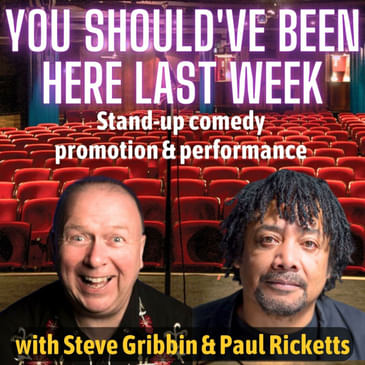
[00:00:33] and welcome to the latest episode of You Should Have Been Here Last Week, the podcast presented by myself Steve Gribbin and fellow comedian Paul Ricketts. Hello. This is the podcast that takes a peek behind the glittery curtain of the comedy industry to give you a glimpse of the moves and the shakers, the gossip, the blood, sweat and the tears and self-doubt that go into making up the world of comedy.
[00:00:57] And today's guest is the wonderfully funny stand-up comedian, writer, presenter and fellow podcaster, fantastic Esther Manito. Welcome Esther. Hello. Hi. Thanks so much for having me. So when did you first watch comedy? Because it's not a question we ask that often. I mean, did you watch it before you got into it or did you do it through YouTube like lots of people do now?
[00:01:22] Oh, no. No, I was too, I'm too old for watching you. I mean, I was watching comedy when I was a kid. It was all like Victoria Wood and stuff. Victoria Wood on a Friday night. You'd watch her, her show was on Friday nights on, was it BBC or ITV? It was BBC. I do remember there being... She flitted between the two, didn't she?
[00:01:48] Yeah. So I grew up a lot with watching Victoria Wood. I, as soon as I got into watching, well, I used to listen to comedy. So I used to have like the DVDs before you had everything digitally. So we, me and my husband, before we had kids, we'd always have DVDs, CDs of people's stand-up specials that we'd listen to on long journeys.
[00:02:15] So it was like Rod Gilbert, Peter Kaye, all of that we'd sit and listen to. And then as soon as I got into comedy, I stopped watching it and stopped listening to it. It happens a lot, doesn't it? And you realise what goes into it. Yeah. It's no longer got the same... Like, I do like going to watch like my friend shows and stuff, but I think as soon as I realised how...
[00:02:45] I don't know. It was just, it just feels like a busman's holiday now. So I'm quite into it. So when I have my downtime, it's all like true crime and murder and gravity and horror films. I just like everything to be quite bleak and dark. I'm not into sitting and watching comedy. And I'm quite surprised by people who do do that, who work in comedy and then are also really into going to like watch comedy and stuff. I'm like, oh, how can you have your whole life? It's just endless comedy. It's...
[00:03:12] Well, I think listening to it, I did a gig once where the act, the other act, it's decided that he wanted to put Richard Pryor on in the car on the way to the gig. It was in my car. And I said to him, no, I don't think it's a good idea to us listen to a comic who's better than us on the way to a gig. Yeah, people do that, don't they? I remember being in a car and someone wanted to listen to Ali Wong. I don't know.
[00:03:41] It just feels like, can we just talk about something else? Yeah. I just need to kind of not just be continuously in the zone of stand-up. I was once in the back of a car. I won't name who this comic is, but they'd recorded their set, right? And they wanted to listen back to their whole set, their whole 45-minute set. It was their car. I actually had to beg them not to do it. I can't think of it. It was like a living hell, you know.
[00:04:11] It's like, I've just seen it. I've seen it. I don't want to see it. I don't want to hear it again. Oh, God. That's a bit weird, isn't it? It is a bit weird, yeah. But mind you, everyone's so fragile, aren't they? Yeah. So if you just wanted to sit and workshop, maybe they felt like it went really well and they needed to hear all that kind of affirmation of all the bits that were good. Or maybe they felt it wasn't good and they wanted to workshop it on the way back, which I kind of get. After a bad gig, I had a stinker on Saturday.
[00:04:39] And last week was such a, I had a brilliant gig where I literally was like, I could have done days on that. That was just lush. Then terrible gig. Then was like, oh, God, that was a shocker. Then the next day, had a brilliant time, had a great gig. And then on Saturday, had a stinker. And I was like, oh, God, it keeps you on your face, doesn't it? It does.
[00:05:08] The roller coaster that is comedy. Yeah, yeah. But on the days when I have good gigs, when my gigs are good, when I enjoy them, I don't think about them on the way home. But when I have a bad gig, I do like to sit and jot down. Just psychologically, it just makes me feel better to go, what was it that they really didn't think? And I don't know why I do that. And then I just kind of go, because sometimes it just allows you to go, because you walk, I'm quite hard on myself.
[00:05:38] So I'll walk away going, death, death, death. And actually, when I sit and go through it, I'm like, oh, they did actually quite like that bit, but they didn't like that. So, you know, obviously that wasn't their cup of tea, but they did enjoy that little bit. So, you know, maybe I'm not as horrific as I think I am. We often talk on this podcast about the Millican rule, isn't it? Sarah Millican devised that rule, said if you have a great gig, don't, you know, crow about it for 24 hours. And the converse is meant to be true of a bad gig.
[00:06:07] But, you know, that's all well and good. But most comedians will always dwell on the bad ones. You know, when we're talking to each other, we don't want to hear another comedian go, oh, I absolutely smashed it. We want to hear, you know, they've shot themselves down in flames. Well, it's like the whole point of being a comedian, and this is something which I think we're losing a little bit, is the whole point of being a comedian I always found is that you're like,
[00:06:33] especially growing up watching the types of people that I watched, was that you would watch that person going, thank God. I mean, thank God. I wouldn't say it, but it's funny that you're saying it. Or thank God I'm not you. Or that's really embarrassing. Or you're making, you're the clown, you're the buffoon. You're the one that's making everybody else in the room feel better about themselves, because you're the idiot who is prepared to be laughed at.
[00:07:00] But, and there's been a bit of a shift where now comedians are quite cool. Yeah. And it's like, here's all the really cool things I've got to say, and I'm going to say it, and you're all going to look at me and go, wow, what wisdom. Look at this orator just holding the room in their hands. And I think it does suddenly shift the pressure, because it's like, no, hang on. I'm totally okay with being a dickhead that everyone laughs at. Yeah.
[00:07:27] I don't know if I can do the being very cool, confident, you know, here's my words of wisdom. Haven't I got loads of, I don't know. That's the American version of stand-up. Yeah, it is, isn't it? Yeah, it is, yeah. High status. Doing that with, you know, and they stand with the mic stand. Yeah. Just like jostling it, like, I just thought about this as I walked up here. None of this is being pretty fair.
[00:07:55] And you're just like, it goes against what you want comedy to be. Yeah. Yeah, whatever. Yeah. I don't even need the mic near my mouth. Yeah. Where's my stool? I'm going to sit on the stool. Do you think, that's interesting you say that. Do you think that's more of a, that's due to age or is it a class thing as well?
[00:08:20] Because there's a lot of, quite a lot of middle class people in comedy, as there were. But it's like that kind of, the confidence that people that have, you know, got private education, etc. If I had the money, I mean, I've come from a really socialist left-wing background and my, I was brought up, you never send your kids to private school. It's, it should be a right, not an entitlement.
[00:08:46] And that being said, I, if I had the money now, I would totally send my kids to private school because I just think it gives them confidence and, and connect up. God, fuck yes. They would be sorted. Yeah. Look at me, I look at people that are privately, because I never, look, I came from a kind of bog standard, normal middle class family. But we wouldn't, we didn't have, you know, we didn't go private school or anything like that.
[00:09:12] And I often get tarnished that I, you know, come up, people assume I'm working class or whatever because of my accent. And I, I do kind of think of myself as a bit of a chav, but I, I never, it just, I've, I've never met that many. I've never, before I did, before I did comedy, I never knew anyone who went to private school. So then I started doing comedy and then people that were like, they're so confident.
[00:09:42] They just walk into a green room and be like, hi, I'm going to own my space. I've got a right to be here. I've got confidence in what I do. And I was just like, I've never met people like this before. I just haven't. But especially like women, women never, ever were, as a woman, you're never brought up to ever feel like you should be in a space. So you're always made to feel public transport, walking down the street. You're always meant to feel, how can I be inconspicuous?
[00:10:10] How can I be like, don't notice me. Don't look at me. Don't draw it. Because you're made to feel constantly that you're. So there's that. But then on top of that, I just grew up in a normal environment where you were supposed to be really grateful for any opportunities that came your way. Because, you know, not everyone gets these opportunities. And then to suddenly be mixed with people who are just like, yeah, why shouldn't I be here? Yeah. And I was just like, wow.
[00:10:36] And I would, if you, if I had the money, yes, I'd give my kids that gift. Politically, I know it's immoral. Ethically, I know it's immoral. But would I want my kids to have that? Fuck yes. But mind you, then they might both end up as comedians. They might all end up as comedians. I don't know. I'm always like, if you have that much, I don't know. How do you end up as comedians when you've got that much self-confidence? Oh, I don't know. I don't know. There must be damage in some other way.
[00:11:06] Because we've all got, you know. It doesn't mean people aren't funny. But it is just interesting when you meet people who have just got, like, private education has just given them the ability to go, I will be vocal. And I am totally comfortable with being heard. Whereas nothing with the rest of us. We're just like, thanks for letting us be here. It's really pretty. So when I do die at a gig, I have noticed it with people who do have that confidence. They're like, nah, wasn't for them. But I know.
[00:11:36] I know what I've got. I know what I can offer. Whereas in I'm the opposite. If I have a great gig, I'm like, oh, thank you. Thank you so much for laughing at me. I'm really grateful. Thank you so much for getting it. That's amazing. And if I have a bad gig, I'm like, yep, you're right. Shouldn't have come out the house. I'm being shit. I'm just going to scot back home. How did you get into comedy? I mean, so you watched all your videos. Listened to the CDs. Yeah, I didn't plan to be a comedian. I was on maternity leave and I did a comedy course with a friend of mine.
[00:12:06] And I said I'd go with her to do the course. I thought I'd be nice just to do that creative, totally unrelated to kids and home and all the rest of it. So I used to go out on a Sunday afternoon and I did the Camden comedy course with her. And she was a performer. So she had that background. But I didn't. And I certainly didn't plan to do stand up. I was like, this will just be six weeks of doing something different. But I never thought I'd do. And I won't do the stand up at the end of it. Because we were supposed to do this showcase.
[00:12:35] I was like, fake sickness for that. There's no way I'm getting on a stage. But I ended up, as the course was going on, I ended up quite enjoying, like, practising, creating five minutes of stand up in this course. And then I convinced myself to do the showcase at the end of the course. And then that was it. Bug bitten. The bug had got under your, burrowed into your skin, the comedy bug.
[00:13:05] And then it just stayed in it. Who ran the course? I think I've seen him on a couple of posters during the Clash, those Clash comedy nights. Oh, right. Oh, right. He had one class. Mr. C. Mr. C, that's it. Yeah, yeah, yeah. And then there was another guy who did the other class. So I wasn't with Mr. C. I was with Noah. When was your first ever gig? Can you remember? Yeah. The showcase was Backyard Bar.
[00:13:35] Backyard. Backyard Comedy. And how did it go? Which is where I died on Saturday night. It went well. It went well. The showcase went well. So that's what made me think I could do it. I mean, do you think your act has changed? How would you say your act has changed since you first started? Because I think when you start, you just emulate. It's like any job. You just go in and go, this is how one, like, you know, I used to be a teacher. And when you start teaching, you were like, you just copied everything that you'd seen
[00:14:04] that you remembered your own teachers doing. And I think when you start stand-up comedy, you go, this is what comedians do. This is what I've seen the ones that I've watched growing up do. So there was a lot. I watched my first video a couple of years back and I was like, fuck me. I'm just like literally copying Victoria Wood. I had this real, like, manic, which I am still very manic now, but I had this almost kind of, like, middle-class mum-ness about me.
[00:14:32] And I was like, which I don't think is a bad thing that any of us do it because I think it's a stepping stone. You literally go, I want to do it, but you haven't found yourself yet really. And I didn't know what the fuck, you know, I didn't know what the hell I was doing. But I definitely think it wasn't until I started my second solo hour that I got into what my stage persona was. So when was that?
[00:15:01] So how long did it take you to get to that second hour? So I did my first hour. I started in 2016 and then I did my first hour in 2018. 2019? Wow, that's quick. Was it? Or 19? I mean, that's pretty fast. No, I did my first hour in 2019, I reckon. I think.
[00:15:27] First hour in 2019 and then it was COVID and then I did my second hour in 2022. And then my third is the tour that I've just finished. And then working on my next one now. Wow. So, I mean, you're a pretty hard worker, aren't you? I mean, you just knuckle down and get to it. I like writing shows. I really like writing shows. I think it's because I am quite comfortable at storytelling.
[00:15:56] So I like funny, quirky, acting it out stories. And I think it's quite fun to do that in an hour. And it's such a different skill to a club set. Like club set, I mean, when you've got people who are pissed up at Up the Creek on a Friday night, you can't really weave a whimsical yarn, can you? No. You're literally going, right, you can't. It's a little bit different.
[00:16:26] But you've got to be quick with it, haven't you? You've got to be bam, bam, bam, bam, bam, bam, bam, punchline, punchline, punchline. Yeah, yeah, yeah. They're not going to let you tit about, are they? No, no. And I think that's what I like about doing my tour show. I mean, some bit, what I like is I do my tour show and it allows me to build up these stories. But then you'll get these little snippets that you can then go and use in the clubs. So you do get the kind of ability to really shorten things down and tighten it up so that you can go and use it in the clubs. And then that does make your jokes stronger for your show.
[00:16:56] So they kind of work together. But I do like writing a show. I like being with people for an hour. Pissed up mums. My crowd. I like it. It's fun. Is that your people? Yeah. Yeah. Prosecco goes pretty quickly when I do a show. Unless you put that on the poster. I know. Pre-order your Prosecco. It's going to go fucking quick.
[00:17:23] I was reading a little bit of press about you. You were talking about the fact that female comics get judged differently from male comics. Because in terms of people ask you, well, where's your children? Who's babysitting your children tonight? Yeah. And that resonated with me. Because if it wasn't for... I wouldn't have met my partner if she hadn't left her kids at home and gone out to do comedy. She didn't have a partner.
[00:17:51] She actually had other comics. Open spot comics babysitter kids. So now the two kids in their 30s, they hate comedy. Absolutely despise it. But I'll just turn that into a question. Do you think that's changed or is it still the same thing? No, I think it's still really subconscious. I don't think people...
[00:18:15] I think people want to think that now feminism is a lot more elitist. I think people now want to see it as something which is actually a lot more pseudo-intellectual. And the reality is, yeah, we have advanced in our conversations about feminism.
[00:18:38] We've advanced in rhetoric and how we talk about what women are going through. But the reality is, the moment you have kids and you're running a household and you're sharing it with a bloke, the judgment for any failings is not really on the bloke. Like, you know, if your kids are going to school looking like shit or your house is a shithole, the judgment is still falling massively on the woman, which means domestic labour is still falling massively on the woman.
[00:19:06] And that hasn't really changed. So that is why I like ranting about the shit that I rant about on stage, because it just gives, you know, women who come to the show a little bit of respite and the blokes who can laugh at themselves and get that will find it funny as well. And you do find it like you do turn up gigs and it's like, well, who's got the kids tonight? Oh, your husband's really good. That's something else that drives me mad. He's continuously telling me my husband's good. I'm like, he's 45.
[00:19:35] He's not lying. But why wouldn't he be able to look after children? He's not this fucking toddler just slamming around the house, you know, unable to open cupboard doors. Like, he's a grown man. Like, why are you talking about him? Like, he's so inadequate. And it does, it drives it. I think there's a kind of real patronising thing of like, well, of course, of course the man needs to go out and be a twat on stage because they're men, aren't they? They're boys.
[00:20:00] But when a woman does it, there is a little bit of like, oh, how are you managing your home life and who's suffering because you're doing this then? Who's been left on their own? So it does still happen. It is still an issue. And I do think it's still worth talking about on stage and talking about, because I have had comments that it's not really feminist to talk the way I talk, but I actually think it really is.
[00:20:27] And I'm not interested in just saying, well, feminism is only us talking about sex. I actually think, no, I think feminism is still talking about the fact that, you know, the kids are still mainly my responsibility, yet we both have to work. It's just, yeah. Do you think your material about children is different from male comics material about children? No. No. I think people find it funnier when a guy slags off his kids.
[00:20:55] I think they relax a little bit more because it's almost like dads are allowed to be pissed off at home life. And I have had it. Not from mums and not from dads. If people are parents, when I'm slagging off the kids, they do, they just get it. And they just get, you know, kids drive you mad. But people who don't have children, sometimes I have had that at gigs where they're like, it's a bit much. And, oh, you're poor kids. And you're just like, yeah, well, you haven't gone. And when you do. You wait. You wait until you've gone. It is that thing, though.
[00:21:25] It is that thing. People are going, I can't believe you'd call your kid that. And you're just like, of course I call. I was like, I was sitting there. I was feeling really bad. I called my husband and my two children. I called them all dickheads and stormed out of a room. But I did it really. I literally was so knackered. And they were all sat eating with their mouths open. You know, that chomping. And I was like, can you shut your mouths? Can you shut your mouths? And then my husband was like, oh, chill out.
[00:21:54] So I just erupted. And I was like, you're a dickhead. And you're a dickhead. You're a dickhead. And just stormed upstairs. And I was retelling it. And I could see people who didn't have kids were just like, oh, seems a bit much. Yeah. I mean, I think, you know, these things. But if you've had kids, you know that they do. Just it is. It's like the straw that breaks the camel's back. You're just like, shut your fucking mouths.
[00:22:23] I'm knackered. I've had a long day. And I'm sitting here listening to you chomp away. If you'd been to private school, you wouldn't have written that piece of material. Let's put it that way. Well, no. And you notice that. You know when you do really posh gigs. And you're slagging off your kids. And the amount of times they will zone in on certain bits and really relate to it. And then other bits, they're like, no, I don't know what you're talking about. And you're like, oh, yeah, you don't look after your children.
[00:22:50] And they're probably away for nine months of the year, aren't they? Yeah. So a lot of them when they're kids to boarding school, they've got nannies or au pairs. So they're like, when you've got that exasperated, I want to fucking, like, they don't leave me alone for a second. And they'll smile and they'll look at you like, yeah, no, I should be relating to this. But the genuine frustration isn't there. And you're like, oh, yeah, you don't have to look after your own kids. Again, why do you need money?
[00:23:20] Capitalism is the way forward. Fuck all this community and helping each other out, Lark. Just make loads of money. Send your kids to boarding school. And then, yeah, and let the cycle continue. Yeah, pull the ladder up. Yeah. Put blood of grease on the ladder like that. I'm saying all this, but I can't afford to send my kids to private school. So I'm just going to have to go back to being a bit of socialist, aren't I?
[00:23:47] Yeah, let's hope they don't watch this in years to come and then blame you for their life. We could be taken away to a detention centre, couldn't we? Yeah. Last one who asked, you know, do you, where do you, we often ask this of all our guests, you know, what do you think is the future for comedy? I mean, that's a big question, but where do you see comedy going in the next few years? Is live comedy still alive and thriving?
[00:24:17] Or do you think, you know, the online thing is going to take over? What do you think? I think people still like nights out. And I think COVID proved that, that people were still trying to find ways of getting out and doing social things. So I think whether, I think we, I've noticed since I started comedy, from the moment I started comedy, there was a real segregation between the club comics and TV comics.
[00:24:47] And so I noticed that straight away that there was like, there's the ones who do the clubs and then there's the ones who go straight into TV and never the twine shall meet. And there's very few who go between. So I was like, well, I'm, I'm going to be a club comic. So I was like, well, I'm going to work in the clubs and I'll keep working in the clubs. And then I kept seeing people who would go straight into TV. And I was like, well, they don't do the clubs. And they're like, no, because it's two different things. And I'm wondering now if we then add a third element.
[00:25:16] So you've got people who go straight into TV and there'll be TV names. You'll have the clubs. And then will we have a third element, which is you're an online comic, a comic comic. And we've got the TikTok comics who could do sketches and skits for TikTok. Yeah. The club comics and then the TV comics. Yeah. Or is it all going to find a way of merging? I don't know. Some will merge, but I think you're right. I think that's, you're the first person to say that.
[00:25:44] And I've suddenly, you know, it's like when you get an opinion, you hear someone say something. You go, oh, wait a minute. That's nice. And I totally agree with you. I think there will be three different bits. Well, because when I was doing my solo show, I was talking to the tech and they said, oh, somebody, I've got no idea who, by the way. But they said they did have a TikToker who sold out the room, but realized very soon into an hour, it's not an easy thing to keep a room engaged for an hour.
[00:26:15] But obviously you've got the hype of, so does that mean that you then have to learn stand up or does that mean that you then go actually selling out live shows is going to be different? So do I have to make being online my art rather than a live show? If you can monetize it, then why would you, if you can monetize online to a level that makes you feel comfortable and happy, send your kids to private school.
[00:26:42] Well, I guess if you do the online stuff and you can make that money, but I guess followers translating into ticket sales is probably quite a good moneymaker as well. But then you need the stuff to fill up the show, don't you? Yeah. I mean, yeah, I think you're absolutely right. Maybe there's going to be even more categories we don't even know of, you know? Yeah.
[00:27:07] I mean, we always talk about the difference between people that do the touring Edinburgh shows and Club Comics. That's a difference as well, isn't it? Yeah. And they're just different aspects of it. I think there's no, because I do think there's a bit of snobbery that goes either way, you know? Oh, yeah. People say, oh, you're not a proper comic unless you can do an Edinburgh show. And then people say, oh, you're not a proper comic unless you can do the clubs. I think there's room for everybody, you know? It's like a...
[00:27:37] But that's because comedians are also insecure. They've got to look at a way of putting everyone else around them down, haven't they? So they're always just like, yeah, well, you're not as good as me because I can perform to shit-faced stags on a Friday night. And then the alternative to that is, well, I don't have to perform shit-faced stags on a Friday night because I can do this hour in, you know, Edinburgh and get five-star reviews from people who think it's really cultural and moving.
[00:28:03] So it's, you know, everyone's got different... Everyone's trying to make themselves feel better, aren't they? I think doing stags on a Saturday night is not a skill that you should necessarily boast about. Even though I might say I have that skill, it's not something I'm particularly proud of a lot of the time, especially when I'm doing it.
[00:28:25] One last thing I was going to say to you as an act of Lebanese extraction and this particular moment in time, do you feel like you have to represent that a bit more on stage? No, I think there'll be other comics that will definitely be bigger representation of that region. But I will...
[00:28:51] But I, from the moment I started, always talked about that and I will continue to talk about that. And I'm not a political comedian, but I have been very, very clear from the moment that I started that when I grew up, being Arab was a negative and it was a dirty word and racism was really quite comfortable. And it still is, you know, to a certain extent. It's still quite comfortable being racist towards people of my heritage.
[00:29:22] And I always just wanted to normalise that. Husband, kids, family, all the same shit that everyone else goes through. And let's just start to normalise that rather than making it a topic. So at the moment, I mean, it's not easy gigging. The other side of that is at the moment, it's not easy gigging because obviously I've got family there.
[00:29:51] And there are times when the last thing I want to do, and it has impacted gigs, but then you need the money. But there are times when you're just sat there going, I do not want to go. I just couldn't give less of a shit about this right now. But you have to just crack on and do it. So it has been, it's been, yeah, it's been a weird time. Yeah, it definitely has. Yeah, yeah.
[00:30:16] I do, I mean, I guess we don't have really, how would you talk about it? I mean, there are things in my new show that I definitely will be talking about that have like true stories that are funny and there's things. But I do think like, would I feel comfortable doing it on a Friday or Saturday night in a club? And I think this is the difference again, between being an Edinburgh comic and a club comic.
[00:30:44] I think there are things that you can do in your show, which talk about things that are probably a little bit more political, whatever. But I mean, on a Friday or Saturday, I also just think on a Friday or Saturday night, people just want to, they want to escape. They want to escape their own shit. So they don't really need me. And people have their own opinions. I'm not here to educate anyone. I have my own opinion. I have my own, you know, thoughts and feelings.
[00:31:09] And, you know, what's going on is absolutely tragic for a million and one reasons. But I don't know if Stephen from Croydon, who's going out for a beer on a Friday night with his missus, necessarily needs to hear my opinion. And I don't necessarily think that gives him the escapism that he wants. Fair enough. I mean, personally, I think he does need to hear. But yeah, I actually saw Ian Stone do with it brilliantly at the comedy store on Saturday night. So he's one of the few people.
[00:31:39] Yeah. Do jokes about very, very serious, you know, I mean, but it's so hard to do. So I'm basically going to thank you, Esther, for gracing us with your presence here. No, thanks for having me. Thanks. Thanks for coming on. It's been brilliant. No, thanks for having me. And I hope you're well. And congratulations again on your nomination. Yeah, but we didn't win, did we? We got nominated. I didn't get fucking nominated. And I was hosting the bloody awards. I was just watching you hosting it going, I wish I was getting paid to do that. Instead of sitting here losing.
[00:32:10] Typical comedian. Typical. Yeah. The nomination's brilliant. So that was Esther Minito having a lovely little chat with us there. And, of course, you now realise that we didn't win our Best Theme Tune category at the Independent Podcast Awards. And we didn't tell you in any of the previous podcasts because we were depressed about it. Well, I was. I was depressed about it.
[00:32:39] You was depressed, but, you know, I still think it was great to be nominated. But there's always next year. Yeah, I know. So I'm thinking, seriously, of redoing the theme tune with different background music, different feel to it, so it can re-enter. So I can finally beat the person who beat me this time, Giles. I'm fed up of being beaten by people called Giles.
[00:33:06] I mean, sometimes it's been Josh, but also it has been Giles. Many people who went to public school have been beaten by someone called Giles, haven't they? Yes, and probably enjoyed it. But I don't. Oh, God. Yes, let's just gloss over that defeat, shall we? Yeah. Yeah. Yeah. So I don't know what I'm going to do for the next one.
[00:33:33] In fact, you can suggest what sort of musical style should the new theme tune have behind it. So if you want grime, I could do grime. I could do anything you want. You name it, we'll do it for the next theme tune. And if you enjoyed listening or watching this particular offering, you know what to do. Subscribe, like, tell your friends.
[00:34:01] You could send us money via you have the... I mean, oh, yeah, you've got a Kofi account. I've got a Kofi account, yes. You've got a Kofi account and I have another thing. It's all in the details. Yeah. If you could send us money for that, that would be great. And obviously, we could send our kids to private school. Yeah. Basically, I mean, yeah, it's not too late. It comes as a shock to mine because they're in their 30s now. It doesn't have to be your own kids.
[00:34:29] I could struggle with them and go, you're going to private school. But I don't want to get there. Even though you're 30, it's still time. There's still enough time for you to be prime minister and ruin people's lives. I'll send someone else's kids to school. I haven't chosen them yet. I know that sounds suspicious and nasty. But, yeah, they'll appreciate it. They won't talk to me afterwards. They'll come out of private school. Who the hell are you? I'm the one who spent all that money. Who are you, father?
[00:35:00] So please do keep listening and, you know, keep watching as well. Because we only do it for love, don't we? Yes, true. And we're still on 109 subscribers. That's just terrible. Come on. Come on. We need one more to reach our dream figure, 110. Yes. Do it. Yeah. It's not that we're begging or anything. We've got pride. Just do it. Do it. Until next time, I think we'll say a fond farewell. Cheerio-bye.
[00:35:30] Bye-bye. Bye-bye. This podcast is part of Podomity, the UK's podcast comedy network. Why not laugh at what else we've got?
[00:36:00] Visit Podomity.com.