
If you’re trying to work out how to grow your podcast audience, there’s a good chance you’ve already encountered the usual advice: post more clips, book bigger guests, improve your SEO, be consistent.
All useful. None of it means much if you haven’t worked out why somebody should care about your show in the first place.
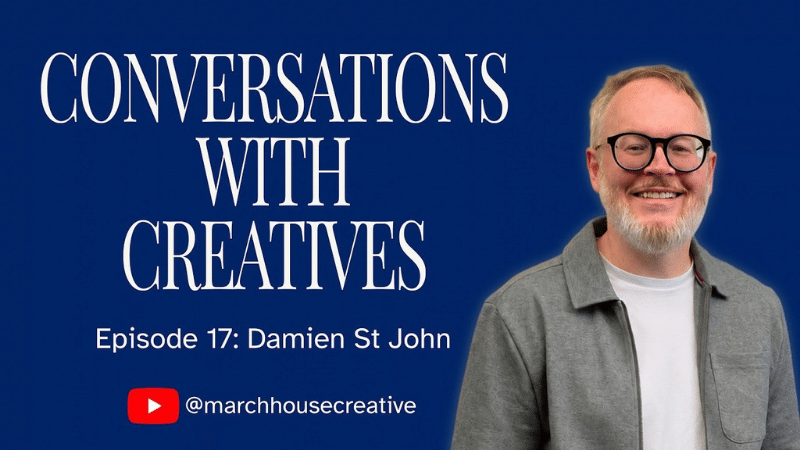
Podomedy co-founder Damien St John joined Esther Stanford on Conversations with Creatives to talk about creativity, comedy, podcasting and building an audience without sanding away the thing that made you want to create in the first place.
For indie podcasters, comedians and performers, much of his advice came back to the same idea: make the thing you believe should exist, then learn how to connect it with the people who might love it.
Start with something you believe should exist
Damien’s route into comedy and podcasting wasn’t mapped out in advance.
After years working in radio, redundancy pushed him towards stand-up. Stand-up led to writing. Writing fed into podcasting, live shows and eventually Podomedy.
The lesson he draws from that isn’t that every idea will work.
“You've gotta take the shots that you think are right, but you'll miss as many as you hit,” he said. “You've just gotta get used to missing and not let that define you.”
That’s particularly relevant to independent creators. A quiet gig, an unsuccessful pitch or an episode that doesn’t travel as far as you hoped doesn’t necessarily tell you that the underlying idea is bad.
Sometimes it simply tells you what to try next.
How to grow your podcast audience after launch
Damien makes a useful distinction between making something and growing it. A podcast can begin entirely from self-interest. You love wrestling, spy films, parenting, obscure history or ridiculous fictional characters, so you make the show you’d want to hear. That’s enough to get started.
“You are your audience,” Damien said. You’ve created something because you believe it deserves to exist.
But if you then want other people to find it, another job begins.
“If you only ever sell ten books, it doesn't mean you're not an illustrator or an author. It just means you haven't then thought about: well, now how do I go and find an audience for it?”
The same applies to podcasts. Knowing how to grow your podcast audience means thinking beyond whether the show is good. You need to understand who it’s for, what makes it distinctive and how someone encountering it for the first time can quickly understand its value.
Being original matters less than being distinctive
One of Damien’s more practical pieces of advice concerns competition.
If someone sends him a podcast idea and five similar shows already exist, he doesn’t necessarily see that as a reason to abandon it. Instead, those shows become your competitor research. Look at what they’re doing. Work out who they serve. Then decide what makes your version worth choosing.
His advice is simple: if you’re going into an existing space, “do it better or find a niche.”
That applies just as much to comedians and performers.
Damien spoke about moving away from simply presenting himself as another stand-up and instead developing a comedy game-show format influenced by Shooting Stars, Whose Line Is It Anyway? and Celebrity Juice.
You don’t necessarily need a completely original idea. You need a clear reason for your version to exist.
Stop treating every social post like an advert
If you’re researching how to grow your podcast audience, social media inevitably enters the conversation.
Damien’s advice is to resist turning every post into “new episode out now”. Instead, think about the behaviour of the person on the other side of the screen. What makes you stop scrolling?
Usually something familiar, interesting, funny, useful or immediately recognisable.
For his own family history podcast, Damien described testing short videos from family days out because the subject matter overlapped naturally with the parents already listening to the show. One video performed modestly on Instagram but continued gathering views on TikTok.
That’s useful information. The same creative idea can behave very differently depending on where you put it.
“Try your creativity in different places, different channels,” he said. “And it will work somewhere. And then you'll kind of double down on that.”
Most importantly, he argues that social content should feel like content in its own right rather than a series of adverts for the podcast.
“Sample the best bits of the work that you do. Don't look for, ‘Hey, this is a good thing that you like.’ Let them work that out.”
Your audience doesn’t owe you anything
Perhaps the most useful idea in the whole conversation is Damien’s description of an audience relationship as a “value exchange with strangers”.
Listeners can skip you, swipe away or even unsubscribe. Your job is to give them enough reason to stay that the relationship gradually becomes something more meaningful. This principle has practical consequences.
During the interview, Esther describes the support Podomedy has given Limited Time Only including regular mentoring, changes to how the podcast is categorised, a stronger trailer and an external view of how the programme presents itself to somebody who hasn’t heard it before.
One category change subsequently helped the show chart.
That is often where an outside perspective helps. When you’re deeply involved in a creative project, what makes perfect sense to you may not be obvious from the outside.
For Podomedy, helping bridge that gap is part of the point: independent creators sharing knowledge, learning from one another and finding routes around the traditional gatekeepers of the industry.
You don’t have to be perfect
There is another obstacle that comes before algorithms, trailers and category choices. Actually putting something out.
Towards the end of the conversation, Damien returns to the pressure creatives put on themselves.
“Just do the thing and enjoy it, and it's not going to be perfect. But no one's asking you to be perfect.”
That might be the most useful starting point for anyone wondering how to grow your podcast audience. You need something to grow first.
Make the show, put it in front of people, pay attention to what connects and change what isn’t working. Keep the bits that make it lovingly yours then make the next one.
Conversations With Creatives is a March House Creatives production. Follow on Instagram: https://www.instagram.com/marchhousecreative/