
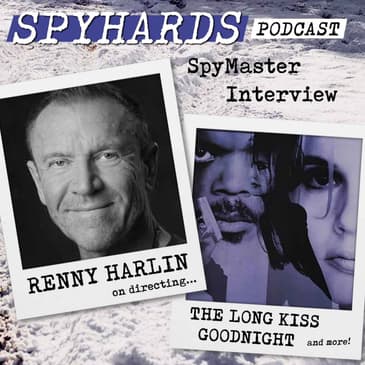


Agents Scott and Cam welcome director Renny Harlin to the show to reveal top secret intel about the making of the 1996 cult favourite spy action-thriller The Long Kiss Goodnight. He also shares stories about almost directing a James Bond movie, Cliffhanger, and much more!
Become a SpyHards Patron and gain access to top secret "Agents in the Field" bonus episodes, movie commentaries and more!
Make your opinions about the NOC List known. Leave us a voicemail on Speakpipe or send us an email now!
Purchase the latest exclusive SpyHards merch at Redbubble.
Social media: @spyhards
View the NOC List and the Disavowed List at Letterboxd.com/spyhards
Podcast artwork by Hannah Hughes.
Theme music by Doug Astley.
Hosted on Acast. See acast.com/privacy for more information.
[00:00:38] Hello and welcome to SpyHards - A Spy Movie Podcast, I'm Agent Scott. And I'm Cam the Provocateur, getting kicked in the head by a deer. And you deserve it. I definitely, you know, wandered right into this one. Maybe it will knock some sense into you. One would hope, one would hope. Because, you know, we have been doing this wonderful little spy movie show for just over six years now. And a long time ago, I wrote a list of people I wanted to talk to on this show.
[00:01:07] And I showed it to some friends and they all laughed at me. Chief me among them. Yeah, it was really sad when like, one of my besties just like, you'll never do that. And you know, look at me now. Denise Richards, Tick, Shane Black, Tick. What else have we got Cam? Give me some names. I mean, John Glenn was a big one for sure. Yeah, I mean, Andrew Davis is another good one. Nicholas Meyer, a man like,
[00:01:37] tuned into my childhood. So many names, so many people, Brannon Braga, like, not one I necessarily reach for, but you think like how much that guy had an impact on my life. And a few months ago, we got an email from one of the people on that list. And they said yes.
[00:01:55] That's right. And that person is director Rennie Harlan, who of course has directed movies like Die Hard 2, Deep Blue Sea, Cliffhanger, and a little film we love, The Long Kiss Goodnight. Right. Hell yes. Rennie Harlan is officially here. I mean, we've been doing the documentary on The Long Kiss Goodnight, it feels like.
[00:02:19] Years ago, we sat down with the child star of the film, Yvonne Zimmer. A couple of years later, we sat down with the screenwriter of the film, who just happened to be Shane Black, the man behind quite a few films, including The Nice Guys, which is one film I actually have a lot of time for. Yeah. And so like, oh, we were already telling the story. And I thought like, why don't we go to the head honcho?
[00:02:43] Rennie effing Harlan. He has been making films consistently since the 1980s, and he's still cracking out crackers. I'm so proud that we are able to bring this interview to you. And it's like just a couple of weeks after our sixth anniversary. I think what a, I can't think of a better way, really, of celebrating six years of Spy Hearts podcast than talking about The Long Kiss Goodnight with the one and only Rennie Harlan.
[00:03:11] So I'm not going to belabor the point. You guys want to hear it? Here it is. Joining us today is one of the most prolific action directors of the last four decades from Die Hard 2, Cliffhanger, Deep Blue Sea, and of course, The Long Kiss Goodnight. Rennie Harlan has directed some of the biggest action films of their generation. Today, we're focusing on a little spy thriller known as The Long Kiss Goodnight, a personal favorite hero on the show. And that leaves me with the incredible honor of saying welcome to the show, Rennie Harlan.
[00:03:38] Thank you so much, Scott and Cam. It's awesome to be on your show and really appreciate you showing such love for my favorite movie of my movies. And I have to say that it's, it's shocking to hear you say, the most prolific action movie directors of the last four decades.
[00:04:00] It's bizarre to hear that when I think about myself as an 18 year old wannabe film student, where the professor said to me, we can't really choose you for the, for the program because you're too young and you have no life experience. And here I am. I think I have too much life experience now. Well, let's, let's, let's bounce off of that and talking about experience because we want to get into the story of Long Kiss Goodnight up front.
[00:04:29] And then perhaps if we have time, we'll talk about a few more of your films you've worked on. For you, where does the story of The Long Kiss Goodnight begin? Good question. It begins in a little bar in Los Angeles. I was, I was having a Bloody Mary. It was probably like a Saturday or Sunday morning and I had had a long night before and I was having a Bloody Mary at this bar.
[00:04:56] And, and then I got this message to, to call Bob Shea at New Line Cinema. And, and I, I used the, the, you know, the, like a pay phone in the, in the bar. And I called him and he said, there's this, there's this script that you, you know, recently read. I had read that it had been sent to me, you know, few days, few days, few days. It was all happening very fast.
[00:05:25] It had been sent to me a few days before. I had read it and I loved it. And, but I knew that, that it was a super hot script, obviously Shane Black and, and every studio wanted that script. And so I had read it with a grain of salt. And, and, and, and so Bob Shea told me that, you know, I love this. I just read the script and I love it too. And I, we want to go aggressively after it.
[00:05:54] And what do you think? And I said, hallelujah, it's the best script that I've ever read in my whole life. And I'll do anything to, to make this movie. And, and so, so started the bidding war and I ended up sitting all day at this bar. It's, the bar is on Sunset Boulevard. It used to be opposite to Tower Records, which is now something else, but it's there right on the Sunset Strip. And the bar is still there.
[00:06:23] And, and I sat there all day and had probably a few Bloody Marys in the course of the day and just followed the bidding war madly. It was, it was, I think it was, you know, between probably like Warner Brothers and Sony and Universal and Paramount and New Orleans Cinema. And, and the prices kept going up and it got crazy. And, and then ultimately, you know, Bob Shea prevailed and, and I think he paid $4 million for the script and we got it.
[00:06:52] And it was, it was, it was, it just felt like the perfect fit. Uh, I had, you know, quite recently gotten married with, with Geena Davis and, uh, she really wanted to do action. And, uh, I, I wanted to do quality action drama and, um, and it just felt like, like a gift from heaven.
[00:07:16] And, and, and so we won the bidding war and, and we couldn't have been more excited and happy and felt like we really had something exceptional in our hands. Now, Shane Black is a producer on the film. And I was curious, like from the initial bidding and getting the script, is there a development of the script over time? Like, are there things Gina's interested in exploring with the character that changes are made?
[00:07:41] I would say, and obviously Shane could contradict my memory, but my memory is that we did very little work on the script. Uh, we, we loved what Shane had delivered and, uh, and Gina loved her character.
[00:08:01] Obviously it was, you know, it was a, it was a groundbreaking script and a movie because it had a female action lead hero, which, which, you know, some would say we were ahead of our time, uh, which kind of showed up in the box office, not in a good way. Um, and then obviously in the, in the near future, then millions of female led action movies followed.
[00:08:32] Uh, but that's another story, but, um, we, uh, you know, the, the, the, you know, few adjustments we did where maybe casting related because there's the infamous story, how, uh, you know, um, we had, we kind of saw, we would assist on it and, uh, or, you know, um, we saw Bruce Willis as a, as a strong candidate for Mitch Hennessy.
[00:08:57] And, uh, and you can share, you know, playing that kind of a part, but, uh, but I ran into, I was at a, at some premiere and, uh, there somebody grabbed me and it was Sam Jackson and he had been like trying to get in touch with me and, uh, and he said, you know, I read the longest good night. I would kill to get that part. By the way, I wish that it was more often like this
[00:09:27] that actors actually were ready to kill. Usually you have to kill yourself to try to get somebody to be in your movie. But he said that and I was like, oh my God, Sam Jackson, I love you. You're incredible. And I was honored and I was excited and I pivoted on a dime and said like, hey, I'm in. Let me talk to New Line.
[00:09:53] And I went to talk to Bob Shea and Mike DeLuca and I said, I think this is a fantastic idea. And he would bring in so much personality and humor and warmth and make this really, really special. And they were totally on board right away. So then we decided to go with Sam and I don't know how much that changed the character, but I think we did maybe some adjustments to fit his way of talking
[00:10:23] and his cadence and style a little bit more. But we all thought it was a great idea. But my recollection is that we did very little changes to the script. I can tell you that there was one point of disagreement, especially between the studio and Shane, which was the title of the film. And I totally understood where Shane was coming from.
[00:10:53] And I know that the name was a riff on Altman's The Long Goodbye, which still is one of my favorite movies in the world. For those of you who haven't seen The Long Goodbye, it is available somewhere on streaming. And I've seen it in a movie theater 37 times. So it's clearly one of my favorite movies ever. So to me, you know, making this movie and with this kind of a romantic,
[00:11:21] you know, reference to that title was super cool. At the same time, I understood that Bob Shea was saying like, you know, we're going to have a real challenge marketing the movie with that title because for your, you know, teenage male, whatever action audience, The Long Kiss Goodnight is going to be strange. And then I guess our argument is that
[00:11:50] if the movie is called Slam Down, it's going to be a challenge for our female audience that we also want to reach. So it was a major, major, major point of discussion. And Shane stayed super firm. And he was like, I'm not changing the title. And in retrospect, we can speculate forever if that was a mistake or not. I think we have a sort of a fan classic, but at the time of its release,
[00:12:18] I think that the title was problematic because it's, it's more marketing as it is, is so hard. And it's so hard through the clutter of all the different movies to get your message across and reach the right audience, especially when we had a movie that was, was unusual in its, you know, female led action thriller that I'm sure there were some red-blooded guys
[00:12:47] somewhere in middle America who said like, you know, they're not going to, you know, real shit-kicking guys. They're not going to say like, hey, Hank, you want to go see that the Long Kiss Goodnight? It's like, it's just not going to happen. So just when you're coming from, you know, watching NASCAR on your way to go to the whatever country music dance. So, yeah. But other than that, I don't remember.
[00:13:16] I don't remember that we did much of the rewriting. You know, I wanted to get into sort of a bit more of the casting. We will in a second, but I feel like there's a point there to just sort of jump onto, which is about the reception of the film and the marketing and everything behind it. You talk about the name, you talk about having a female-led action film. A lot of the Long Kiss Goodnight, and I think why now it clicks with so many people, especially younger people now, is because it is so, for 1990s, it is quite forward-thinking. Whereas now, it feels almost like
[00:13:46] it's part of any lineup. Were you aware at the time that you were making such a potentially prescient film about how filmmaking is going to go? I mean, obviously, you've got your action style to it, but having Gina as the lead was such a great idea. Were you aware that you were making something quite, you're pushing the boundaries, I suppose? We were aware of that, but for us, it was just sort of like a natural progression of action cinema. And, you know, I've been a fan of action cinema my whole life,
[00:14:16] and especially, you know, like 1970s movies. And what I loved about 1970s movies, you look at Peckinpah, Don Siegel, and so many others, is that the movies were not formula, and they were, they had stories where you didn't know where the story was going to go and who the bad guys and who the good guys were. And there was a real, you know, shades of darkness and light and complex,
[00:14:44] really layered characters and screwed up relationships. And, you know, think about The Getaway, you know, Ali McRow's character cheating on Stephen McQueen with the prison warden, like, just like really screwed up stuff. So, so I felt like having lived through and also worked in the 80s, late 80s cinema and then moving into 90s cinema, I felt that this was kind of like
[00:15:14] a natural progression and that we have to do something new. And I also, I was a very sort of a, I guess you could say, like in a way of like a feminist director having grown up with a very, very strong and, and movie loving mother whom I truly respected and, and she had, you know, brought me up on a diet of Howard Hawks and Hitchcock
[00:15:43] and Polanski and so on. So, so for me, a strong female character was a no brainer. But I, but we did realize that we were doing something a little different. We thought it was only a good thing and that we were going to blow everybody's minds and, and, and as people may know, the movie got really good reviews. I, I got really, really nice reviews for the movie. But,
[00:16:12] but in the box office, it was, it was definitely a disappointment at that time. And it was, I'll tell you a little story about this. Bob Shea, who was the chairman of New Line Cinema, he had a habit of always when he had a movie coming out, he would gather the, the filmmakers and his key staff at Elaine's, which was this legendary New York restaurant. And we would all, you know, the team would all
[00:16:42] have dinner there and, and drinks until late at night and, and, and see, you know, follow the box office results as they were coming in and see how the movie was doing. And, so we were all at Elaine's and we are all, and you know, the crazy thing, which probably people know, is that, that in the movie business, nobody knows nothing. And even, even nowadays, of course, movies are opening on, all the big movies open on Thursdays. So, you know something on Thursday,
[00:17:11] but in those days, it was Friday. Even sort of like, Monday early afternoon, you still know nothing. And, and, and, you know, you have this investment of millions or tens of millions and you have no idea if anybody's going to come and see it. And it's still kind of like that, you know, do you think that they, you know, do you think Disney thought that the live action Moana was, was not going to work great? You know, it's like you look
[00:17:41] at any of these movies and even, even, you know, you look at the Odyssey, and Christopher Nolan giving interviews saying like, I'm super nervous because I don't know how it's going to do. Well, he did have sold out theaters in IMAX a year before, so it should have been an indication. But anyhow, nobody knows nothing. And so we are at Elaine's and we are having drinks and, and eating something. And then we start getting the results from, from the East Coast because obviously that's three hours ahead. So,
[00:18:09] so the first afternoon results start coming in before the movie theaters are even open on the West Coast. And we start getting the first results and they are, they are comparing them to seven because they also produced and released seven. So they are comparing theater by theater in New York and they are like, oh my God, we have a hit in our hands. It's, it's doing so great. It's, it's like we are beating seven in all the major theaters like Times Square everywhere.
[00:18:38] The results are bigger than seven and seven of course was a huge hit for them. So we're starting to celebrate and have more drinks because it's Bob Shea. And so all East Coast is fantastic. And so we then go to sleep. We were staying at the Four Seasons Hotel and with, in such, on such a high and we are like, we did it, we made it. And, and when we go to sleep, it's still, you know,
[00:19:07] we're starting to get the results from the West Coast, but it's the early, early results from the West Coast. Let's say that we, we go to sleep at, at 11 in New York. So it's eight o'clock in, on the West Coast. So we're getting, you know, also fantastic results from the West Coast and we're not really getting the, the flow of information is not happening the same way from middle America, but these are the big cities like, like, you know, East Coast and then West Coast, San Francisco
[00:19:37] and LA and San Diego and so on. And the results are looking fantastic. That's how we go to sleep. And when we wake up in the morning, we get the cold shower, which is that the movie performed fantastically on the East Coast and on the West Coast and it didn't perform at all in the middle of America. And, and then of course everybody started analyzing what went wrong and, you know, people talked about the complicated title, people talked about the female lead and people also talked about that there was
[00:20:07] an interracial relationship which caused a problem with certain groups of the audience. Well, first of all, that was shocking to us because, you know, I guess you, on a certain level you, you kind of live in your, your own kind of a vacuum and a bubble when you live on a, you know, whether you're in New York or LA you think that the world is kind of homogenous and, and people see things in a certain way
[00:20:37] and there's no racial divide in a, in a, in that way and, and plus and it's like it's just something like never entered our minds when we were putting the movie together and casting it and, and plus there is no real interracial relationship in the movie. It is, it's part of the movie is that, you know, the, you know, Charlie gets really screwed up and with, with, with her memory and her past and everything and wants to, wants to mess up the,
[00:21:07] you know, nice image of the school teacher and just, you know, he'll still pretty much sleep with anybody just to crush that illusion and has like a go at Sam's character but they never consummate it, they never get together, they are just really, really great friends. But I guess based on the trailer and the publicity and the movie poster, it seemed like people perceived this in middle America that there was a, there was this kind of interracial relationship and,
[00:21:37] and a female action lead and, you know, that at least was the analysis of the distributor that these things turned against us and hence the movie didn't perform for the great masses. It's, it performed in the major cities but that was it. So that's my really long-winded answer to what I have no idea what you asked for. This is the problem with me. You ask something
[00:22:06] and I just keep talking. I don't see that as a problem, Rennie, that's absolutely fine. And I just, I just wanted to follow up on the question I said I was going to ask before which is about Gina. I want to get back to Gina for a second because you said she was perfect for the role. What is it about Gina for you that worked for the role of Sam and Charlie? And, you know, I note that she hasn't done much, Gina hasn't done much in the world of action since. And I think that's a real shame because she really brings a distinct energy to this film. Yes. What do you think the industry sort of, have they underestimated her? What's happened there? But go back
[00:22:35] to my first question. Yeah. Yeah. I, well, I thought she was perfect because I knew her and I knew how physical and athletic she was and she just had the frame for it. And plus, you know, she's one of the best actresses of her generation, Oscar winning actresses, fantastic. Plus, she's super funny. so I, I thought, you know, super intelligent, super great sense of humor. I,
[00:23:05] I thought that she had everything that you would want in a, in an, in an action star. And, and I knew that she was going to dedicate every ounce of herself to this character. And, I mean, she worked out so hard. She was on a special diet for several months and she worked out every day relentlessly and got herself. And this was, you know, like before it was fashionable that everybody works out that everybody is in amazing shape and, you know,
[00:23:34] takes what hormones, but she just did it in a, in a real way and, and got herself into an amazing shape. She trained with these, you know, professional, uh, special forces guys and, so she did all her fighting and all her shooting and all the physical stuff. She did it herself and she trained until, until she could do it. So, I, you could never ask for anybody to be more dedicated for the role.
[00:24:05] Uh, and she just had a blast playing it and I, you know, knew that because she's such a great actor, she could play these dual roles of the school teacher and the spy in a brilliant way. And, uh, and it is a, it is a shame that she, she didn't do more of that. You know, maybe it was, maybe it was just the curse of the movie having not done so well in box office, but like, for me, looking at people like, for example,
[00:24:34] like Angela Jolie and, and, and, um, Charles Theron and so on, uh, you know, they've, they've been able to go to that well several times, uh, and, uh, and do great work and it is a shame because, you know, at least after, afterwards, you know, some years later, you could see that there was a, there was a real fan base building for the movie and for her in that kind of movie so it would have been great to, to, you know,
[00:25:03] see her do more of that, more of that kind of stuff for sure. Mm-hmm. And, a movie of this type is only as good as its villain, they often say, and Craig Bierko's performance in this film is incredible and I would just love to know about kind of helping him or working with him to find that character because it's a big performance and, you know, if it goes a little too, just that extra notch bigger, it almost becomes too silly. Like, what was it about finding that character? Yes,
[00:25:34] that was, that was my goal was to find a villain who would be you know, more than your usual bad guy or, you know, the worst version being sort of a one-note I'm the baddie. He had to be charming and he had to be intellectually and, and in terms of sense of humor, he had to be a match to Charlie and so we saw,
[00:26:04] obviously, we didn't cast on purpose, we didn't cast anybody famous at that point role because we really wanted to surprise the audience and not telegraph where we're going to go and not have somebody who comes with the baggage of like, yeah, I played 12 bad guys and this is how I am always. So, so, I must have seen close to 100 actors for that, you know, auditioned close to 100
[00:26:33] actors and when Craig worked, walked in and the way he did it, it really clicked and I just felt like, he was a total unknown at that point, no, no disrespect what he was but just the way, you know, his presence, his eyes, which were so important in the story and, and, and that twinkle in his eyes and the fact that, like, he could, he could in, in other
[00:27:03] circumstances, he could be, you know, the guy who comes, comes home with, with your daughter for Christmas dinner and you are like, what a charming, lovely guy and she's really found a gem and, and that's what I wanted him to be and that, that the, that he really is a total sociopath and that when, when we are introducing him and he, he kills that guy, you know, who's tied in the airplane hangar, tied up and he just
[00:27:33] knives him with, like, no remorse, no feeling whatsoever. I wanted him to be that guy and you're absolutely right, you know, if, if, if he was any more of a mustache twirling scene chewing, you know, attention stealer, it would have been over the top and it would have, would have been a joke. So there was a really fine line and, and it's really thanks to his talent and, and, you know,
[00:28:02] we spent a lot of time together and, and, and preparing for the movie and talking about the character and, and doing rehearsals together with Gina and, and, and, and talking with Shane to really mold him to, to be that, that person and always, always walk in that fine line of like, let's not go too, let's make him, you know, he's, he's charming, he's lovable,
[00:28:31] but extremely evil, but because he's a psychopath, he doesn't really realize that he's, he's evil because he has no remorse. So, I, yeah, I think we were lucky to find somebody like him because he, he really made the, the character so interesting without, you know, trying to steal the scenes or making it ridiculous. I, I said at the beginning when I introduced you about action direction and I think that's an important thing
[00:29:01] to discuss with Long Kiss Goodnight because the action in the film is absolutely phenomenal and it's, it's an important thing because you're going back and looking at films in the 90s comparing them to now and we feel like we've lost a lot of that tangible sense of action nowadays in a lot of films and I just go back and watch Long Kiss Goodnight it's had a 4K restoration recently, it looks great and you just see like that, that sequence at the end on the bridge is just pure physical action and you feel every second of it. How important was it for you to make that connection and have it feel tangible to the audience?
[00:29:31] Very and, and here we come to one of my favorite topics which is I, you know, coming from that generation I love real action action done by actors done in front of camera done by stunt guys and, and, you know, blending that all into, into something that is really tangible and feels real for the audience and, and where you feel the blood and sweat and tears and,
[00:30:00] and the suffering for real and, and I think that we have lost some of that in a lot of the modern movies starting with the comic book movies not to put them down not to criticize them but just, it's just the, the, modern technology she has replaced reality and emotion and, and true involvement with spectacle
[00:30:29] and showmanship and, and obviously the comic book movies are one, one genre and, but even, even just big action movies nowadays they, they seem to have such a need these sort of big studio movies to, to top everything that's ever been done before and, whether it's flying cars or, or, or elaborate fight scenes you know,
[00:30:59] defying gravity and, and altitude and everything possible it's, it's almost like the studios they don't trust that the audience would be satisfied just with the, with the sort of believable plausible scenarios they feel like they just have to give them something more and bigger and I think that that's, to a certain extent what suffers is the screenplays, the characters, the storylines
[00:31:30] because instead of concentrating on creating these, these characters that you would really root for and care about and, and go on a journey with, it's replaced like I said with spectacle where you have the movie has like four giant endings and, and sequences that are completely impossible and that, and, and by, by feeding the audience with this kind of stuff on a constant, you know, steady pace then the audience
[00:31:59] expects more and, and so being in some kind of a small emotional moment or, or more realistic action moment is not enough because you say like what, you know, this is bullshit. I want everything to blow up and everybody fly everywhere and people fly through the walls and use, you know, crazy weapons and be able to do completely gravity defying things and then, you know, you get used to, to, to, um,
[00:32:29] digi doubles and all that stuff which is weightless and which you can kind of see, I mean, there are car chases in, in modern movies that are completely animated sequences and I think that the audience kind of knows that they are watching animation but they kind of accept it and they kind of expect that that's how it's going to be. So, getting back to, to what we're talking about is, is that I, I love the realistic action and I've always tried to, to, you know,
[00:32:58] do that in my movies and, and of course sometimes to save, save costs and, and time, you know, you have to rely nowadays on, on certain things digitally but I, I try to make the digital part sort of a supportive, supporting part and still the essence of the action to be real so that the physics are real and the gravity is real and, uh, and I think from what I experienced when I talk to film students or I go to, you know,
[00:33:29] uh, film festivals when I talk to fans at different events, I always get the response that people say we love when it's real, we love when you can really feel it and it's, it's, it's tangible and, and so on so I think there's a place for it uh, and, uh, you know, even if, you know, now everybody talks about like Obsession and Backrooms and, and Gen Z and so on but I, I feel like even with those movies, they are,
[00:33:58] they're very real, they're very tangible and, and they don't rely on fancy gimmicks, they are going, you know, some, going for your gut so let's hope that that's something that's, that's, that the new generation also would gravitate toward and, and, and appreciate uh, we'll see, we'll see how all these new, new, big, uh, comic book movies, uh, how they're, they are going to perform. I wish them the best, I want every movie to succeed,
[00:34:28] that's not the issue but, uh, but we'll see what the, what the really younger generation, what, what do they appreciate, what do they want uh, but, uh, you know, like in the, in the longest good night the, the, the bridge scene was done, the whole movie was shot in really harsh conditions, it was, it was like the coldest winter, snowiest and coldest winter ever in North America or like in the last six, 60 years,
[00:34:57] there were days where we had to stop shooting because it was so cold, I would ask Gina, it's like, I would say like, why are you speaking so slowly, it's like weird and she's, she would be, my, my jaw is frozen, I can't speak faster and, uh, in that particular sequence on the, on the bridge in the end, what happened was that, cause Gina was like covered in blood, you know, fake blood and there's a scene where she's like
[00:35:27] and then she ends up falling down and, and, and her daughter, Iman Zima, you know, she's, Caitlin is, is running away and then decides to turn back and come and, you know, tries to rescue her mom and give her the energy to get up one more time and keep going and, and, uh, and so we're filming the sequence and we have, you know, tons of cameras on it and it's, it's at night, it's on this bridge, it's, it's really cold, it's really windy,
[00:35:57] it's really harsh conditions and, uh, and, and so Gina is, is lying there and then, then Caitlin is like pounding on her and telling her to get up and then she finally with her last strength she starts like dragging herself up and gets up and all that, cameras are rolling, we're shooting it and I'm, you know, I say action and they're doing the scene and, and, uh, and then Caitlin is crying and trying to get her up and, and, and she's like struggling but she's not getting up
[00:36:27] and I say like, uh, okay Gina, it's, yeah, we, we, I think we got that part, you know, like, you can, you know, take your time but anytime you want to get up just get up and we keep rolling and she's, you know, like she's, she's doing this and she's struggling and I'm, yeah Gina, great, love it, love it, love it, great, that, you know, go ahead, just start getting up and she's trying and she's trying and she's doing it and she's like, finally I'm like, Gina, get up and she's like, I can't,
[00:36:55] I'm frozen to the ground because she was covered in that fake blood, this kind of syrup, it had frozen her to the ground because she had been lying there for, you know, from the time she lies there and cameras get ready and everything is rolling and, and Caitlin comes back and she has to get up, you know, she's probably been there for a good half a minute to a minute and she's frozen to the ground so we had to like, get like, four Burley stunt guys, they grabbed her from different sides and they went like,
[00:37:26] ripped her off the ground so those were hard conditions but, but it was, it was fun and it was, it was, it was put together on kind of like, few different locations because we had to find a, an abandoned freeway, this was a freeway they were building that wasn't opened yet so we were shooting on this freeway and we were shooting on this bridge and there were two different locations and so it was a, it was a real puzzle we couldn't really use a helicopter
[00:37:54] right on, on one location it had to be a different location and, like, like usual it was a puzzle put together but, and when we were doing that it was, you know, like I said they were harsh conditions it was so windy, so cold and no matter how many layers of clothes everybody had those, those were tough nights I remember, you know, driving to the set every evening, you know,
[00:38:24] it was already dark you know, it was middle of the winter in the afternoon it was already dark and we could see everybody else was going home and we saw the warm lights in their windows and we're just like about to start our brutal nights and we would go there and I remember what Gina did particularly on that location she had somehow gotten the recipe of Elvis's favorite food which was deep fried deep fried McDonald's burgers so she had her assistant get her deep fryer
[00:38:54] and in her trailer she had a deep fryer and then she had the assistant go and buy like 30 Big Macs and then and she had batter and she had oil and she had everything and so while we were shooting in these super hard conditions then she would she would you know surprise us with these deep fried Big Macs that we would hot hot deep fried Big Macs that we would eat between setups and they were truly delicious probably about
[00:39:23] 70,000 calories per burger and and her trailer was pretty much destroyed because it it smelled like deep fried but but you know anything to get the nights go by well when I look at your body of work it seems like you're often challenging yourself with tough conditions I look at cliffhanger obviously the location's there there's a lot of water shooting you know whether it's Cutthroat Island or Deep Blue Sea or your more recent film Deep Water
[00:39:52] and when you talk about like shooting in the winter for this film is there something about a really tough location that you perhaps seek out or is it something you find like just helps a film 100% I've come to the conclusion that I gravitate toward really physically challenging films and when I'm reading a script I get excited when I see like oh I'm gonna be in the jungle or I'm gonna be underwater or I'm gonna be on a mountaintop or something harsh like that it's just
[00:40:22] it just comes from my childhood somehow I've always you know I love the outdoors I love you know I grew up in Finland with you know obviously the snow is a very familiar environment and and for me it's really boring to be on a soundstage you know antiseptic place everybody's comfortable video village is there you know nicely you know everything you know the
[00:40:51] the craft service is right there next to you and everybody is comfy and hanging out and and for me when when you have the cast and crew together in a really challenging environment it just galvanizes it it just brings everybody together and you know there's a there's a little known movie of mine called Five Days of War which was about the brief war between Russia
[00:41:21] and Georgia you know way before the Ukrainian Ukraine war and we shot that in Georgia in in in in the mountains there you know in a really small village and like forget about hotels forget about anything like that forget about restaurants we were in this little mountain village and staying in farmhouses and I was staying in one farmhouse with
[00:41:50] with all the lead actors and we stayed in this farmhouse we shared one bathroom and one shower one kitchen and four bedrooms and everybody was you know located in different places like that around the town and there was no restaurant there was nothing there was just you know our local guy cooking food
[00:42:26] up up up mountain and yet we felt more like a family than any film I've ever made we just felt like everybody felt like we are in this shit together and we're gonna pull something great out of this and it just made it really really special and I've experienced the same thing you know like movies like Cliffhanger where we shot most of the movie in the Italian Alps and we had six helicopters that took us on the mountaintops every
[00:42:56] morning and we worked in the snow storms and you know waist deep in the snow and then we would get back down from the mountain in the afternoon or in the evening and everybody would just gather in a local bar and have drinks together and talk about what we had been through you know let alone on weekends you know same thing you know shooting deep blue sea in Mexico you know
[00:43:25] we were 14 hours a day neck deep in freezing Pacific Ocean and then in the evenings or weekends just drinking tequila and having tacos and having a blast so I gravitate toward that not to mention Die Hard 2 which happened to be the least
[00:43:55] snowy and the warmest winter ever in North America and we just travel around the country looking for snow desperately and again like really tough conditions because there was no digital escape it had to be all shot on camera so in camera so yeah Deep Water you know another movie that just recently came out we shot it in New Zealand it
[00:44:25] was in water tanks but still you know it's all water and not easy and I just shot another movie in Spain called Black Tides which I'm just doing post production for now which is and I'm the crazy guy who is always like
[00:44:55] even if it's stormy and it's windy and it's crazy big waves I'm like we can do it let's just go not to endanger everybody but I feel like when you put the actors and the crew and the situation and the boat and you go out to the sea you're going to get some real shit and yeah so it's my favorite and I I'm now in the middle of sort of prepping couple of new movies and find myself back in the
[00:45:24] similar circumstances again we'll see what happens but it's going to be some rough stuff coming up but that's where I'm alive I feel that it just pulls everybody together and instead of you
[00:46:04] I think the last question for Longest Good Night I wanted to ask a little bit about you got your big breakthrough was Nightmare on Elm Street the fourth film and there's a sequence in this film the car crash with the deer you have the dream that recalls some of that horror imagery almost like a surreal type of filmmaking can you talk a little bit about creating that sort of sequence within the film within what other people think of as I'm going to see a meat and potatoes action
[00:46:33] film in a sense interesting I'm glad you bring that up but I horror action genre films and I like blending things together and I think it just comes to me naturally or it's my urge so I feel like sometimes I may put
[00:47:03] more action into a horror film than something otherwise might do and vice versa I I think we had some pretty big sequences in that little film that came from that sort of like let's put some cool stuff into this that is a little bigger than usual if you think of the
[00:47:33] car chunk yard sequence or something like that and you're right in Long Is where I had maybe a little more freedom I was working very closely hand in hand with Shane and loved working with him but he was open to this stuff and I felt like those kind of touches of Gina's character dealing with her past and the present and those things colliding in a nightmarish way so
[00:48:03] I felt like it gave me an opportunity to do some things where I could also riff on some of my early influences of European cinema whether it will be Polanski or Dario Argento or any of that little more surreal stuff and you're right I think that the deer crash and what she goes through in that and how her
[00:48:32] transformation starts and her expression on her face and being covered in blood and doing some sort of pretty sick stuff and then the sequences with the mirror and all that and sort of surreal images of being on the edge of a cliff with the mirror floating in thin air yeah I definitely had a good time being able to do some of that and bringing
[00:49:02] that sort of crossover stuff into that movie yeah it was one of those chances you know when you you're making a movie that is not your meat and potatoes movie and for better or worse you know so definitely there was it was one of those rare opportunities where I have doing that
[00:49:31] we we where are you why do you hide follow that patreon trail and make spy hearts your guide that's right from spy tv reviews covering the antics of george smiley jack bauer and the slow horses to reviews of non spy movies from your favorite spy actors there's no more secrets over on our patreon but cam tell the listeners
[00:50:01] about this week's top secret broadcast well scott our first las vegas agents episode went big well next week we're going a little smaller and taking a look at doug lyman's breakthrough comedy swingers starring vince fawn and john fabbro is this highly quotable 1996 indie gem still money tune in and find out so accept your mission and help support your favorite spy movie podcast at patreon.com slash spy
[00:50:31] hearts but before we activate the fourth protocol let's get back to the spy jinx rennie i'm conscious of the time and i want to slowly wrap us up but i do have a last question on long kiss goodnight which is kind of a legacy question because off air we were talking about Sam Jackson for instance his favorite film the only film he said he ever go back and do a sequel about i want to know from you personally why do you think long kiss goodnight has had such a legacy and
[00:51:01] why is it so important to you that's a good question and it's a hard one to answer because you don't want to feel so self centered and it's such a great movie because blah blah blah so I personally
[00:51:30] I just feel like I have such a personal connection to it because it was done in a very special time in my life I had this obviously I was married to the lead actor and we had this very unique relationship that I think happens very rarely in a director's life when you have the ultimate trust with the
[00:52:00] actor you have a relationship that is 100% based on love and respect and trust and so you can speak freely and you can say anything because it comes from the right place and there's never that any chance of suspicion of who's playing games or where's that coming from or why is he saying that or why is he saying that what does that person want am I being manipulated it's just like complete open
[00:52:30] trust of like here's my issues here's what I'm trying to do I hear what you are trying to do and together we are trying to do this and let's try to find best ways to accomplish all that so it was just such a good place and same thing applied to Sam Jackson we really brought him into our family and we were just three artists working together with complete honesty and
[00:53:00] I know Sam felt it and I know there was just no bullshit and there was no any kind of ass kissing or backstabbing or any of that kind of unnecessary stuff we were just three people together doing our best work and being 100% honest and open with each other and it all started with Shane's script and like I said it's the best script I've ever read
[00:53:30] and it just offered such great characters great humor great action sequences for me to do that it was just a combination that you know and then finding Guillermo Navarro to come in and shoot it you know a Mexican DP who had practically never seen snow before so it was just funny and together we had such a lovely time there are such
[00:54:00] great memories in making that movie and we were so proud of it and loved those characters loved the story loved the visuals and of course you know I like you can look at it and you can see like I borrowed and paid homage to 70s cinema to so many different things and characters and
[00:54:32] it's just a movie where I felt like I could really pour my heart and soul into it fully and I will always be proud of that movie and I think that honesty and that passion and that true commitment shows in the movie and maybe that's why it's held together so well and build a fan base that goes through
[00:55:01] generations and it is one of those movies you know there's always those obvious movies that people talk about Die Hard 2 and Cliffhanger and so on but it's really the movie that I get more mentions and responses to than anything else in a sense that people say like you know I didn't realize you know like you made this movie The Longest Good Night and I just recently saw it or I saw it with my dad or I saw it with my sister or whatever
[00:55:32] and people just keep bringing it and and and and and think it's just honestly
[00:56:01] and passion that went into that movie and the love that that is a long life and hopefully continues to and and and we've talked many many times about doing a sequel for it I've had work on treatments for it I've talked about it Shane and I've talked a million times with Sam about it I know Gina would love to do it but it's it comes back to economics you know you have
[00:56:31] a movie that doesn't make hundred million dollars you're not going to have a sequel for it and and and even when we floated the idea to New Line which of course then became Bob Warner Brothers like we can just do a really small budget version of it it's just it okay well why don't you just take the rights and make some indie movie because I
[00:57:01] think that we'd be happy I know that Sam and Gina would be game we could do like a 12 million dollar version of this movie and a sequel because it doesn't have to have flashy huge digital effects and doesn't have to have crazy stuff what it this podcast I'm positive that there's an audience will
[00:57:31] somebody pay for the marketing of the movie but like especially today in the age of obviously we are talking about completely different era in terms of the original but now you look at these movies that are self distributed and you look at obsession and you look at back rooms and you look at all this stuff that maybe if we could just wrestle the rights from New Line and say don't you worry about
[00:58:01] it let us just run with it and you can get the profits and we'll figure out a way to self distribute this and distribute this to the fans and not do a 40 million advertising campaign let us just run with it we'll do it we'll get whatever money we can maybe it's 10 million maybe it's 15 million whatever is the budget I know that everybody who was involved would want to be involved and will make a
[00:58:52] it is testament to the film the fact that we're talking about this now exactly as you said I think it's a testament to the fact that this is a film that is constantly referenced by other filmmakers that we have on the show actors directors screenwriters they call back to this film as one of their favorite movies and we'll get to your favorite movie in just a minute but you don't need to hear this from us but we're two spy movie experts in air quotes and it's one of our favorite spy movies and I think
[00:59:22] that comes from the passion that you have for it and had for it when you made it thank according to the internet and you can dispel this rumor if you like there was a moment in time where you were approached about GoldenEye
[00:59:52] and I wanted to see if you recalled that if you had any memories of it and if it is true what a Rennie Harlan James Bond film would have looked like it is 100% true I was offered that right around the time of Cliffhanger I think it was right after Cliffhanger could have been even before I sat with Barbara Broccoli in a couple of meetings they wanted me to do it
[01:00:23] I had one I can be honest about this because this is not to diss anybody or put down anybody or anything like that but in my choices in my career I found that when I have been completely honest the results have been best and then when I done something for the wrong reasons the results haven't been so great but that's about
[01:00:53] movie choices but in this case I didn't believe that Timothy Dalton was the Bond that if I was going to make the Bond movie that he was the right Bond and I said Barbara Broccoli I said I will do this movie if you you know there's been many Bonds in the series of these movies and there's nothing wrong you know ultimately always change the actor
[01:01:23] I would do this hands down I mean it would be an honor it would be the most exciting thing but I would want to cast a new bond because I have a different idea of where I want and then
[01:01:53] when they ultimately did it which was probably like a year after we talked about it it's just sort of stagnated when they ultimately did it they did recast the movie with Pierce Brosnan recast Bond with Pierce Brosnan so I am not claiming in any shape or form that I had anything to do with the movie or the character getting this is
[01:02:23] my honest truth of what happened and then what happened after that is up to those people but I would have been doing a Bond movie for sure if it wasn't for this one issue with disrespect for Dimitri Dalton great actor none of that he just wasn't my Bond we talk to Bond fans all the time and that's a key part of it if you don't connect to the Bond actor and everyone has their own favorite Bond
[01:02:52] it's not yeah makes sense to me what do you think it's going to be the new Bond oh the million dollar question ready come on you should be telling us you're the director come on I I'm at a loss I wonder if it's going to be
[01:03:25] yeah yeah okay so we've spoken about things you're working on at the moment you've given us some teases is there a potential another spy movie in Rennie's future you're working on at all because I feel we need we need another one I wish I and it
[01:03:55] is a spy movie and we just today made an offer to a major actor for the lead role and now I'm just waiting to hear and hoping that it works out it's I can
[01:04:26] is it because there are more choices because of all the streamers and all that I really don't know but it's very hard because you know financing movies is harder than ever pretty much all movies are cast dependent you need somebody as the engine of that train that is going to pull the train so casting is very hard and now I'm just crossing my fingers
[01:04:56] here hoping that things work out and then hopefully we could in the coming weeks announce a new Renny Harlan spy movie starring a major international star awesome I will look forward for what is
[01:05:28] your favorite spy movie of all time I wish you had warned me. No, no, no, no. Because now I'm just going to have to pull it out of my pocket. But maybe that's good.
[01:05:53] But two movies come to mind without now really intellectually analyzing this situation. I'll tell you, the first movie that popped into my mind is Three Days of the Condor. It's always been one of those movies that I... Of course, it's super dated now and all that stuff. But it was a William Goldman script.
[01:06:22] And brilliant movie. Always loved that movie. Obviously, then there's another movie that is not really... When I think about it, it goes in the same category for me of my favorite movies. But it's not really a spy movie. It's a... I don't know what you call that movie. It feels a little bit like a spy movie. But it's some kind of a special operative movie.
[01:06:52] And that's The Marathon Man. Marathon Man, yeah. But, you know, it's another movie that I put in that sort of same category of masterpieces that I love. But that's what I'm going to leave you with. You know, if I have to say one, I'm going to say Three Days of the Condor without thinking further. I don't think anyone would argue with either choice, Rennie.
[01:07:19] And both pieces of perfection and both of an era that you referenced at the beginning. One that you go back to and think about often is that sort of 1970s era of film. And that's perfect examples of that decade. I want to just say thank you for your time on behalf of everyone watching and listening. I want to say thank you for The Long Kiss Goodnight. On behalf of everyone that's enjoyed it over the years. And just thank you for the passion you have for it and for being here with us today. Thank you, Scott and Cam.
[01:07:46] It's been an absolute pleasure talking to you. And like when we started, I said, I'm talking to you from the Finnish archipelago, five miles from the Russian border, 24 miles from the shore on an island with no electricity and no running water. And I love this environment and I love talking to you. And I hope we all tag each other on Instagram.
[01:08:13] You can find me there, Rennie Harlan, and support each other and really, really enjoy talking to you. And let's talk soon again. I'm here for you guys. We're down. Let's do it. And you know, you've teased us with another spy movie soon. We'll have to have you back for that. For sure. Thank you, Rennie. Take care, guys. There you go, folks. That was our chat with the one and only Rennie Harlan.
[01:08:39] Yes, that was an absolutely fantastic deep dive into the long kiss goodnight. So many great stories, too. Like, you never quite know when you bring someone on the show, like, how great a storyteller they're going to be. Like a box of chocolates. Exactly. And Rennie was fantastic. Just some great accounts about the filming there. The story about Geena Davis being stuck to the ground was hilarious. Uh-huh. Um...
[01:09:05] I loved him talking about action and how to film action. Uh-huh. Whereas now, as he said, like, it wasn't like a slam against superhero movies or things like that. But just that it's a very different type of action.
[01:09:33] And it lacks that sort of immediacy and impact that he really likes. And I feel the same. Yeah, I mean, there's so many things we could dive into. But I think that's a good jumping off point. And it's interesting. We've been beaten down a little bit as audiences. I think we've become accustomed to less. Our expectations have lowered. You know, and then sometimes we'll go watch something like The Odyssey. And it just reminds you how important practical filmmaking is. Yeah.
[01:10:02] And you then go back and watch something like The Long Kiss Goodnight, which just had a great 4K restoration that I watched in preparation for this. It looks wonderful. And all the action sequences are just fantastic. I mean, there are tiny little bits of, like, CG used in this film to add explosions and stuff, which is absolutely fine. Yeah. But for the most part, this is a, like, practical, hands-on, gritty, dirt-in-the-lens kind of a film.
[01:10:30] And that is coming from the head honcho, Rennie Harlan. He knows how to do that. And he brought it to this film. And I think I want to bounce off to the thing I think that impressed me the most about this conversation. Is just how important The Long Kiss Goodnight is and was to Rennie. Because you can, you know, if you go into the macro for a second, talking to directors and screenwriters and actors about films they did 20, 30 years ago is kind of a silly thing.
[01:10:59] Because a lot of the times people just signed up for something as a job and they did it. Like, you and I both have jobs. And if someone wanted to interview us about those jobs in 20 years' time, I would think they're insane. Can't imagine a world where that's happening. I'll do the interview just to see what they're asking about. I'd be fascinated, but I also think no one would listen to it. But because they work in a space of art, of creation, there is certain things that they make in their careers.
[01:11:28] Not that his career is over, but we're looking back on something that mean more than others. And it's clear through that conversation, I hope it's clear to you all listening or watching this, that it meant something to Rennie. So when we managed to get that message through to him, like, hey, do you want to come on and talk about it? He jumps at the chance because he's passionate about this film, just like we are.
[01:11:50] And as spy movie fans, a lot of us flock towards Long Kiss Goodnight for its practical filmmaking, for its fun spy story, for its fantastic Geena Davis performance. But I think one thing we can all agree on is that it feels like it's a spy movie made by someone that not only loves the genre, but loves making action films like this. And it's just on the screen. But it's also bringing their own sensibility. And so that makes it feel different.
[01:12:16] And that's something like, you know, when you go through spy movies, the stuff that really jumps out are the ones that feel different, that they stand out from the pack. That's how James Bond got famous, was that James Bond movies felt different than a lot of what else was going on at the time. And that's why Bond is still so popular. But we've seen in the wake of Bond, there's a lot of movies that felt a lot like they were trying to be Bond or they were trying to be other popular, you know, Jason. There was a lot of things that were trying to be Jason Bourne.
[01:12:44] When you watch Long Kiss Goodnight, you can see the connective points with Rennie Harlan's work, for sure. But it feels like a Rennie Harlan film with a, you know, fantastic Shane Black script. And those two things are very unique unto themselves. It's a merging of these two. And there's no way to really replicate that. No, it's such a unique entity in spy movie history. I think that is why it resonates with all of us spy movie fans around the world.
[01:13:14] And I think that's why we all gravitate to it. And I think it's clearly why the cast and crew that we've talked to over the years also feel compelled by it. Like one of our earliest interviews is with Yvonne Zimmer, who I mentioned earlier. She loved making this film and she will talk about it to anyone. Yeah. And, you know, she's a busy actress. She doesn't need to do that. She's a screenwriter now. She doesn't need to do that. But she did. Shane Black, working director, doesn't need to talk about it. It's a screenplay he sold for a lot of money many, many years ago, but clearly cares about it.
[01:13:44] I don't think people know this about the Shane Black interview. I don't remember if it was mentioned during it. But like Shane Black was literally at the studio working on his latest film when we were doing that interview. Yeah. Like he was looking for a space to actually be able to sit down and talk to us because it was kind of that chaotic point of shooting. Like things were busy, but he was actually, you know, finding a way to take an hour to talk to us.
[01:14:08] And, you know, it's clear that he wouldn't do that if he wasn't passionate about the film and very giving to people who wanted to talk about it. Yeah. And I think Rennie had a good time. Clearly enjoyed the conversation. And there are lots of other stories that we could reflect upon with this, but I think it stands for itself. You can go back and listen to it again if you want. It's a great chat. I will listen to it again. I think it was fantastic. I'd recommend you check out the video version because it's slightly different to this.
[01:14:37] So go on the YouTube page and search that out too. Why not? The only other thing I think is worth mentioning is there was, I don't know if it's necessarily breaking news, but a lot of people don't know that Rennie Harlan was offered Goldeneye. Yeah. And we, you know, when I looked at that in his history, when I was preparing for the interview, I'm like, well, I have to ask about that. That would just be illogical if I didn't. And so we did. And, you know, it turns out he had a big meeting with Barbara Broccoli. They're like, film's yours. He said, great. Get rid of Dalton. Yeah.
[01:15:07] And it's funny because like, if you look at the timelines of that, it's around the same time Jeff Kleeman, one of our biggest interviews ever, was saying the same thing. Like the market researchers, we don't want him. Let's change it. No, no, no. Dalton's our guy. And lo and behold, a few months later, here's Pierce Brosnan, folks. Mm hmm. Yeah. I didn't ask the question, who would have been your person?
[01:15:32] And I think it's probably would have been a silly question to ask because not only is it looking back in to what didn't happen, it's also he could have chosen anyone now. But it's really like a situational thing at the time. And who would have been available? Who would have said yes? There are all kinds of variables. I think the important thing is he knew which way the wind was blowing.
[01:15:55] It also would have been a conversation with him in the Broccoli's as well as the studio because ask Martin Campbell, who's playing Bond for Casino Royale? Henry Cavill. That's who he wants. You know, so it's a multi-part conversation as to who is actually going to play Bond. Yeah. But I'm glad we got to ask him about it. I'm glad we got to have that story. And I'm sure I'll be making a big deal out of that on social media, along with this entire interview. And I would love you all to join us with that. Come and talk about it on social media. If you see me posting about it, share it.
[01:16:24] Tell your friends. Come and listen to this Renny Harlan interview if you think it's worth sharing. And if you do, we'd love it if you did. But thank you all for tuning in to the interview. It's kind of a big moment for us. It may not feel it for some, but it's a real like pout on the back for me and Cam to be able to get people like Renny to say yes, to spend their time with us. Because, you know, there are people that we've had on the show over the years that, you know, are retired, not working in the industry anymore and have a little bit of free time on their hands.
[01:16:53] Renny is basically in between films. He had a little bit of spare time. He called us from his like shack in an island in Finland or something like that. Like he had terrible internet signal. We did a lot of work behind the scenes to make this like listenable for you all. And the YouTube version took a lot of work from me to get it into a viewable state where it's not like buffering and whatnot. And we don't sweat it because we wanted to give you the best version we could.
[01:17:19] But what I'm trying to say is people like Renny are giving us that time now because they feel like we're worth it. And I'm starting to believe sometimes that maybe we are. Maybe we're not. I don't know, Cam. Maybe I'm eating too much of my own ego. Well, I will say we have also banked some interviews that are waiting to come out that are really cool as well. So this is a huge milestone for us having Renny on the show.
[01:17:46] But there's more great stuff coming that is confirmed, has happened, and is waiting. Yeah, I think we've got about three or four more in the chamber at this point. And there's still things that are in talk. So all to play for. And we've got some big Bond anniversaries this year that we haven't really looked at. I suppose we could do something with that this year too. You never know. And if this is your first time listening to Spy Hearts, I mean, I want you all to take a second and go, Well done. You made a good choice today. When you played this episode and you got to the end, that's even better. You're one of the best.
[01:18:16] But if you're here and you liked it, please hit subscribe on whatever podcast app you're listening on. And tell your friends to come and check out this really nerdy spy movie podcast because they'll be one of the cool kids too. That's right. They definitely will. But that wraps up our chat with Renny Harlan. It might not be our last destination with the longest goodnight, I suspect. I hope not. But there's always more ground to cover with these movies we love. So you never know. I'm just saying. Gina.
[01:18:46] Gina. Answer those emails. Where are ya? Yeah. Yeah. I've spoken to her team. It just hasn't happened. And one day I like to think I can make it. I'd also love to talk to Craig Bjerko. Oh, that's the one I'm really also very enthusiastic about talking to. Well, Craig, if you're listening, mail at spyhards.com. Let us know. I'll reach out to your people after we've done this. See if we can put it together. Because I think you've got a very interesting story to tell about this film. And I think a lot of people would like to hear that too. So that's your mission, Craig, should you choose to accept it.
[01:19:14] But Cam, what is everyone else's mission next week? Well, Scott, one of Rennie Harland's specialties is water. Deep Blue Sea. One of his newest films, Deep Water, which is a very effective disaster thriller. I do recommend to people. And so we are next week going to do a little bit of a transition to a different type of water film. A submarine film. We are going to take a look at the 1943 Cary Grant film, Destination Tokyo.
[01:19:43] Well, there you go, folks. Join us next week as we up tools and down Periscope as we dive into Destination Tokyo. It is a film we've been wanting to talk about for years. We love Cary Grant here on SpyHards. And I think you might just enjoy this film too. So make sure you check it out over the next seven days. Track it down. It's available online basically everywhere. I think it's also on YouTube. So if you're a YouTuber, you can find it there too.
[01:20:06] Check out the film and then come and join us next week as we sit down and talk all about 1943's Destination Tokyo. Yes. And this is definitely not a SpyHard special. This was a big movie in its time and one that we had a lot of fun talking about. So join us next week for Destination Tokyo. And join us during the week this whole week as we talk about the longest good night and Rennie Harlan. And the wonderful chat that you all just listened to.
[01:20:33] You can find us on social media at SpyHards, S-P-Y-H-A-R-D-S. And if you can't get enough of SpyHards podcast, I don't blame you. We're pretty cool guys. Not to be too presumptuous that you all assume that, but... Well, they've got to this point in the episode. They've either fallen asleep. I hope you have a nice night. Or they're just like... They're so paralyzed from moving that the phone is playing it and they can't be bothered to turn it off.
[01:21:02] I recommend you all get up and stretch your legs. It's good for you. Or they really like SpyHards. That's the only three categories left at this point. So if you're in the third, or maybe if you're in the other two and just want to go with what everyone else is doing, come and join us over on the Patreon. We've got over 100 bonus episodes there on the Patreon. Very, very low membership fees. Get you access to those episodes. And you are contributing to the little engine that could.
[01:21:31] SpyHards podcast. Patreon.com slash SpyHards. Over 100 bonus episodes. We talk about spy television shows. And we also talk about films by your favorite spy actors that aren't spy films. It gives us a little chance to kick around films like, I don't know, The Rock, Con Air, the Star Wars films. Scott. Rennie Harlan's Die Hard 2. We did an episode on that. Rennie Harlan's Die Hard 2. If you want more Rennie in your life, if you want a yippee-ki-yay Mr. Falcon,
[01:22:01] you can join us over on the Patreon. And you can be our Mr. Falcon, and we hope you are. Patreon.com slash SpyHards. Come and join us there. But until next time, folks, you'll find Cam and I slamming back some Bloody Marys with our man, Rennie Harlan. This podcast is part of Podomity, the UK's podcast comedy network. Why not laugh at what else we've got?
[01:22:31] Visit Podomity.com.