
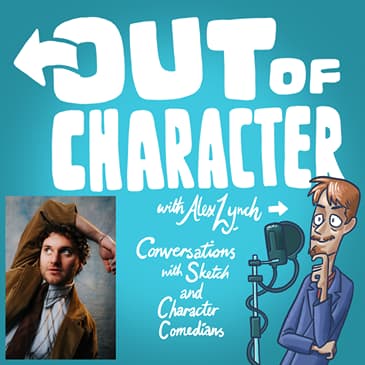

As the 'Heatwave' series continues, Alex chats to writer and performer Jonathan Oldfield (Radio 4's 'Time of the Week', 'Star Wars: Andor') about haunted arms, spicy feedback, and one-way mirrors.
Jonathan also creates a character on the spot based solely on the made-up name given to him by Alex in our regular section ‘Chain(ge) of Character’. This episode was recorded 10th July 2025.
You can find more of Jonathan's work at https://www.jonathanoldfield.co.uk/
Insta: @jonathanoldfield
Listen to 'Time Of The Week' on BBC Sounds.
Presented, recorded, edited and produced by Alex Lynch
Music by Naïve
Artwork by Tom Crowley
A Podomedy Podcast
Follow the podcast at @oocharacterpod on Instagram and BlueSky. Email oocharacterpod@gmail.com
New Podcast - Listen now to Voice Notes on my Phone, created by Richard Soames and produced by Alex Lynch: https://podfollow.com/6821851928
Hosted on Acast. See acast.com/privacy for more information.
[00:00:02] Hi, I just wanted to let you know about this podcast. It's about voice notes on my phone. You can hear my wholesome family chats. Why am I not an admin? You've made dad an admin? But not me. This is a nightmare. Some excellent flirting. You know, it's really hard being your girlfriend sometimes. Or my deep and meaningful conversations. Do you really see yourself with someone who has such different values to you?
[00:00:30] And other bits and pieces from my totally normal friends. Quick Wes, is it normal to shoot yourself as an adult? These are, well this is, voice notes on my phone. Coming soon.
[00:00:59] Hello and welcome to Out Of Character, a podcast about sketch and character comedy. My name is Alex Lynch. In this show I chat to writers and performers from the world of sketch and character comedy. Find out what made them venture into it, talk about their characters, maybe meet some of their characters. And generally just shoot the breeze and more importantly, have a laugh. My special guest for episode 86 is the performer, writer and director, Jonathan Oldfield. Hello. Hello, thank you for having me.
[00:01:29] No, not at all. Thank you for being here. It's, as the time of recording this, we are all melting. I'm melting. It's, uh... It's positively a melt situation. Um, and, uh, but you know, I'm getting by. It's alright. Could be worse. We haven't got a fan in our house. That's the main thing. So that, and it's, I'm, it's, it's too late into the heatwave for me to get one and not feel like it's giving up.
[00:01:54] Yeah, yeah. It feels very much like a heatwave series, this one, because everyone I've spoken to, it's been on like the hottest days. The joy of listening to podcasts though is that somebody, sometime, somewhere, will be listening to this in the depths of winter. And it'll be hard for them to imagine, but it is hot right now, I promise you. You are currently working on your new show, Exquisite Corpse. I am. Um, that is the title, isn't it? Yes, Exquisite Corpse, spot on. Nice. It's a good, it's a great title. Hey, thank you.
[00:02:21] Is this the first time you've done a solo character show? This is, yeah. Because I know you've done solo shows before, but is this the first like multi-character one? This is, yeah. So I've made two, I've made two solo theatre shows in the past. Which, I mean, I think when I was a younger artist, I didn't really care about the distinction between theatre and comedy that much. But now that I'm making a comedy show, I think the distinction for me is quite clear. Which is that I had the privilege of making theatre shows where funniness was part of it.
[00:02:50] There would be laugh points and punchlines. But the overriding thing was a theatre show. It was exploring a theme or a set of themes or a story or a set of stories. And this is, now I'm making a multi, yeah, my debut multi-character comedy show. So it's got to be funny and it's got to be consistently funny for as long as it can be, ideally for the full hour. Please and thank you. Yeah. And are these all new characters or are they characters you've like tried out for four years ago in something else?
[00:03:18] They've actually ended up mostly being new characters. I've got a couple of characters which I've done over the years on gigs. And I did one for the BBC New Comedy Awards and another one for the Musical Comedy Awards. But those characters actually, at time of recording, although we'll see because there's still three weeks left to Fringe, at time of recording they're currently not in the show. I've sort of enjoyed more building new things, new characters, new ideas, yeah.
[00:03:44] Yeah, yeah. Because I came to a preview of it, I guess it must have been quite early on. Oh yeah, of course. Was it Leicester? No, it was, oh God, it was the Star of Kings. Oh yes, in King's Cross. It was a double one with you and Rory. Yes, Rory Marshall, yeah. Rory Marshall. And, I mean, you had this brilliant, without spoiling too much, you get the audience to essentially draw a body,
[00:04:12] which I assume is where this exquisite corpse title is referring to. Yeah, so the show is called Exquisite Corpse because of a childhood game, which a lot of people know as the game Consequences, where you draw a set of legs and then fold the page over and then a body and then fold the page over and a head. Yes. But it was invented in the 1920s by a bunch of French surrealist artists who used to play it. They'd get drunk in a flat in Paris and play it together, basically.
[00:04:39] And they called it Exquisite Corpse, which I thought was a much better title for a show than Consequences. Yeah, oh no, Exquisite Corpse is great. And it feels a bit more like you know it's a comedy show, a character show, rather than Consequences. Yeah. But it's such a great idea. And then you are kind of, as they are drawing, you are talking to them as this Sicilian man. And so they're not quite sure what you're asking of them. Yeah, although interestingly, the show's changed dramatically since then.
[00:05:07] And the Sicilian man is no longer the narrator of the show. Oh, okay. But he is still there and another guy's. But for listeners, I tried a version of the show early on where I speak Italian and I would talk to the audience members in Italian. And that was quite lovely because everyone that I spoke to didn't really speak Italian beyond what you need in order to order a pizza in Rome. Yeah. And that would make for quite a funny setup for things.
[00:05:39] But after a while, it became a little too restrictive as an idea. And yeah, the show's changed dramatically since then. But I would say that's part of my process as a writer and also part of the way that I like to direct shows as well, which is to keep pushing and exploring. I think the first idea for me is not always the best one. Or if it is, then I need to do it a few times to make sure that it is.
[00:06:03] And more often that I find is that if I don't hold on to my ideas too strongly, as in if I hold on to my ideas lightly, I can follow them. I can ride the wave of them much further and get to a more interesting or exciting or strange or odd or funny place. Yeah. Yeah, absolutely. Have you previewed it quite a lot then to kind of come to this conclusion of this needs to change or this is too restrictive? Yes, I do. I'm previewing this show a lot.
[00:06:29] I mean, I think by the time I get to Fringe, I will have done it about 25, 26 times. So about the same amount of times as I would have done Fringe. Exactly. Yeah, yeah. And now this bit of July is where we're recording a few weeks before Fringe is my busiest one. So I'm going to Bath and Cambridge and Berlin and the Isle of Wight and Leeds and Manchester. So I'm doing it all over the place in July as well. But again, that was an active effort on my part.
[00:06:55] I really enjoy trying out in front of different audiences. I think sometimes Fringe shows can fall into the trap of only performing to either A, your friends or B, a London audience before it gets up there. And then you meet a slightly different one. And then B, I think the audience are the people who are telling you what's funny and what's not. But you can't, I don't know how to describe them. They're sort of like, you can't put all your faith in one audience because one audience isn't always right.
[00:07:21] So you sort of need to try and correlate or tessellate the feedback that you get across multiple audiences in multiple cities. Is at least how I'm approaching it. No, I mean, that's totally the right way to approach it. As you say, it's very easy to get, you know, you take something somewhere and if it kind of, not bombs, but if it doesn't do as well, you're kind of like, oh, they like that in London. And it's like, yeah, because that's, it's kind of London is sort of its own bubble as well. I mean, Berlin is quite a curveball.
[00:07:50] Berlin is a huge curveball. What made you decide to do that? There's a wonderful thing called Berlin Fringe, which I think has been running for a few years, basically mid-July just before the Edinburgh Fringe. And they got in touch to see if I wanted to do it over there. And I've never been to Berlin and I'd quite like to go. But I'm really fascinated to see, I don't know, maybe it's the sort of, it's the bit of me that's scared but also wants to feel brave.
[00:08:18] I'm excited to see what this show will look like in front of a Berlin audience. I enjoy trying, especially character and alternative comedy out in front of audiences that might not normally get it or receive it. And yeah, so that, I think that'll be fun. Because you've just, at most of the time recording this, you've just wrote a feature for The Guardian about your, in inverted commas, haunted arm. Yes, my haunted arm. Because you've broken your arm six times? Seven times?
[00:08:47] Seven times, seven times. Seven separate breaks on seven separate occasions. That's mad. I mean, it's an interesting point in itself. Is that making it into the show? Or is that... It is, yeah, definitely. Yeah. The thing that interested me about the childhood game originally was this idea of sort of building a man. Yeah. And the various, like, absurd and silly versions of men that you could build. Which I think links to the radio show that I write, which is called Time of the Week. Yes.
[00:09:15] Which is a sort of gender satire. And I work a lot with gender satire. And so I enjoy satirising or working with different versions of men. But in doing so, the big question comes up, like, what's the relationship of the game to me and my body and my version of myself that I portray and walk around in every day? Now, I don't want your listeners to think that it's in any way a kind of heavy or interesting dissection of that.
[00:09:43] Which really is where the arm came in, because it's... I think a lot of my relationship to my body can be summed up in the fact that between the ages of 8 and 13, I broke it seven times. Yeah. And... Let that be an indication of who I was. It's interesting in the article you talk about how now you kind of listen more to your body than, like, you used to. Yeah, I mean, it's... I had this baffling encounter with a masseuse who told me my arm was haunted by my great-great-grandfather.
[00:10:13] Who lost his arm in World War... in World War I. Which I, you know, that's absolute cannon fodder for a comedian. What a beautiful interaction I had. If I was a sort of observational stand-up, that would be my man-draw material. But instead, I did find it funny. But then I also actually have found since that moment that treating my arm as if it's haunted
[00:10:37] has allowed me to sort of think a little bit about the ways in which my arm does still have problems. Because that much trauma on one part of your body leaves a lasting impression. And the Guardian article was a nice and, I would say, rare... Like, a very rare opportunity for me to be very candid about that. Yeah. Well, yeah. I read the article and it was really interesting you talk about how, like, sometimes you...
[00:11:05] You walk still holding it as if it's in a sling sometimes. Or almost like the kind of sort of ghost... The ghost of it sort of thing. Yeah. There's... I... When I was younger and it was broken, I would sleep... I'd have to sleep with a pillow underneath my right arm, sort of propping it up. Because the cast was often very heavy. And I didn't grow up in the UK. I grew up internationally for most of my childhood. Often in quite hot countries.
[00:11:32] And so my memories of being a teenager were actually very linked to a very stinky, heavy cast attached to my body. And sometimes if I can't sleep very well, I'll put... I'll find myself putting a pillow under my arm and sleeping a lot better. And I think there's something comforting there that's interesting, yeah. I mean, let's hear more about that. So you grew up internationally. Where did you grow up?
[00:11:57] And what was the sort of comedy then that you enjoyed growing up? Or did you really have comedy when you were growing up? No, that's a great question. So I was born in the UK and then I moved to Mexico and then Thailand. And then South Korea and then France. And then I moved back to the UK as a teenager. And then in my early 20s, I lived in Spain and Italy as well. So... What? I've got... I move around a lot. I moved pretty much every three years for most of my childhood.
[00:12:26] Why was that? My parents' jobs, they... My parents both did languages at university and they love... They're linguists, but they work... My dad worked for quite an international company. My mum was taught English as a foreign language. And so they love to travel and they take us all along with them. It was an immensely... Immensely privileged childhood in the sense that I got to experience and live in the most amazing cultures at a very young age. Wow.
[00:12:54] And then it also provided quite an odd juxtapositional childhood in the sense that my relationship to... Because I am English, I'm British. My relationship to Englishness and Britishness is quite strange. And also my relationship to these other cultures is quite strange. You know, I've got... I've got sense memories around Mexican culture, but I am not Mexican and that's not my culture. Wow. And, yeah, it's made for... I would say it's made for quite a disjointed sense of self,
[00:13:22] which I think lends itself quite naturally to character comedy. I enjoy diving into other people and other things, partly because that's what I spent the majority of my childhood doing, was starting in a new place. So that explains why you could speak Italian when you were doing that character. Yes, yeah. So Italian and Spanish are the languages that I speak and I do a bit of French as well, but not really. But between us as a family, there's quite a few languages, yeah. That's amazing. How many... Have you got quite a few siblings then? I've got an older brother and a younger brother, yeah.
[00:13:51] And they... Yeah, we're all back in the UK now, but they've got, I think, a similar sense of international kid, British international kid, which is quite strange. That's amazing, though, going to so many different places at such a young age as well. It was amazing. I mean, it was genuinely amazing. And I think a large part of the things that I consider positive in myself as an adult now, as in my personality traits that I consider to be positive, Yeah, yeah.
[00:14:20] are built from that. Those experiences are built from turning up in a place and finding your place in it, calling it home, meeting people and calling them friends, and then being willing sometimes to let that go after a little bit and start again, which is not always easy, but does teach you stuff.
[00:14:40] It's a huge experience, isn't it? Yeah, exactly, yeah. So when did comedy come into your life then? That's a funny question. I mean, I... I mean, I suppose, like, not... I mean, obviously, comedy... Yeah. ...is obviously part of life, but I mean in terms of TV shows or films or...
[00:15:10] Yeah, yeah, yeah. Yeah. I mean, I think so when I was living in Mexico, the majority of sort of kids' TV that we would get would not be CBBC. It would be things like Cartoon Network and more American stuff. Right. And so odd things that I would not even consider to be comedy, like Courage the Cowardly Dog, if you ever remember that, which I would say... Oh, I love that. Yeah, that was such a bizarre show. Sort of bizarre, odd, baffling, like haunting at times childhood shows. Yes.
[00:15:39] That was a strong memory of mine from a childhood. But then weirdly, almost every summer whilst we were living abroad, we'd come back and we'd see our grandparents and things like that. So I would also get pockets of... I'd get pockets of memories of Britishness, things like Tracy Beaker as a child and things like that. And then I would say the big one would be like Monty Python. I'd get flashes of Monty Python coming through. But never in a way that felt like it was mine or for me, but in a way that, yeah,
[00:16:09] that felt like a kind of sense memory. A lot of my characters and my comedy builds from rhythms and feelings or genres or music. Music is a big inspiration for me. And I think a lot of that comes from the fact that I don't have a single cultural heritage to draw from. Yes. So sometimes I'll parody things that feel like they're parodying, I don't know, feel like they're parodying Tracy Beaker or parodying Monty Python, but only because that's how they feel to me sometimes.
[00:16:39] They feel like not super ingrained in my childhood, but also there, yeah. That's, I mean, that's such a... That is a unique experience experience of just getting this, sort of how it sort of finds you. So then when did you start putting it into practice and being like, oh, this is something I want to do? Yeah. You were an improver, weren't you? Yeah, completely that. So I ended up going to Edinburgh University. I studied languages there,
[00:17:08] but part of me sort of went to Edinburgh because I think I wanted to perform or be an actor or be a comedian and I knew the Edinburgh Fringe was a good place for that. And I joined the Improverts, which for people who don't know is a very long running, short form improvised comedy troupe, which is the university improv troupe. And Edinburgh is, I would say, quite different compared to other unis and in other unis, often the sketch or the stand-up scene is quite strong. But for Edinburgh,
[00:17:36] the improv scene was really, really strong. And I joined this troupe and found myself in an amazing space of doing a show at half midnight every night during Fringe and it being completely improvised. And it was a proper baptism by fire of working out who you are, how to deal with an audience, how to deal with a drunk audience, what's funny, what's not funny, of what happens when you have a show that's not funny and how you pick yourself back up again.
[00:18:06] And, you know, interestingly, it's an improv troupe that's been running for many, many years. So people like Humphrey Kerr, who now, who's part of the Penny Dreadfuls and now writes on SNL, is part of it. People of my generation, people like Lorna Rose Treen or Jodie Mitchell also were part of it. But it was that, it was sort of improv where I started out. And it was also when I got to Edinburgh that I started watching, I mean, a sort of early important influence of mine was Limmy, Limmy's show. Oh, yes.
[00:18:35] Which again, outside of Scotland, not many people know him, but Limmy's show and Limmy's homemade show are sort of, I would call them in between sort of solo sketch and character comedy. And they were absolutely fantastic. Really surreal and odd, but also grounded and realistic. And living in Edinburgh and getting to know Scotland as an outsider through those years that Limmy's show were coming out were, yeah, was a real privilege. Which that was a real early influence of mine
[00:19:05] as well, I'd say. Nice. Yeah. I mean, as you say, the Improverts is very much kind of a, the alumni that have been there. It's, yeah. I mean, with Lorna Rose Treen, who obviously you work together with a lot and she's also your partner. Yes, she is. Um, do you remember, because I know when I, because Lorna's been on the show and we talked very briefly about the two of you meeting
[00:19:34] and she said that you were both friends or you didn't really know each other in the first year and then you worked together and then, you know, before you started dating. What was your memory of first meeting Lorna? Yeah, whatever her memory is, is mine too. That sounds good to me. No, yeah, that's spot on. We, we started, we didn't know each other in the early years and then towards the latter half of my time at Edinburgh and Lorna's time was, was when there was a very,
[00:20:02] what I would call the sort of first wave of modern clowns coming out of, coming out of Golier or, or, or starting to work with clowning work. So, so people like Lucy Pierman, who I ended up last year directing her show, but people like Lucy Pierman and Lucy Hopkins, Spencer Jones, a generation of people who were really experimenting with what comedy could look like, what live comedy could look like and could feel like in front of an audience.
[00:20:32] Me and Lorna met, we were doing the Improverts and then we started watching all of these weirdos and in, and in only a way that I think the confidence of somebody in their early twenties who's starting to explore comedy has, we decided that we were going to do that with no knowledge or training or understanding of what it was. And so we started to build a, a, a, a sort of comedy clown show together called Jam Sandwich where we played, we played, um, sort of failed kids TV presenters
[00:21:01] from the eighties and nineties, think sort of art attack style. Uh, and we, and it was sort of a sketch show built around that. It was sort of horribly dark and, and very silly and surreal at the same time. Uh, and we worked on that for a good few years and then, yeah. Wow. Yeah, that was our beginnings. Did you do that at the Fringe then, Jam Sandwich? Yeah, but not properly. It was, it was mostly, it was mostly sort of, um, the student, your student uni scene that we did it of outside of Fringe. And then we maybe did,
[00:21:30] we did like a couple of, we maybe did two or three free Fringe shows of it. Uh, but yeah, nothing, nothing real. We were just sort of, again, as with the Improverts, we had the advantage of being Edinburgh residents. And so we got a lot of, we, we got a lot of last minute canceled slots that would come our way or we'd know to the people who ran the pubs for Free Fringe and so we'd be able, we'd be able to get a slot that way and it was fantastic. Yeah. Yeah. And obviously like, you know, you both work well and enjoy working well together because you also co-write
[00:21:59] Time of the Week, which is your, um, Radio 4, uh, Women's Hour spoof series. Yeah. Which is very funny. Two series of them. Yeah, two series of course. Yes, two series of it. And, and it's a, was it award winning? Oh yes. It was award winning. Yes. Multi, I'm going to call it multi-award nominated and award winning once. Yeah. The multi, the multi-award nominated is always a good, it's always a good. That's a strong sound.
[00:22:29] Yeah. Yeah. I've got that in one of mine. Yeah. Um, Lorna described, described you as the Olivia Colman of the team and that you're playing all the man parts and you're, you're the only man in the same way that Olivia Colman was playing all the female parts in Mitchell and Webb. Yeah, that's, that's spot on. That was, that was an act, that was actively done on our, on our part. We wanted to try and readdress the balance of, uh, sketch shows of times gone past. Yeah, yeah, yeah.
[00:23:20] you're depending, depending, you don't want to like cross a board of being like, oh, should I, should I say that? Or is that, you know, something that I have no understanding of or I don't, you know, it's a kind of different, um, outlook perspective. No, for sure. Um, I mean, I think what's at the base of, of time of the week and if people haven't listened to it, it's, it's, it's essentially a very silly sketch show. It's parodying a sort of very serious news and current affairs program that's, that's around women's news
[00:23:50] and current affairs. But ultimately it's, it's a very stupid show. However, what's underneath it is, uh, like a sort of strong feminist political stance. And I think that when you work from a place with a team where we all have the same viewpoint on feminism in particular, um, then it becomes a conversation about, about things. More, you know, it's not to say I, I wrote a lot of the men in the show. It's not to say I was the only one who wrote, the men and I also wrote a lot of the female characters, but that's not to say I,
[00:24:19] I wrote, you know, for, for the women in the show. It's, I, I, I, my favourite place to be is, is in a collaborative space. And, and if there's, if you can build up trust amongst a team and you have a shared, uh, political understanding of what you're, where you're aiming your, your satire, where it is that you're trying to hit, uh, who it is that you're punching up at, um, then, then those conversations, yeah, we've never, those conversations don't often feel like they, they come up or at least if they do,
[00:24:50] then there's, then there's space for those conversations to happen. I, um, adore making time of the week and, uh, I think, you know, I, I, I think, I don't know if Lorna describes herself as this, but I do, I sometimes think of a lot of the work we do with time of the week and, and in some of our solo work as, uh, as, as sort of gender satire and, uh, and, coming from a place as a man, being able to satirize men, uh,
[00:25:19] but also being able to look at the way that women are treated in the world and be able to satirize that is not the same as, uh, sort of satirizing women, if that makes sense. Uh, yeah, what you're satirizing is the gaze, the male gaze more often than not, but the gaze and that, uh, that can be really exciting once you start to unlock it because it feels like it could be, uh, yeah, radical in a way or, or at least, um, it feels like it could be satirical. Yeah, no, I mean, you,
[00:25:48] you articulated that answer much better than I articulated the question. Kathleen, 79, says that supermarket milk comes in plastic cartons which is bad for the environment. She misses glass bottles and also when the milkman would come and have sex with her. Rita, 80, says that she thinks glass bottles were chic and kind of iconic and also she misses sleeping with the milkman. Francis, 87, says that it isn't just milk she misses getting delivered but also orange juice and also having sex with the milkman. Joan, 81,
[00:26:18] says she never used to have milk delivered. She was at a nunnery most of her life she's lapsed. She'd quite like the opportunity to sleep with a milkman. Arlene, 78, says she wants to sleep with a milkman. Helga, 81, says, Ich möchte mit den Milchmann schlafen. Alana, 94, says that she used to get very annoyed when the milk float would wake her up at 5am but sleeping with a milkman would always make up for it. And one from Alan, 85, who says that he misses sleeping with a milkman. Had you, had you fully listened to Woman's Hour
[00:26:48] before you started writing this because Lorna was a producer on it. Yeah. So obviously she, she had the experience, this sort of first-hand experience of, but had you listened to it or did, did you kind of have to swat up on it? No, I am, I am, I was and I am an avid Woman's Hour listener and I think that again, hopefully provided a good grounding for parodying it. I often think that, you know, parodying something you need to know it intimately or love it.
[00:27:18] There's an element of love within parody. I love that show, I love listening to it, I also am critical of it and I find it really funny sometimes and so that's a nice middle ground to be in to try and satirise it or parody it but no, I was, I've been listening to it for years so it was a really nice space to, to build from.
[00:27:55] To go onto your directing, how long had, have you been directing and do you feel like as at home in that chair as you do being a performer? Yeah, I mean, I, I, you know, me and Laura work together a lot but we also work separately so I've spent a good few years as a, working in theatre or in TV and film as an actor as well. Right, yes. And, and that theatrical side or more, more sort of dramery side of my work
[00:28:26] I think is what led me to directing comedy. Comedy directing is a very odd and specific job and there's also not, there's not very many people who do it and everyone seems to do it differently so I don't, before I speak about it I don't want to pretend to be in any way an authority on it at least the way, the things that I find are really fun or that I enjoy in comedy directing is having a really, like, being part of a process of trying to make, of trying to help the artist make what they want.
[00:28:56] Sitting with, with somebody like Lorna or Joe Kent Waters or Lucy Pearman or Alice Kacane and trying to work out what is it that's in their brain and how can they help convey that to an audience in the funniest, clearest, most exciting, most adventurous way possible. Yeah. Now within that there are some skills that I bring from the theatre world things like staging or lighting or set or sound or costume help like more traditional things especially in the character and alternative world. Yes. But there's also things that come
[00:29:25] from my skill set as a writer or as a script editor or also from my skills as a performer where I can help them work out how to, yeah, how to sort of perform it. It's a, I often, although I describe myself as a sort of performer, writer, director, the thing that excites me most is really jumping across forms and roles a lot and pushing myself and exploring. It's why, you know, we'd never written a radio show before doing Time of the Week and I relished the opportunity of seeing what that, what that
[00:29:55] playground looked like. So when I first started directing comedy I felt like I was competent and I could give it a go but I certainly was more excited by the possibility of trying out that playground and seeing where my skills or my things that I'm interested in can fit that role if that makes sense. No, it totally does. That's interesting and also it's funny you say, you know, you feel like you don't necessarily have like an authority on it but when you look at the shows that you have directed the names that you said
[00:30:24] you've got Lorna, you've got Joey Kent Waters, you've got Lucy. Those are, those were some big shows. Oh yeah. I mean, Joey Kent Waters won the Best Newcomer. Yeah, oh totally. I mean, how do you go about directing a show like that, the Frankie Monroe one which is completely off the wall and brilliant. Had you worked with Joey before or was this a brand new working relationship? No, it was a new working relationship with Joe and, I mean,
[00:30:54] listen, it's, I'm very proud of the work that I've made. Like, whether they've had sort of critical success or not is always an added bonus but it's certainly, at least for me, it's certainly not the reason that I dive into things. No, of course. Often what happens is that I'll watch a performer, maybe they've asked me to come watch them or I'll be interested in them and I'll go and watch them and if I find it funny but also I feel like I could be helpful or that I've got some thoughts or ideas or exciting bubble in my stomach of where this could go, then that's often
[00:31:24] a good sign that something exciting could happen. It's always a gamble when you start working with somebody new as it is from the performer side as well. Whenever you're looking for a new collaborator it's always a gamble and so I've now, I worked on both Jo's shows and we've got a really fantastic, wonderful working relationship and I think part of that is built on all the things that you would expect like we find each other funny, mutual respect and understanding
[00:31:53] that both of us or neither of us could be right or wrong at any given time but also that my role on that is to support and help Jo find what he does so his shows are a success because of him and where I've been helpful along the way is hopefully to be a voice of the audience of making sure that it's coming across, it's making sense, it's as funny as it can be and occasionally pushing him into a new direction and finding new things for him to explore and play with.
[00:32:23] So yeah, it's a collaboration in that sense but it's, Jo's success is certainly his and I'm glad to have helped along the way. Also, I am a good director, I will say that because the things that I've worked on have done well so yeah, I don't want to be completely self-sortable. I do also think I'm good at it. Yeah, you are good at it. I mean, it's interesting when you say about being located from the audience, you know, what the audience would want kind of thing.
[00:32:52] when you were working on Jo's show, when you were sort of making that show together, was there quite a lot of riffing and improvising and trying stuff and then you kind of helping structure or be like that should definitely go in, that shouldn't or was it much more tightly scripted than I'm giving it credit? No, no, I mean, every act works very differently.
[00:33:23] With Jo, the first show I came on slightly later, he'd already worked on it for a little bit and so where I was helpful was more as a sort of fresh pair of eyes and we moved a load of things around, sort of I helped with some of the narrative going through it and then, you know, punching up bits and bobs here and there. My ideal, like maybe my ideal space to be in as a director is working with a performer
[00:33:52] who is up for like playing around on their feet, experimenting, trying stuff out, then going and practicing that at gigs or maybe at whips and working on it a bit more and then oddly, often with character and alternative work, I find myself doing the narrative work or the work of structure a little bit later. I want the funny to come first and then the structure can be justified afterwards.
[00:34:21] So it's a bit of a mixture of everything but I often encourage the acts that I work with to keep pushing for the funny first and it won't take that long to work out how we can slot it in. Yeah, and how do you find, because presumably you have a, who's directing your Exquisite Corpse show? Yeah, I'm working with a couple of people, I'm working with John Luke Roberts. Oh yes. Who's fantastic. Yeah. And also John Britton is doing some work on it as well. Oh, fantastic.
[00:34:51] And how are you finding being, being directed? Yeah, very funny. I guess obviously you've, I mean, yeah, you've been, you know, you're an actor, you're used to it but I mean, when it's something that's, it's, it's you and it's like your show, how, how do you find it? It's, I mean, it's very different. I honestly, I, I, I think I wish that my skill set as a director would transfer over to my own show much better because it's, it's extremely, I mean, if anything, it's, it's re-reminded me
[00:35:21] of the value of, of directors, of having an outside eye or even not just a full director like having somebody, having an objective voice who can, who can tell you in no uncertain terms without hurting your ego whether something is working or whether it's not. Comedy is, I do a lot of comedy teaching as well. I teach a course at Soho Theatre and I run courses independently and I teach at Guildhall sometimes. And I think like, one of the main things that I feel like with, with that is the,
[00:35:50] the feeling that having somebody, you know, make, trying to make somebody laugh is actually quite a vulnerable thing. It can, it can hit on quite a childish part of ours. it can sometimes feel like rejection or feel like acceptance if, that you get a laugh from audience if you don't. And so having an outside, having an outside adult voice who's there to help with that and be honest with you about whether something's working or not, but also be there to support you through that is, I think it's vital.
[00:36:20] John Roberts is fantastic with that and I, I just think I, yeah, it's, it's, it's been endlessly fascinating to me how, how little I can see how my show should be fixed because I'm the one doing it. Oh, but it's always that thing of giving advice but not being able to take your own. Totally, yeah. I think everyone has a danger of that. Yeah, absolutely. It's funny, I, the episode before you, I spoke to Elf Lyons and she mentioned you
[00:36:49] and what she called your spicy feedback. Yes, yeah. How spicy do you like your feedback? Yeah, is that something you do on your course then? Yeah, absolutely. I've done, I've done some work on with, with Elf as well and, and, but I, when I, when I, when I teach people I find that some people often enjoy getting feedback quite directly and some people would rather hear it indirectly. Sure. And often that can change day on day. I mean, I find myself working with people like Joe
[00:37:18] and Lorna and Lucy who all went to École Philippe Gollier which is the clown school in France and one of the tenets of people who, who go there is that they often receive feedback from a very, what's called via negativa as in they only receive negative feedback not really any positive feedback. Yes. And so those performers I think enjoy or at least are used to receiving feedback quite strongly and quite full on but not everyone is. And also I don't think that necessarily receiving feedback
[00:37:48] in an extremely direct way is always the best way for some people. So, sometimes when I teach I like to, I like to encourage the students who I'm working with to be vocal about, about how they'd like to receive their feedback on any given day. Now, to be clear, I'm not going to be nicer to you if you've asked for less spicy feedback. I think of it like the sort of Nando's hot sauce scale. You get, you know, you get like extra hot and lemon and herb and sometimes you're like, if you're, for whatever reasons in your life you're feeling vulnerable
[00:38:18] you want a lemon and herb day rather than an extra hot day, that's fine. It's probably not going to change the feedback that I'm giving you but it will change the way that I say it. Yeah, yeah, absolutely. And so, you know, yeah, my opinion will probably remain the same but how I give it to you or how I couch it or how I deliver it or how often I give it to you, how directly I give it to you, I think that can be quite empowering for a student to be in charge of that. And how spicy do you like your feedback? Well, I think I would be doing my own rule a disservice
[00:38:48] if I didn't say that it changes day on day. That's fair, yeah. But sometimes, I do think sometimes I need to hear it quite directly and sometimes, yeah, because it's, when you come up with an idea, it's, I think it's a constant muscle to flex that you need to come up with an idea, you need to find it funny, you need to think that you'll be able to deliver it to other people and then you need to try and remove your ego that's attached to it in order that you can objectively work on it
[00:39:17] as an editor. I mean, other writers have said this in much better ways than I'm saying it but, you know, there's the child childish creative part of your brain that comes up with something, there's the writer who writes it down, there's the performer who gives it a go and then there needs to be a separate person in your own brain which is the editor who's able to look at it and go, is this working or is it not? And that's where a director can help but also where you need to be honest with yourself and your own ego about whether an idea is working or not. You know, so often, more often than not, the majority of the feedback
[00:39:47] that I'm giving to a performer on stage, the audience is giving to them, they're just not listening to it. The audience is, like audiences, especially good audiences are extremely, like they're telling you all the time whether they are enjoying something or not. It's just whether your ego is choosing to ignore that. Yeah, that's true. That is true. And I mean, you're obviously like, you're a very collaborative person. Do you sort of feel, personally for me, it's that thing of I could, I'm a writer but I could never be a writer-director
[00:40:17] because I don't trust my judgment enough, if that makes sense. Like, I kind of, I need another pair of eyes to either confirm my suspicions of it or my, you know, sort of positive feelings about it, you know. Yeah, yeah, I don't know. I mean, I'm really interested in doing more directing for sort of TV stuff
[00:40:46] and I think writing, directing in that way is maybe a more common route. I really relish, I really relish collaboration and I relish it mostly because, I mean, although I'm going to say this and I'm going to caveat it by saying this might happen to me one day, I've just not yet had an idea that's like this, that very few of my ideas I think are perfect and in fact, quite often, I don't think that ideas
[00:41:16] come fully formed perfect, they need to be chiseled or played with or, you know, like made malleable and the more people I've got playing with a blue tack, I think, not always, I mean, you don't want too many cooks spoiling the broth but like having a group of trusted people that can give me some other perspectives on it is often really, really useful but it requires stamina and it requires resilience to realise that those people are,
[00:41:45] and it requires finding the right people, I mean, it's why I relish working with Lorna so much or for example our producer Ben who produces Time of the Week is somebody whose opinion I trust but also somebody who I know whenever is giving feedback about something is not there to attack me but is there instead to serve the work, to serve the writing, to serve the piece that we're ultimately going to make together and so therefore I never feel like things are personal. Everybody treats everything as
[00:42:15] personal and it really rarely is. No, because you're all striving, you're all wanting the same outcome, you're all wanting the same thing, aren't you? Yeah. What about when you did your show One Way Mirror? Was that a completely solo effort or was that also a very collaborative show? Because it was very different, wasn't it? I sadly never got to see it. Yeah, it was very different. It sounded great but was it a comedy or was it a That was a theatre show.
[00:42:45] That was a theatre show, yeah. And it was what I would call for myself a storytelling show and it was about the true story of me living with a large one-way mirror looking onto a busy high street so I lived in a I essentially did legal squatting for a few years. I lived in a disused lawyer's office on Stratford High Street and our front window was a one-way mirror so I could look out and see people and people, if they looked
[00:43:14] at the window, would only see themselves. And we lived in there through the pandemic so it was a story about people watching, about the people that I saw go by, about connection and isolation but interestingly that was an idea that I worked on alone a lot because I had to because it was a pandemic. But also the whole premise of the show was that I would, I set up a bunch of stories and then the audience would decide through the show where the stories would go and then the show
[00:43:44] ended with me getting an audience to astral project back to the time where I was doing the stories and then me and an audience member live on stage would essentially improvise and finish the stories together. Wow. So whilst I couldn't have a collaborator in the sense of the rehearsal process, the collaborators were the live audience members on stage and that was something I was really interested in at the time mostly because like all of us I was extremely isolated from audiences and people from other things
[00:44:13] and so I built a show that required liveness and required the audience to be there. So yeah, that was collaborative but with the audience I would say. Did that feel like quite a gamble because audiences aren't always the most natural performers or even collaborators. But I mean honestly the shows where the person on stage wasn't a performer were often the better ones because performers love to perform. But the reason that it was definitely a theatre show was
[00:44:43] that some nights audiences wanted the stories to feel darker or sadder or more realistic and sometimes the audiences wanted the stories to feel funny and so the show would be wildly different every night depending on which way they wanted to take it. So there'd be shows where the stories became very magical realistic and not realistic at all and there'd be shows where they were very grounded and that was, I enjoyed experimenting with form in that sense. Yeah, that is quite, I mean I suppose because you've been improvising for so
[00:45:12] long you have the courage of your conviction to trust where it goes and just sort of follow the fun as it were. Totally and that's going back to what I was saying earlier that's the ultimate test of not being precious about your ideas. If I held too strongly onto the directions that I would like the stories to finish in it would be at the detriment of the show. So I had to sometimes completely let go of control, let the audience member or audience members do what they wanted and trust that
[00:45:42] that would be the show for today. So that was a really useful lesson. Oh well completely and I mean it's sort of that tight rope of walking that tight rope of letting go but also completely maintaining control at the same time. Yeah yeah yeah. How many performances did you do of that show? Was that quite a long run? It was it never really had a long run but it was over quite a long period of time so I did a few shows at Pleasance, I did a show at Soho, I did
[00:46:11] a few shows at Brighton Fringe, I did various shows at Camden's People Theatre, early versions of it were at Theatre Royal Stratford East so it was quite, it was a deliberately long slow process and then it never I mean this is the funny thing is I thought I'd done it lots but very few people saw it mostly because it never went to Edinburgh Fringe which is a place where you can get audiences to see your shows quite quickly but yeah I performed it all
[00:46:41] over the place for a good year and a half, two years but it never really had a it sounds a really interesting concept man, I really especially when it comes from like you you actually lived in that situation that must have been some of those some of the sort of what is it property guardianships that people have often talked about like Christian Brighty talked about like the ballroom where he was living
[00:47:11] and it's just that's how he was able to do his you know Regency parodies oh it's mad because he was like oh we just we had a ballroom that we could just use it's absolutely mad I mean I think sadly like with the rest of capitalist society where property guardianships maybe three, four, five years ago were an affordable place for artists to live maybe a bit a bit riskier place to live but a bit more affordable especially in London now unfortunately they've become
[00:47:40] extremely pricey as well oh you're joking really yeah so we got we sort of got priced out of ours in the end you know towards the end of our time living in a property guardianship it wasn't much cheaper than living in a normal flat that's ridiculous you just had a lot less rights talking about One Way Mirror before and how you've you know the sort of the audience participation and sort of pushing yourself more in that way do are you doing are you pushing yourself just as
[00:48:10] much if not more with this new show are you really bringing the audience more into it I'm certainly pushing myself more in this show I mean part of it is about bringing the audience into it but part of it for me is the premise of the show which is built around a deliberately nonsense game a game that encourages the artist or the artists involved in it to experiment and enjoy juxtaposition and surrealism and things that
[00:48:39] look or feel a bit odd or different yes I think partly partly because my route up and through comedy has been like involving writing and directing which often involves things like narrative work or helping things make sense or helping things be clear I think I'm enjoying pushing myself as a performer and as a writer into a space that's deliberately a bit more odd or a bit or tied up a little bit less neatly I mean obviously there will be things tied up neatly within
[00:49:09] there but I'm enjoying pushing myself into a space that feels like it's pushing beyond me or beyond my knowledge or beyond the frontal cortex of my brain I'm less interested at the moment in using my logic brain and instead trying to engage my and mine and the audience's instinct brain or subconscious brain and finding laughter there if you had to be isolated
[00:49:39] with any tv comedy character who would it be that's so tricky who could you have done a legal squat with I think Sue White in Green Wing oh that's good I think it would be a really difficult few hours few days few months however long I'm spending with her but it would also be endlessly entertaining
[00:50:08] it would be fantastic Michelle Gomez playing Sue White is still one of my favourite comedy things ever yeah she's so good in that that would be a very mad lockdown but you're happy with that absolutely insane you'll embrace that oh yeah I think I would rather embrace the madness of Sue White than feel the stale dryness of lockdown again is there kind of
[00:50:38] a limit of kind of you go okay Sue this is like this is too much now and I'm thinking of the point where she ended up getting a lion in the end of series two oh it would have to be a conversation with her at some point that I've got to have some time off yeah but you know that's what collaboration is all about that is what collaboration is all about yeah listening to the other person yeah whether Sue White will actually listen is a whole other question do you I mean
[00:51:07] if she if she fancies you then you're in a different trickier situation a whole different world then yeah and maybe not one that I'm interested in being in but yeah great so you are locking down with Sue White lovely stuff final section of the podcast
[00:51:37] it is called Chain of character and this name has been gifted to you by Elf Lions and the name is Flipper Fox Crotch the third Flipper Fox Crotch the third really good so who is Flipper Fox Crotch the third Flipper Fox Crotch the third has no upper lip through generations of
[00:52:06] wealthy aristocratic inbreeding the upper lip has become useless to that family for it was only used to stop soup getting in and now that it's just air to teeth they can get the soup past the teeth nice and simply he certainly has pantaloons but not not on his legs they are his legs oh okay yeah they're sort of thick pinstriped
[00:52:36] pantaloons on his leg so he's an eccentric aristocrat is he yeah but he's got a catchphrase as well well you know I'm going to ask you what that is yeah of course yeah give me a second to think of it what do you mean you don't have it just a hand no no I mean I'm trying to remember it because if you hear it once you're doomed to forget it because he wasn't a super successful man his catchphrase was spare change please spare change please
[00:53:05] coming from a wealthy yeah exactly so it's a sort of contrast thing even though he was so wealthy he was concerned about the pennies oh was he so that wasn't he wasn't he he's looking he's looking for cash wherever he can get it wow so he's mean with his money never gets a round in absolutely not no and if anything like if you give him
[00:53:35] 20 quid to go and get around you won't see any of that change because of the aforementioned spare change please i see so does he he pretty much lives in like his little bubble doesn't he yeah he has no concept of the outside world no what does he do um like with his day who is around him or is he on his own sorry i did i did forget to say his sidekick is a is a thesaurus
[00:54:04] his sidekick is a thesaurus yeah his sidekick any questions yeah his sidekick he's got a sidekick and it's a thesaurus and does the thesaurus have a name or is it just this is the thesaurus this is the yeah that's his it's a sidekick the thesaurus and he struggles to say it just as much as i do what does so does he go into town with his thesaurus yeah of course it's a sidekick it's his sidekick yeah yeah of course what do they what do they do together
[00:54:34] what does he where does the thesaurus come into play is he doing a lot of public speaking no no he's just his sidekick he's there to advise or to sort of crack little jokes with him depends what they're up to really there was this one time where they went to york and they went on the there's like a boat that you can get around the river of york yeah um and the thesaurus thought it'd be funny to try and jump overboard uh and then he had to jump in with him and fish him out again and dry him off in the sunshine on the south bank
[00:55:04] of the uh of the river going through york i realize halfway through that it's a person who is a thesaurus i was just imagining he's just carrying a book around and it's his sidekick and it just adds to the no no it's his sidekick his sidekick is a thesaurus yeah he's not a person who's a thesaurus his sidekick is a thesaurus oh is it but it's a sentient thesaurus this is the problem Alex if you question it too much it starts to kill it you're right because the sidekick
[00:55:33] is a thesaurus okay that's fine sorry if there's any other questions then there shouldn't need to be because he's he's a posh man and his sidekick is a thesaurus right and yeah so he's a posh man with a thesaurus sidekick does is that the only confidant in his life then i don't know i'm struggling to work out if he used to have a wife and she either left him or he killed her oh i mean there's quite a difference you're saying quite a different tone there yeah exactly i think him murdering her
[00:56:03] feels too dark especially because his sidekick is a thesaurus yeah i think i think it's quite understandable that she just left him because he's sounds nuts oh actually no i've changed my mind she's still with him but she's a beard okay yeah yeah so it's a sham marriage oh i see yeah i have no further questions on that good that makes total sense um so what does he is he like um
[00:56:33] did he inherit like a great fortune is he leaving his legacy to kids if he has them or is he just he's dead he'll be dead and that's it and everything will go to the thesaurus yeah i think well i think what it is is that there's there's those rich families that don't have a lot of cash but they are wealthy so he's kind of cash poor but wealth rich which is why he's always looking for the pennies um and i think it's it's up it's it's up in the air whether when he dies
[00:57:03] the money goes to the thesaurus or the thesaurus the thesaurus was in fact um his hallucinate his sort of hallucination oh god okay yeah it's sort of that's all a bit you know it's all a bit unclear that in a good way so it's gonna be a very complicated will to work out yeah oh totally yeah yeah but he's in good health so he's probably not gonna die for he's fine he'll be around for a while longer without a doubt yeah yeah yeah what does he want to be remembered for
[00:57:32] he wants to be remembered um you know what he wants to be remembered for he wants to be remembered for his like his um his inventions yes which mostly are things that are already invented but he thinks he's the first to do it oh right such as he invented a way of getting a block of cheese into smaller bits of cheese right but that's just a cheese grater yeah and he thinks he invented that yeah he invented um he invented uh
[00:58:02] a way of getting from england to france but that's just the eurotunnel so i mean yeah i mean very um innovative inventions if they hadn't already been if they hadn't yeah he's just a little bit too late if they hadn't already been invented yeah yeah oh so he hasn't actually got anything original of uh to so to speak no no but he'll be remembered by his failed inventions and that that in a way is beautiful yes you've got to fail
[00:58:31] however many times to you know get the success yeah there's a there's a more pithy way of putting that but i've forgotten what it is but uh yeah yeah okay so that is uh actually whilst we're on that why is he called flipper uh it's a nickname his dad gave him when he was a kid ah okay so flipper fox crotch yeah because he used to have a lot of um scallops and he'd always flip the scallops because he doesn't like eating them right way up that is flipper fox crotch the third
[00:59:01] thank you for that could you please tell me the name you're going to pass on to my next guest yes i can the name is david tennan david tennant just david tennant but not that david tennant yeah not that one yeah another one interesting okay so who is david tennant we shall find out on the next episode of out of character in the meantime thank you so much for being my guest
[00:59:31] exquisite corpse jonathan oldfield thank you so much licks lynch here thank you so much for listening to this episode and indeed other episodes if you have done if you like the show why not tell people about it you could do this
[01:00:01] by either leaving a review on apple rating it on spotify shouting about it on social media and then the old-fashioned but probably most effective way of just telling people about it any support really does help push the show to more listeners and it also gives me a little less anxiety that i'm not wasting my life with my audio endeavors anyway that's enough from me thanks again bye