
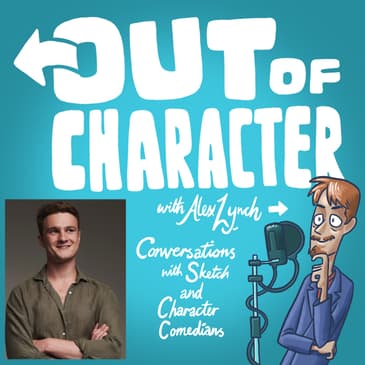

Alex chats to comedian and impressionist Josh Berry (BBC’s ‘Dead Ringers’) about positive masculinity, tennis players, and keeping an impression interesting.
Josh also creates a character on the spot based solely on the made-up name given to him by Alex in our regular section ‘Chain(ge) of Character’. This episode was recorded 20th June 2026.
You can find more of Josh’s work at www.joshberryofficial.com
Insta & TikTok: @joshberrycomedy
Presented, recorded, edited and produced by Alex Lynch
Music by Naïve
Artwork by Tom Crowley
A Podomedy Podcast
Follow the podcast at @oocharacterpod on Instagram and BlueSky.
Email oocharacterpod@gmail.com
New Podcast - Listen now to Voice Notes on my Phone, created by Richard Soames and produced by Alex Lynch: https://podfollow.com/6821851928
Hosted on Acast. See acast.com/privacy for more information.
[00:00:00] This September, podcasts across the Podomedy Network are supporting CALM's Stay Tuned campaign. Podcasts can be good company, but sometimes people need somewhere to turn. CALM provides free, anonymous support for anyone struggling with suicidal thoughts or affected by suicide. If you can help, £12.20 can cover the cost of answering a potentially life-saving call. You'll find the link to give in the show notes. Thank you for supporting CALM.
[00:00:41] Hello and welcome to Out Of Character, a podcast about sketch and character comedy. My name is Alex Lynch. In this show I chat to writers and performers from the world of sketch and character comedy. Find out what made them venture into it, talk about their characters, maybe meet some of their characters, and generally just shoot the breeze and more importantly, have a laugh. My special guest for episode 80 is the comedian and impressionist Jake Yapp. Hello.
[00:01:11] Sorry, I'll get myself a round of applause there. Hello. It's very good. I couldn't hear it. I just saw your hands moving. It was like a lot of my early career. God, that takes me back. Thank you for having me on. What a delight. What a privilege. You had my friend Peter on recently. Is that right? I did. Yes, I did. He spoke very highly of you and I'm very excited to hear about the podcast that you're both going to be doing.
[00:01:40] I was telling you about that. Yeah. God, he's amazing, man. He's just such a... I couldn't... Yeah, it was such a weird... It's a really weird experience becoming friends with him because he's just... I would describe Peter as a man, like, exploding with talent. It's just like... Oh, God. He can do everything. But it's just constantly there and he's so nice. And I... Yeah.
[00:02:05] You know, that isn't always the case as well, right? Like, a lot of people are brilliant and horrible and he is such a lovely guy. Oh, no. Absolutely. It's definitely that, you know, they say never meet your heroes, but if they're all like Peter, then you've got nothing to worry about. Well, I... Do you know... I don't know how many heroes of yours you've met, but of the ones I've met, I would say it's about 50% good, 50% bad. Oh, really?
[00:02:30] It's always a beard of a gamble, but when they're good, you're like, oh, God, I'm so pleased I met this person. Oh, nice. Who else of your heroes have you met? Well, I've met Andy Murray, who's... I mean, not really related to comedy, but... Well, he is funny, but an absolutely amazing guy. Just really great. Yeah. And I don't know. Yeah. Amazing. Wonderful. I can't tell you any of the ones I've met who I've been like, oh, no one's actually that good. No, no, no. I mean, of course not.
[00:03:00] But I was... It was very surreal for me meeting Peter, because I've always been such a huge fan of his work. And it was just... It was really funny, because I was like saying, oh, I'd seen, you know, your Brian Butterfield show and your... You know, and he was kind of like, dude, oh my God, you came to see it? And it's like, yeah. Yeah.
[00:03:19] Yeah, he's so... He's got such a body of excellent work. And yet, when you compliment it, he's so like, thrilled, which is so nice to see. Yeah, yeah. But oh my God, what a talent. And, you know, I was... I've mentioned some friends in the pub the other day that I was... Yeah, me and him are hoping to do this podcast and, you know, it's about impressions and whatever. And they were telling me about work if it's... I hadn't seen like when he does Terry Wogan doing the Jungle DJ set. Have you seen that?
[00:03:48] Oh, that's so good. Yeah, when he took over Six Music and he did... Have you listened to the Six Music takeover? Yeah. What... That's it, right? The... Just him... He's doing the Terry... The T-Wogs, but he also does... Oh God, he does like little sketches... Oh no, I haven't seen that. ...in between interviews. One of my favourites... One of my favourites of his is he does... He does a Ringo Remembers and he goes,
[00:04:16] NBC came along and said, would we like to do a television show? And we said yes, but on one condition, that we could all be detectives. And then it's like this Beatles murder mystery squad. And it's so funny. It's just so daft. So your thing with him is about impressionists, is it?
[00:04:38] Yeah, it's... Yeah, it's kind of still taking its final shape, but a lot of it is just us, yeah, discussing kind of the art of mimicry and hopefully maybe getting some people who we do impressions of, like on... Like on, sort of to do them in, you know, live, like a kind of... You know, like I've done a clip with Louie Theroux where I've done that and it's... Yes, I've seen that.
[00:05:05] And that, there's something in it. I mean, it's kind of excruciating to do it in real life, but it is also like, it makes it so interesting. I mean, we shot Pilot the other day and we were doing... We were both doing Tom Reed Wilson from, you know, The Jungle and he was doing his impression of him and I was doing my impression.
[00:05:25] And what was really interesting is that he... I felt like we were both capturing... Our impressions are relatively different, but we were both capturing real aspects of Tom Reed Wilson. Yeah. And I was just like, at the time, I was like, fuck, it'd be so good if Tom Reed Wilson came along to finish the sketch, you know, to finish the bit, you know, and I'm like... Yeah, yeah.
[00:05:47] And also, I think, I don't know, as someone who does impressions, normally I tend to sort of learn to do people that, like, I'm really interested in or like or whatever, just via osmosis, really.
[00:06:00] But there's something cool about if we're doing this podcast and we're like, you know, we're kind of unpacking the art form a bit and kind of saying like, you know, Josh, this week you had to learn to try and do, I don't know, Mark Zuckerberg or... Sure. Whoever, you know. So you kind of challenge yourselves to do... Exactly. ...the impressions that you, like, out of your comfort zone. Yeah, or like, or just sort of widening the scope of it.
[00:06:28] Like, I like this idea of, like, impressions through history, like finding people who are dead or that we have recordings of or whatever or... Do you know what I mean? Like, just kind of being a bit more creative and playful with it whilst, you know, Peter and I also discuss neurodivergence and the sort of... Yeah. Which is really, you know, I kind of think a necessity to do impressions.
[00:06:52] Funnily enough, I was just about... I was going to ask that. Do you think ADHD and neurodivergence plays, like, quite a big part in being an impressionist? Yeah. I mean, I think it definitely plays a huge part, I think, in being a comedian, honestly. You know, I've got a joke in my stand-up at the moment about that, about how terrible... Like, people whinge about, oh, comedians are all neurodiverse and they talk about it or whatever. But you wouldn't want neurotypical comedy. That would be so bad.
[00:07:20] Like, can you imagine how awful and dull, like, a sort of emotionally well-adjusted person would be, like, talking about their day or something? So, it just, you know... But I think that's it, isn't it? It's like, all good comedians are sort of sly outsiders. They're people with maybe a chip on their shoulder or whatever. And often they're sort of hypersensitive. I think that lends itself to the art form, right? And it's like, neurodivergence goes hand-in-hand with that, for sure.
[00:07:49] I think both autism and ADHD. And also, obviously, like, some people have both at once, right? Which will make for some amazing comedy, like... But I think, yeah, I mean, definitely ADHD. I mean, pretty much all the Impressionists I've met, I would say, flag for ADHD. Maybe with the exception of Alistair McGowan, who seems very kind of together and steady. Yes, yes. Who's just such a lovely man as well.
[00:08:16] But most of them, yeah, most of them are kind of like, you know, a jukebox. All over the show. Just doing all these voices and being like, oh, what would Gordon Ramsay say in this environment? Well, wow, I don't know. God, fuck me. You know, like, it's that, like, it's like an affliction almost. Yeah. Which has managed to be monetised. I mean, that's good. Yeah. But, like, do you think sometimes it's when you sort of happen to, and Impressionists do,
[00:08:45] just sort of, in the middle of a conversation, slot into an impression, is that, like, a sort of equivalent of, like, a nervous tick, do you think? Oh, that's interesting. No, do you know, I wouldn't do it out of nervousness. But then I may be slightly different, because in real life I'm quite, I like to listen to people normally, and I'm not necessarily a massive character.
[00:09:13] Like, I'm quite sort of relatively quiet and reserved. Unless I've had a drink, in which case I'm quite fun and a bit more, sort of put a bit more out into the world. But, yeah, I mean, I wouldn't say it's necessarily a nervousness thing. It's more like, I'm just obsessed. I get very, like, obsessed with people. And I'm like, wow, this person's so interesting. And, yeah, I would say it's more just sort of, like, the fruits of analysis and observation
[00:09:43] that your brain just kind of naturally does. And, like, oh, that person's got a funny way of saying this or that or whatever, you know? And there's just, like, this kind of, you kind of can't help yourself but want to imitate it. Yeah, yeah. It feels to me more of, like, a sort of naughty urge than a nervous tick. You know what I mean? Do you think that stems from, like, as a kid? Were you always like that? I was always, I don't know.
[00:10:10] I think as a kid I was quite a sort of studious, observer-y type of person. I wasn't, like, bouncing off the walls or whatever. I was, like, you know, quite obsessed with doing well at school and blah-de-blah. But I think, I don't know, it was just something that just kind of happened. Like, that was just the way that my brain works. Like, I would just find it easy to kind of pick out, like, set phrases, for example.
[00:10:38] I find that really enjoyable that, like, because we all have this, right? We all kind of use the same bits of language and fall into patterns. And I just loved the process of that. Like, it wasn't even, you know, about me being like, oh, I want to be a comedian or whatever. I just loved the process. Because at school, my mum worked at my school. And I would love the fact that she knew how all the teachers sounded. And so I could kind of come home and do the impressions of those teachers.
[00:11:06] And she would really get them because she'd get the nuances. Because she'd obviously, like, been in the staff room with them or whatever. And so, like, yeah, it just felt exciting. I do feel, I don't know, I feel like a lot of good comedy is that, right? It's like, oh, God, I really want to share this observation with you. Like, Kevin Bridges does that brilliantly, I think. He's got that sort of, there's that sense that he's like, yeah, just really excited to get off his chest.
[00:11:36] Something that is, you know, unarguably funny. Going back to the sort of, well, what we've been talking about in Neurodivergence and everything. You described yourself on privacy settings with Will Seabag Montefiore. You described yourself as scatty as fuck.
[00:12:03] And I wondered, like, how does that kind of manifest itself when you're creating your shows? Like, does that kind of chaos help or hinder it? That's interesting. Do you know, that's, I hadn't realised I'd said that to Will. And that's really interesting. Because, but do you know what? Well, because actually, I feel like I've changed my thinking slightly. Because scatty as fuck is quite judgmental of self, actually.
[00:12:32] And I feel like I'm being a bit unfair to myself there. Because I think a huge part of the creative process is scattiness. It is picking up loose threads and going, oh, fuck, maybe there's something in this. Or, well, maybe not. And whatever. And I think at the time, the stand-up show that I was doing was very, like, regimented and narrative-based. Was that Best Man? Yeah, yeah. So, so. Yes, yeah, yeah. I saw that. Oh, did you? Oh, that's so sweet. Thanks for, thanks for watching.
[00:13:03] It was, yeah, it was a show where I was, you know, I really wanted to kind of, like, tell a story and create a sense of narrative arc. And it's something I hadn't really ever done in a stand-up show before. But I kind of, for this one, I want to be a bit more, like, you know, all over the place and lean into being scatty and lean into, because maybe a lot of comedians find this with doing a show like that.
[00:13:31] It's like, you know, it was an interesting idea, and I think it resonated with people, or I hope it did anyway. But the issue, I think, is that sometimes, like, I don't really want to be bound to just a singular theme. And I felt like that show kind of was bound a bit to a singular theme. And the idea of, like... Do you want to quickly explain that idea? Sorry, yes. Yeah, yeah. Yeah, yeah, to those who may not have seen it. So the show was basically about, it was about being asked to be my best friend's best man.
[00:14:00] And the difficulties around expression of positive emotion that straight men, but also men in general, I think, experience. Yes. Around the time of kind of writing it, my brother was doing a dissertation, and the dissertation was all about what academics would call homo hysteria,
[00:14:20] which is where, like, men are terrified of saying anything nice to any of their friends because they're scared it'll make them, and I use this in quotation marks, gay. And, you know, there were lots of ideas about kind of, like, hegemonic masculinity and this notion that to be a man is to be not woman. And I was trying to kind of challenge that through a narrative about me struggling to tell my best friend that I love him.
[00:14:47] And I kind of, to add to that, there was, in this narrative, there was another best man. And so he was kind of set up as this kind of, you know, paragon of positive masculinity. And I was this kind of, you know, over-emotional man-child who was also kind of not brave enough to kind of say that he loved his friend. And the narrative was me basically coming round to the idea that actually, you, I should do that.
[00:15:15] And I would finish the show every day, every time, by getting two friends up from the crowd and getting them to tell each other they loved each other. Which, you know, was really sweet. Yeah, thanks. And it was, I loved it. And it was, because I was, do you know, I got that idea from watching, I was watching Johnny Vegas. I mean, this is a bit of a weird comparison. But I was watching Johnny Vegas back in the noughties or whatever.
[00:15:44] And there's a bit, and it hasn't aged brilliantly, I should stress. There's a bit where he uses the pressure of the crowd to get off with a woman. And that doesn't look great now. But I was like, okay, that's malign. And it's certainly not within the bounds of taste of, you know, modern society. But I was like, what if I could force people to do things that I think are good and that are good for them? And from that, that was born. It was born from that idea.
[00:16:10] They're like, man, obviously they love each other because they hang out all the time and they've been friends for years or whatever. And they've come to a show that I bet they haven't said it. And so, yeah, that was how we'd end the show. And I loved it. It was funny how, you know, everyone said it. Everyone told their friends they loved each other. They loved them, I should say. That's lovely. But, yeah, so that was the show. And it was fun and it had a point to make.
[00:16:35] But I think for this one, yeah, I'm just a bit more excited by just being like, here's my, you know, the heavy thought count in my brain that's all over the place. And here are all my anxieties. And there's no real threat. But, you know, it's kind of hopefully surprising. A bit more like a, not that I'm obviously, I'm not claiming to be anywhere near the ballpark of this genius. But like something like Billy Connolly or Robin Williams. Yeah.
[00:17:03] Or that very kind of, you know, frenetic. Right, yeah. Stuff exploding out of them type thing, you know. That's the hope anyway. Yeah, yeah. Are you bringing the audience more into it like you did with Best Man? Are you going to get them to do more good things? I don't know. I don't know. Yeah, maybe my role as a benevolent comedian is I should, you know, have a bit less time doing that. And it should be a bit more about, I don't know. It's interesting, isn't it?
[00:17:32] Because like I was thinking about this the other day about, you know, a lot of the debates around comedy where people will say, you know, like comedy ought to sort of punch up and comedy ought to kind of be. I mean, Nish Kumar, obviously brilliant comedian, had that bit about like comedy being inherently left wing. Oh, yes. And I don't really know what I think about that. I kind of feel like for me, comedy is already feel sort of apolitical.
[00:17:58] Or like I may be a bit more drawn to what Tommy Tianan says about like the concept. I think it's like he's talking about the concept of the jester or the joke or the archetype. And it's like sometimes they might be nice. Sometimes they might be horrible. Sometimes they might be a bit mischievous. You know, it's it's. But I think the point is, is that you can't guess where they're going, I think. And I, I don't know.
[00:18:22] I think maybe there's not that I'm obviously I'm not talking about doing a show where I'm being horrible to people and spewing all kinds of bigotry. But like a show that isn't about, you know, let me try and be super benevolent all the time. Sure. Might be more interesting artistically, you know. Well, yeah, especially if you can like if you are able to have a style that doesn't at the same time doesn't it's recognizable, but at the same time doesn't pigeonhole you. Yeah, that's the hope. Yeah, yeah, yeah.
[00:18:52] To rewind slightly, friend of the show, Tom Crowley. Big up Tom Crowley and Crowley time. And Crowley time with me, Tom Crowley. He directed your first two shows. Yeah. Yeah. What a great man. What were they like? Were they very different then to what you're doing now? Were they more impression based? Yeah.
[00:19:16] I mean, I think Tom, bless his soul, you know, took me on when I'd kind of been doing stand up for like a month. And then I went to the fringe, which like in hindsight, what an unbelievably confident thing to do. But actually, in many respects. Yeah. I mean, God, like. But like, yeah, I can't believe I did that, actually.
[00:19:40] Sorry, that's really, that's actually flummoxed me that I did that because now I'm like, but in a sense, great, because it was like really diving into the deep. Yeah, 100%. Like you learn so fast. Obviously, I was, you know, Tom made lots of good changes, but I wasn't particularly experienced, right, at that point. But they were, yeah, I mean, the first show was like super impressionsy.
[00:20:06] I would say there wasn't really very much stand up or any kind of initial attempt at stand up was, should be forgotten. And, yeah, the 2019 one was a little bit more stand up. It was a little bit more kind of trying to weave impressions into the material. So there was definitely kind of embryonic. I mean, nowadays, that's, you know, a decent amount of what I do would be observations that might weave impressions or characters in.
[00:20:32] Although there is some stand up that's a bit more, you know, me talking about ideas or. But, yeah, I mean, so I would say it was kind of like an embryonic form with less stand up and that I do now. But, yeah, it was probably wasn't a million miles away. But sorry. The reason I'm kind of slightly obfuscating is just because I've been brought back to the year 2018 mentally. And just how horrific the early gigs are.
[00:21:02] I'm just. Oh, God. Oh, good. Am I digging up trauma? Absolutely. This is trauma. Maybe I need to go back to therapy. I've been out of therapy for a while. Often this podcast has been like described as therapy for some of my guests. That's good. I think that's positive. It is interesting that I don't know if you talk about you talk to this about people that, you know, the experience of like doing it early on. It's. Yeah. God, it's brutal. It's so brutal. Yeah. Yeah, of course.
[00:21:29] And when and you know, you aren't the first person to have gone up to the fringe after like a month of doing it or something. It's. It's. But it's that thing of, as you say, you dive into the deep end and it's whether you learn to swim or not. Yeah. A hundred percent. And you. Yeah. Because you're just, you know, you're making it up every day and if you can kind of get comfortable with that. But it is good. It's like gave me a really good relationship with failure. Yeah.
[00:21:58] Like, particularly in stand up, I would say, like, because, you know, whatever gig I do now, I'm like, well, it definitely can't suck as much as some of those shows. Like I have this, you know, occasionally if I'm lucky enough to be asked to do like a corporate gig or a hosting thing or whatever. Yes. I'm just like, I honestly like I could absolutely eat shit for 10 minutes and it's just fine.
[00:22:27] It's really fine because. Yeah. I mean, it's that's that's the process. But I'm without sounding too hustle, bro. It's, you know, you get good on the other side of embracing that visceral humiliation. Yeah. No, that's true. It's once you've once you've fallen on your ass once, there's nothing to be afraid of anymore. Exactly. Exactly. And then, yeah, you get to a cool stage where you can kind of. Yeah. You come out the other side of it and it feels.
[00:22:57] Yeah. It feels so gratifying. Like I have that at the end of kind of every tour. You're like, oh, my God. I can't believe. You know, actually, I remember Tim Key saying that to me in Falmouth. We did the Falmouth Cringe Festival. I don't know why it was called the Falmouth Cringe because there was nothing crazy. It was just a comedy festival. But lovely audiences, lovely place. And he I'd never seen him perform it live. And he did Mulberry. I think it was his show, Mulberry. Yeah.
[00:23:26] And it just it blew me away. It was, you know, it was a bit like when I watched Bo Burnham's Inside. Oh, that's that's incredible. Yeah. I was like, it's actually depressing how good this is. Like I've never. Especially during lockdown. Amazing. It's just like, well, it's when you're trying to sort of do stuff whilst, you know, you're everyone's in isolation. You see that and you're just like, well, am I bothering? Yeah. Yeah. Yeah. Just.
[00:23:57] And also like now what I find amazing about it is that now it's so prophetic in ways that I didn't realise at the time, like about the internet and stuff. I listened to that. I think I was in the top point one, no, point zero one percent of listeners of Bo Burnham on Spotify that year. I've been listening to all the songs from inside. And I still was like, oh, my God, there's all this stuff that, you know, the stuff about
[00:24:28] like even a song Welcome to the Internet. I was like, oh, my God, I haven't appreciated how like. Yeah. Yeah. You know, he's really lampooning these kind of cynical tech people. And it's like it's like polka, is it? And it's just, oh, it's just genius. Welcome to the Internet. Come and take a seat. Would you like to see the news or any famous women's feet? There's no need to panic. This isn't a test.
[00:24:56] Just nod or shake your head and we'll do the rest. Welcome to the Internet. It almost makes me like emotional how amazing he is. I can't. Yeah, I can't believe it. And it's very accomplished because, I mean, I saw Bo Burnham in I saw him live in Brighton in 2011. Where's he playing in Brighton? He's doing the Comedia. Yeah. No, he's not. Yeah, he's done the Comedia. That's hilarious. I was working there at the time. No way.
[00:25:26] Yeah, yeah, yeah. And it was so, I mean, it was really funny, but it's just amazing how much he's like, I don't know, just, I guess it's just kind of how you evolve. Oh, yeah. His brain is just incredible. Like, he's so smart and so, like, verbally dexterous.
[00:25:49] And, I mean, I remember even early on, like, one of my favorite jokes of his, it kind of, obviously it kind of relates to this and to what I do and stuff. But he was like, hey, hey, you like impressions? And then everyone's like, yeah, woo. And then he's like, why? And then they laugh. And then he's like, thank you. That was Socrates.
[00:26:13] And I'm like, that is such a lovely joke. It's such. That's good. But he, his power, the intellect that's, like, just exploding out of what he does is truly incredible. But, yeah, that's so funny, him playing the comedian. That's like, I remember doing a gig in a pub and Richard Gadd was on, like, three people after me or whatever. Yeah.
[00:26:43] And just how weird that is now, you know? It's so strange. Like, yeah, Richard Gad, it was funny. I bumped into him in the British Library a few days before Baby Reindeer came out on Netflix. And we just, and, like, it was sort of like, because I'd known him from, like, the circuit and just sort of saw him and just waved sort of like, oh, hey, hey. You know, he was working. I was working. Whatever. Yeah. And then Baby Reindeer came out.
[00:27:09] And then you're like, oh, now he literally can't walk down the street without being recognised. But that, yeah, it's so, there's just something, because comedy is so not grand, is it? And that's, and so I always feel like when a comedian busts through, it kind of, it feels strange. Particularly a British comedian, because obviously, like, maybe the Americans kind of carry it a bit better. But it always, you know, I was, I always feel like, you know, what was it?
[00:27:38] Eddie Murphy wore that red jumpsuit in, was it Delirious? Was that the name of the show? And he's doing, he's doing all the impressions. Yeah. And, is that where he's doing, oh, come on, there's one where he's doing James Brown. Yeah, yeah, it's that one. And he's doing that, yeah, yeah, yeah, yeah. And he's like 22. And it's this routine that's just. What? That's like the platonic ideal of an impressions routine.
[00:28:02] He's just got all the, he's bouncing around all these different ones and doing, I mean, it's fucking amazing. And he comes out in a, in a red jumpsuit. Yeah. It's made of leather, right? And he looks fucking cool. And I'm, and I always feel like the comparison is like, there's no British comedian that can do that, right? Like, can you imagine Josh Widdicombe coming out and being like, how the fuck are we doing tonight? How, how, how is everybody?
[00:28:32] Sit down, sit your ass down. You know, in a fucking red leather. I mean, it just, it just wouldn't work. Like it would not work. Oh my God.
[00:29:02] So getting into comedy, was that what you were watching? I mean, I watched, I grew up on a lot of sketch, like a lot of, like Armstrong and Miller was real sort of peak. Yeah. And you know, I watched that back a few, maybe like a year ago now. And it fucking holds up. It's really funny. It's really good and well-written and like what's really well acted. And so definitely there was a lot of that.
[00:29:29] And yeah, I was obsessed with that Michelin Webb look and obviously like, you know, things like Peep Show and the Inbetweeners. And again, all of which hold up massively. I just, I think they're brilliant. Yeah. Yeah. Yeah. And yeah, what else? I mean, I was only, I was kind of aware of Peter's work maybe slightly later on and Partridge slightly later on like post-university. But yeah, as a teenager, it was definitely those.
[00:29:57] And I just used to think, God, it was that very sort of witty, tightly written style of comedy. And it kind of, yeah, definitely affected. I just, I was obsessed with sketch. I don't know what your experience with kind of falling in love with comedy was, but I just was like, I, I didn't think it would be a career or anything, but I used to write sketches and I loved it. It's the same, same man. Absolutely the same.
[00:30:27] Yeah. Like the sort of, cause my parents, they watched a lot of things like Two Ronnies and Morecambe and Wise and, and, and Python and stuff. So I was like really into them. And then in my teens, I discovered, you know, Amanda Inucci and Peter and, and, and just, and Mitchell and Webb and Armstrong and Miller, all of that. And yeah, I mean, it's, and that was the thing.
[00:30:54] I think that's why I was, it's quite, it was sort of, I grew up being like, oh yeah, well, you know, I'm going to write on sketch shows or whatever. And then you got to your twenties and there were no sketch shows to write on. It's just, it's so sad to me that, because there's that constant, you know, oh, sketch is dead or whatever. Sketch is so not dead. It's not dead. It's not dead. It's just, I just, I just think it's so arrogant to dismiss an entire genre. It's just, it's just silly.
[00:31:20] Yeah, it's never going to be like the seventies or the eighties or the nineties again. Right. It's just the formats are different and there is a lot of excellent sketch stuff online. Although obviously, yeah, I don't know. I mean, I'm someone who does this, but like, I don't love how you have to obey the kind of laws of the tech gods in order to kind of get a sketch to land to, you know, peak people's really short attention spans. Like there are so many great sketches that just wouldn't work. Right.
[00:31:51] I think maybe my favorite sketch from Tim Robinson is, you know, the lady luck one where he's in the casino. Oh yeah. And, uh, and he's, you know, put it all red. Oh yes. Yeah. And then he loses all his money. And he's like, fuck, I'm ruined. Fuck. And, uh, and it just, he just completely, I mean, it's just, that's one of my favorite. It's one of my favorite sketches. I love it so much.
[00:32:17] But you're like, if you were, if you had to like have a good hook for an Instagram reel or whatever, that wouldn't work. And I, and I hate that. No. I hate that the tech bros are deciding the art, you know, I, I, I really feel strongly about that. It's, um, yeah. The least creative people. Exactly. What's true. Yeah. Yeah. The, the people who like, you know, you'll have had it just fucking lecture you being like your work. I mean, the thing is anyone could do your work.
[00:32:45] And you're like, no, actually, I'm not saying that I'm amazing. I am saying I'm amazing, but it's just, it feels, yes. Just people who aren't artistically minded creating art. And it just, uh, I hate it. I really hate it. It seems to have changed, it seems to have changed a lot from like when you, in the days of say Twitter, when it was not a hellscape, you, um, people were putting up just random sketches and random things. Yeah.
[00:33:14] And there wasn't so much of a kind of, or maybe there wasn't an algorithm to an extent, but not like there is now. Like you could definitely just, things could fly that were just really random. Yeah, definitely. And also kind of, you know, production values. There's a much higher like sense of saturation these days online. Uh, yeah. That maybe there was even in kind of lockdown on Twitter, I think. Yeah. Yeah.
[00:33:40] But I've also found that kind of interesting because that, and this isn't necessarily a bad consequence is that I, I, I found that's kind of like made me reflect a bit more on like, okay, well, what am I actually like good at? Because there's lots of people doing sort of sketches about various things, but like, it makes you think about like, what can I do that maybe other people can't or whatever? And what am I doing that's maybe a bit generic and be, can be created by lots of people.
[00:34:08] And so that's probably kind of made me feel a bit more like into doing like impressions and stuff recently. Yeah. Yeah. Yeah. So that's, you know, maybe the tech bros are great. I don't want to be algorithmically suppressed. I'll, uh, I'll be sure to take that out of context. Please do. Yeah. No, do that. Make that clip. Absolutely do that. Could I interest you in everything all of the time? A little bit of everything all of the time.
[00:34:45] All of the time. If you had to be isolated with any comedy character, who would it be? Oh. So the, uh, the character, not the actor. That's a great question. God. Well, my mind immediately jumps to like, you know, on stag do's when guys hire the David Brent impersonator and he's just there and it's the worst thing in the fucking world.
[00:35:11] Cause it's like no disrespect to that guy, but like off what the fuck is happening after the first 90 seconds of that and being like, yeah, just been hanging out with Chris Finch. Finchy. Like what else is there? There's nothing like terrible. So definitely not that. He's going to do the dance. Yeah. It's like, we've gone for two hours. What's he doing? Um, I, well, I don't know.
[00:35:36] I honestly, I mean, the part of the joy of any comedy character is that they're sort of excruciating people. Right. And so you kind of wouldn't want to be in a room with anything, but. No. Although I've had people say they have wanted to lock down with Alan Partridge, Basil Fawlty. Oh no. Yeah. Yeah. No, no, absolutely. No, I could never do that. I mean, I'm trying to think, I mean, I love, um, I love Mr. G as a character.
[00:36:04] Mr. G is a very, you know, from Chris Lilly. That would be quite fun. Yeah. Yeah. I mean, oh God, but honestly, sorry. It feels like a cop-out. Oh, I know. No. Um, the problem is, right. I find all this so funny. And then like, again, after two minutes, you're like, this, this must stop. This has to come to an end. This is someone who you have to, you know, you're kind of essentially for the foreseeable you're living with.
[00:36:33] I, do you know that there's a sketch. I, also, sorry. I just want to go on the bloody record and say how much. I, I, a whole lifetime by Jamie Dimitri is one of the funniest things I've ever seen. I, I, I am obsessed with it. It makes me like wheeze, like piss myself with laughter. And there's a sketch in that on Netflix. Yeah. People who haven't seen it, you know, it's him playing different characters over the course of a human life. That's the kind of through line. Oh, cool.
[00:37:03] I haven't seen that. Oh, it's so good. It's so like funny and just so silly. And there's one bit where he's playing, it's this sort of sketch about a couple and their, um, and they're like on their anniversary. And this guy is, he just plays this like funny, posh middle-aged man. And his wife clearly doesn't love him, but he's singing her this song.
[00:37:32] I can't really do it yet. You have to watch it. Okay. But maybe him that that's, that's probably him. So you're gonna, you're gonna lock down with the husband of the Jamie Dimitri couple. Yes. From a whole lifetime. Locked and loaded on that one. Was online how you kind of started doing your, your comedy?
[00:38:00] Or did you do live first? What was your kind of... I don't really, I mean, I did impressions that were put online early on, but it kind of grew side by side, really, for me. I think, um, obviously, you know, if you have some success online, people are quite, people can be quite quick to sort of be like, oh, they're just an online comedian or whatever. Sure. But I, I don't really know if I draw a distinction. You know, there definitely used to be a distinction. Yes.
[00:38:30] And you see it in some of the kind of older stand-ups and stuff who, you know, maybe some of them sort of look down a bit on people who do stuff online and are successful. But I don't know. I think that's the game. That's just how, that's how the landscape has changed now. Yeah, exactly. Exactly. You have to apply your comic mind to the places where there are lots of eyeballs. And so, yeah, it was kind of both, but I've always taken like stand-up very seriously and,
[00:38:59] you know, enjoyed it or occasionally found it deeply frustrating and, you know, causing of despair, but also loved it. And so the stuff online was really a sort of method to get people to come to shows and hopefully I would deliver something broadly similar to the sort of thing I did online. But so they, they kind of grew alongside one another. That's good. Yeah. And those were like impression videos of like when you were doing tennis players and the
[00:39:28] first time I, the first time I, I saw your, um, your stuff was when you were doing just the James Acaster making pasta. Oh yeah. God, what a, that, that was a, what a time, what a time that was. Great. Yeah. But again, like in that summer, cause I just started doing stand-up that summer. Oh, it was like 2019, but yeah, 2018, I'd just been obsessed because, you know, repertoire
[00:39:53] came out and I was like, wow, this guy is so amazing and interesting and funny. And, and, you know, it was almost kind of occupying a space that someone like Eddie Izzard kind of occupied, but there was sort of more structure to it. And I, I, you know, brilliant, really amazing. And I, as a result, just started doing the impression. Yeah. And I, I loved it, man. Fair play.
[00:40:21] It's, uh, got a bit of a sort of, a, a, a quackily voice, James A. Caster. I love it. Yeah. And, and, and, and I think he enjoyed it. I think and hope. I've never met him, but I've, yeah. Oh really? Did he? No, yeah, never. I think he enjoyed the impression. Um, but then, but then in recent years, loads of people started doing James A. Caster. And I remember I gave him the catchphrase. Fair play.
[00:40:52] And it's not that no one owns an impression, obviously, but I did. That was, I used to do that a lot in sketches. And now if you go on TikTok, there's loads of like people. Fair play, man. Oh, I love it. Yeah. I don't claim to understand it. Fair play. And it's, uh, it's funny because I think also I sense based on what I've heard, um, based on the show that James A. Caster is doing, which I think is where he's playing a James A. Caster impersonator.
[00:41:18] His feelings regarding people doing impressions of him have shifted slightly. And I think I'm just, I'm, I'm, you know, I'm, I'm inferring, um, and maybe he feels slightly less comfortable, uh, with all of that. But certainly at the time, uh, I think he enjoyed it. I think he enjoyed it. Did you ever see him? Cold lasagna 1999. Yeah. I went to see it. I went to see it in, uh, in the West End. Yeah. It's really good. I think that's his best show.
[00:41:48] Yeah. I mean, it was, it was, it was great. And it was, I just found it, I found it quite sad, honestly, which may be, I mean, it definitely takes a darker turn. The second half you are just a bit like, Oh Christ. Okay. Yeah. I found that quite hard. I kind of enjoyed repertoire more because of the whimsy of it. Sure. I really enjoyed, um, Eckler's welcome. Actually. I thought he seemed like he kind of entered a slightly more reflective.
[00:42:18] He's obviously always been introspective, but maybe a kind of slightly more at peace. Yeah. Style of standup, which I really enjoyed. But, you know, I think he's a, I think he's a genius man. I think he's really, he's really amazing. Um, but yeah, sorry, before that I was doing, yeah, like impressions of tennis players. Yes. Uh, which is a niche that I've managed to hold on to, which is good. Um, were you, were you, have you always been a big tennis fan? Yeah. Yeah. I was like obsessed with it as a kid.
[00:42:47] Oh fuck. Sorry. I, when we would, I, I also, I am going to get back to this, but, um, we were talking about people we watched in our teens and there was someone I forgot to mention. Yes. And it's Tim Minchin. I was, I was just completely obsessed with Tim Minchin. Yes. And again, like just this amazing intellect exploding from his work and just such a talented pianist and whatever. Sorry. I just wanted to say that because I felt like I was doing my teenage self a disservice in
[00:43:16] not mentioning how great he is. He, oh, he is brilliant. Did you, you've, um, I always think of the storm. Yeah. Yeah. Yeah. Yeah. Yeah. Yeah. Yeah. Story he tells. So good. The nine minute deep poem. So good. And just, oh God. But, but I mean, it keeps your attention the whole way through. It's, um, it's. Yeah, it does. Yeah. And he manages to sort of do the atheist line without making it kind of tedious and, you
[00:43:41] know, like some standup comedians, uh, who, uh, have popular Netflix shows. So I won't mention, but it's just boring. I, it's just boring. I don't care. You don't believe in God. Whereas Tim Minchin managed to do it in a way that I was like, all right, I'll listen to this, you know? Um, I love him. I think he's, I mean, he's so clever. Uh, but, um, but yeah, yeah, sorry. Yeah.
[00:44:07] I've always been a, always been a massive fan, obsessed, obsessed with tennis. Um, and I played a lot growing up and I was never good enough to be anywhere near to anything, but, um, I've just always obsessed with it. And I would just watch all these interviews and I, and I remember watching Nadal and all that and doing the impression to my mom and, and her kind of helping me perfect it a little bit, which is quite funny. But cause, cause he had so little English, you know, he would just be like, well, thank you very much.
[00:44:35] I am, I am happy to play here. That was it. Like that, you know, there's those 10 words. And I just thought that was really funny that he had this kind of, you know, it's like he's reading off a sheet every match and he would every time. And he'd be like, well, thank you very much. You know, it just cracked me up. And then I started to do that with like Andy Murray and Andy Murray would always go like, uh, before he answered something. Yeah. I don't know.
[00:45:05] It's interesting. It's something Peter said to me the other day. He was like, every impression can just be like a sound. You should be able to kind of like do it just by making like a single note. Oh, interesting. And that's so bang on. And I think with those guys, I could do that. Like Andy Murray, it would be just like, uh, you know, whereas like Louis Theroux is sort of like, ooh, like that, you know, like there's, there's a kind of, um, yeah, there's, you could, you could summarize an essence, you know, in a word. That's interesting.
[00:45:34] Cause I mean, I was going to say, how do you, I don't know. Cause like think about every, everyone at some point has done like a Louis Theroux impression or tried to do a Louis Theroux impression. What do you think keeps an impression interesting and different? Oh, that's an interesting question. Well, I think there's probably two things. I think one is if you're giving it a slightly different look that people haven't seen before.
[00:46:02] Cause I think the problem with a lot of impressions and I feel slightly this about doing Trump, although like when I've done Trump on stage, it kind of, it works and it's fine. Well, when we met, you were doing Trump. Yeah, exactly. On a golf course in Croydon. Yes. My career unfortunately hasn't got any better than that since that point. Um, but yeah, the problem is that, you know, like everyone, everyone does, you know, that
[00:46:29] thing and everybody, everybody can do it. And then, you know, and it, and it becomes like, it's perfectly fine. But for me, it feels a bit hack cause it's not like that interesting or like a new look or a new take. So either that's it. So either that's it. I think finding a different, slightly different way to talk about them. Like, I really enjoyed listening to Kay Van Novak's Louis Theroux because of his like, you know, the whispery thing he does. Like, are you, are you all right?
[00:46:58] In fact, I was worried I'd upset Alex. I was worried that I was jumping all over the shop and, uh, and my neurodiversity was actually not serving the podcast as well as I'd hoped. You know, he does that really, really well. Yeah. That's one thing. And I think the other way of just keeping it fresh is like, if it's so bang on, if it's so bang on that you're like, oh my God, that's that person. You can listen to it for hours.
[00:47:25] I was stuck on Instagram reels yesterday listening to the guy. I don't even know what his name is. I feel bad for shouting him out without knowing his name, but he does an impression of Freddie Mercury and he like does it professionally. He like is the support, the tribute band for Queen. And it's like, make the hairs on your arm stand up good. It's amazing.
[00:47:50] And in a sense, like, I don't really know if I could ever get tired of that because it's just incredible, right? Like it's just this amazing thing. That is interesting that it's, is there like a particular impression that you always love doing? Like you'll never get sick of doing. I do like, I think it's the ones where there's like a complexity to them and you keep kind of unfurling nuance. Like when I did that interview with Louis Theroux. Yes.
[00:48:20] He was like, oh, um, you know, you should do it. Like I do a documentary, you know, sort of do the intro bit. And I was trying to do it and I couldn't fully do it. And he kept me like, I wouldn't say that. I'd never do that. I'd report. No, I wouldn't do that. Um, and since that point, I've then gone back and watched his documentaries and I know exactly how he unpacked, you know, like it would be something along the lines of like, I was spending time with Alex on his podcast.
[00:48:48] Out of character, um, a podcast that was rumoured to be highly popular. Although there were sinister rumours around Alex with, with guests often storming off halfway through. Um, and with many legal claims against him, I was eager to go and spend time with Alex and learn if he really was as charming as he came across us. Or something like that would be, that I've, I've garbled with that. But it's like, once you know that.
[00:49:15] Well, you did the hen do, you did the hen do, which was really funny. Oh, thank you, man. Louis Theroux on a hen do, that was really funny. Yeah, we did, I did a stag and then a hen do. And that was, that was fun. I enjoyed, I have complex feelings about stags. And so it was nice to kind of, um, do shit on them a little bit. Fire, fire the medium of Louis Theroux. I've had a lot of pleasure doing that. With highly regimented itineraries of organised fun. 3pm dildo mini golf.
[00:49:45] 4pm reverse cowgirl workshop. 5pm stick the dildo on the stripper. And also to ask hard-hitting questions like, Is there ever a worry that perhaps you might have too many dildos? That was, I mean, to be fair, I should, I really should, um, uh, show my hand and give credit to Dolly Alderson, really. Because she, um, I haven't really ever been on a, uh, archetypal hen. But Dolly Alderson's parody of hen do's is, is just such a, you know, it's, it's, it's the canon.
[00:50:14] It's part of the canon for hen do's. Yeah, yeah. It's funny because, you know, earlier we were talking about other impressionists and you mentioned Alistair McGowan. And he was the first time I saw someone doing an impression of Louis Theroux. Yes, you know, it's the same with me. It's exactly the same with me. And I, and I mentioned, because I weirdly was at this dinner next to him and I was like a, I did this gig as a 16 year old doing impressions at Wimbledon. Wow. And I was sitting next to him and he was so lovely and friendly.
[00:50:43] And I was talking about him doing Louis because I was on, you know, at that stage I was really into Louis and, um, already. And, uh, and he said that Louis had like, Louis had sat behind him at the wards. And he was like, you know, I, I hear that you're going to try and do an impression of me. I just, I don't know if that'd be any good. I just don't think it would be a good idea to do that, which just cracked me up. I just let you say that. God. So funny.
[00:51:12] I mean, you, you, you sort of dropped that in a very, very sort of, uh, offhand. You were at 16, you were at the. Yeah. I mean, just cause I, cause I was just doing these impressions and I used to get asked to do like tennis events, which was so weird. I, well, for me it was awesome. So you started really young. You started doing impressions really young. And then I did, I started standing up at 21. Yeah. 21.
[00:51:40] Which I guess is, I feel like that's quite a typical age to start honestly doing standup. I feel like, um, you know, obviously there are some like brilliant people who do it in their teens or whatever, but yeah. Yeah. So, um, I guess, yeah, I guess I've kind of done it all my life, which feels a bit weird just to think and say, but yeah, man, it was, it was awesome. Like I've done impressions for, for, yeah, over half my life. Nearly, nearly, nearly half my life. That's crazy.
[00:52:09] That's a crazy thought. Having interviewed paedophiles, murderers and extremists. It was a sobering realisation that nothing in my career had been quite this unbearable. As I lay on the floor listening to the bride murder a song that up until this point I quite liked. I'd never wanted to sit in a quiet, dark room more in my life. Is there an impression that you have still yet to refine?
[00:52:36] Like, for example, when I spoke to, um, Terry Minors. Oh yeah. Very good. He said one impression that he eventually had to give up that he just couldn't, he tried so hard but couldn't do was Nicolas Cage. Okay. Interesting. That's interesting. So do you have one that you have tried? There's loads that, I don't know, I think, like kind of the way that I look at them philosophically is maybe different because I don't necessarily view it as binary. Like either you have them or you don't.
[00:53:05] Like I'll listen to earlier cuts of me doing Louis Theroux or whoever or Andy Murray or whatever and be like that. Yeah. I don't think that's very good. Like I'll be like that's out, it feels like it's out of key is how I would describe it. You're like, whoa, that's a bit of a clanger or doesn't do that. You've fallen out of the voice there. So I kind of view them as constantly improving. And, you know, in that sense, there's loads of people.
[00:53:31] I mean, there's hundreds of people that I just have no hope or currently can't do. Whereas, you know, if you put a gun to my head, maybe I could try and learn them. Honestly, that might be a good method for me because it's a good motivating factor. Gun to the head. What, having a gun to your head? Honestly, I think it would be really, it would be net positive. I mean, it might psychologically fill me up a little bit, but my God, imagine the impressions I would have. Fantastic. That's great.
[00:54:01] Well, someone, I can't remember who said, it might have been Tom Neen and I can't remember, but he said a, what was it, a bad impression is just a new character. That's a good, I like that. That's funny. I've also heard Simon Evans say that the characters you create are often the people that you're afraid of becoming. That's another. Oh, that's good. Or they're aspects of yourself.
[00:54:28] Or they're, I think sometimes for me, they're ways of like exaggerated versions of things I felt I've needed to play up to. And then I've come out the other side of that and I'm kind of, I think relatively healthily laughing at how stupid it was. But yeah, I don't know. I kind of view them as like, what's the Rick Rubin thing he says in the creative act? I feel like he says stuff like this about like, it's never finished. The work's never finished. You just sort of get to a point where you let it go. And I feel like that was impressions.
[00:54:58] They're never finished. The final section of the podcast. And this is called Chain-er of Character. And I see the little nod of approval in the... Yeah, lovely. Yeah, I appreciate craft. Well, you're like this. This name has been gifted to you by Kevin Eldon.
[00:55:27] Wow, my God. Kevin Eldon's a legend. Wow. And the name he has gifted you is Lenny the Neck Armitage. So who is Lenny the Neck Armitage? Lenny the Neck Armitage. I'm imagining... Sorry. Do you know in Borat where he goes to the gay parade? Yeah.
[00:55:56] And he's got this big rubber fist. And it's really sort of floppy and it's flopping around. I'm imagining a character with that, but that's their neck. And there's not a lot of... I've got to be honest, there's not a lot of lines. He's actually just a really... He's just a really serious guy. And he's trying to have all these conversations. And something really tough has happened to him.
[00:56:23] You know, he's lost his dog or whatever. And he's trying to talk about it, but his neck has no structural integrity. So his head is just hitting the table. And people aren't taking anything he's saying because they're just too focused on the neck. Exactly. But they're trying not to make it seem like they're... Exactly. It's like the Michelin web sketch, the kid with an arse for a face. And it's like... You know, David Michelin...
[00:56:52] In our next edition of the Sympathetic Freak Show series, we present you the kid with an arse for a face. And it's that. With lots of juicy pictures of boys. Yeah, yeah, yeah. In a way you can tell yourself it's okay. So that would be it. And he'd just be like, yeah, it's been really tough. I should bang head on the table. And he's constantly pulling himself up with his hands. Oh, God.
[00:57:19] What does he do for a living, learning the neck armitage? What can he do? I think he's an accountant or something. He's just like, you know, he just lives a very normal life. He works in a really sort of humdrum building, doing something to do with files. God, I think the problem is there's just no way of making that a reality. But I think that's really funny. I say so myself. I don't know. Does he kind of become renowned?
[00:57:49] No, I perceive him to be a guy who is just like... He just lives quite a quiet life. But a lot of the humour is stemming from, you know, situational. And everyone else sort of takes it seriously. And yeah, it's one of those where you're sort of... You probably ought not to laugh. But unfortunately, his neck is made of a big floppy dildo.
[00:58:16] So in the sitcom of Lenny the Neck Armitage, then, what's the classic scrape? Well, it's quite a serious... I mean, yeah, I'm sure what would a classic scrape be. It would be some situation where you really need to keep your head up. Like, I don't know, he goes... Swimming. He goes go-karting. Yeah, swimming. Yeah, exactly. And he's trying to avoid the pool, but he keeps... Yeah, it would be that.
[00:58:46] It's like he's definitely trying to avoid going in the pool. He's on a date or something. Yeah. And he's like, he can't go in the pool, otherwise he'll drown. Which is obviously a bit bleak. I'd have to knock the edges off. I'd have to knock the edges off, obviously. It's rough. It's rough. But, you know, it's not there yet. Is his voice very serious? Like, is it very kind of stern and you should... You know, there's no comedic... Like, sort of... There's no comedic look or sound to him. It is literally just... I do always quite like a... He's a normal bloke, except for the neck. I...
[00:59:16] Yeah, honestly, I think that's really fun. I mean, you could do a sort of... It's been really hard, actually, since my dog died. Foof! On the table. I'm just sorry. And then I always... That's the kind of voice that's modeled half on a cheetah I had at university and maybe sort of half on Brian Butterfield, I guess. But I think it... Honestly, I think, yeah, it's funnier if it's just completely straight. Everything is completely straight. And you're like, this can't be funny the hundredth time his head hits the table.
[00:59:46] But it is... It is still funny. Just via relentless tenacity, it's still funny. Five series and it's still... Exactly. Five series on the BBC. Not on the BBC, probably, but... Yeah, five series. Netflix. Let's be honest. Yeah, it's going to be on Netflix. There's going to be a little bit of, you know, perot over... The quality control on Netflix isn't always there. That's true. Yes. No, that's... Yeah.
[01:00:14] But I think it would be an excellent series, though. I would watch it. Yeah. So, yeah, that was Lenny the Neck Armitage. Thank you very much for that. Can you please tell me the name you are going to pass on to my next guest? Yes. Jeremy Thrush. Jeremy Thrush. My, um... Not yet. Nearly wife. Uh... Is doing some work with someone or received a request to do some work with someone and his name... His surname was Thrush and I won't mention his first name. Brilliant.
[01:00:44] But I was like, ooh, Jeremy would go well with Thrush. Do you know what I mean? It feels like a marriage maiden. Oh, wow. A&E. That's... That's great. So, who is Jeremy Thrush? We shall find out on the next episode of Out of Character. In the meantime, thank you so much for being my guest, Josh Berry. Been lovely to catch up after all this time. Pleasure. 2019. Yeah, God, after...
[01:01:13] Yeah, seven years. I realised we didn't actually say what... We just said... It sounded very dubious. I said, oh, you were Trump on a golf course in Croydon. It was a Comedy Central pilot that you did with Katja Kavinge. She was Bjork. You were Trump. Yeah, I wasn't having a break. I wasn't having a breakdown. It was paid work. Mate, thanks so much for having me on. It's been lovely to chat. Really enjoy.
[01:01:50] Hello, this is Alex Lynch here. Thank you so much for listening to this episode and indeed other episodes if you have done. If you like the show, why not tell people about it? You could do this by either leaving a review on Apple, rating it on Spotify, shouting about it on social media and then the old-fashioned but probably most effective way of just telling people about it. Any support really does help push the show to more listeners and it also gives me a little less anxiety that I'm not wasting my life with my audio endeavours.
[01:02:18] Anyway, that's enough from me. Thanks again. Bye. Bye. Bye. Bye.